The Art of Weightlessness: A Study of Katherine Fashion Lab’s Global Heritage Silk Piece
In the rarefied echelons of contemporary couture, where novelty often masquerades as innovation, Katherine Fashion Lab has delivered a masterclass in restraint and narrative depth. The subject of this standalone analysis—an unnamed, numbered piece from the house’s *Global Heritage* collection—is not merely a garment. It is a thesis on the transmutation of cultural memory into wearable architecture. Constructed exclusively from hand-loomed mulberry silk, the piece eschews the transient spectacle of trend-driven design in favor of a quieter, more profound dialogue between the artisan’s hand and the wearer’s form.
The decision to isolate this piece for study, rather than contextualize it within a full runway presentation, is deliberate. A standalone examination allows the observer to strip away the noise of styling, music, and scenography, forcing a confrontation with the object’s intrinsic logic. What emerges is a testament to the lab’s core philosophy: that couture is not the decoration of a body, but the negotiation of space, light, and heritage through the medium of fabric.
Deconstructing the Global Heritage Narrative
Katherine Fashion Lab’s *Global Heritage* designation is not a superficial nod to exoticism. Rather, it is a rigorous curatorial process. The creative director, Katherine Zhou, has long maintained that her research begins not in archives of Western fashion, but in the textile traditions of the Silk Road—a geographic and cultural artery connecting China, Central Asia, Persia, and the Mediterranean. This piece, in particular, draws upon two distinct, yet harmonious, lineages: the structural precision of Tang Dynasty court robes and the fluid, almost liquid drape characteristic of Safavid Persian ceremonial shawls.
The synthesis is achieved not through pastiche, but through a sophisticated manipulation of negative space and tension points. The garment’s silhouette—a deceptively simple column with a dramatic, asymmetrical cowl at the shoulder—belies an internal network of hand-stitched boning channels that are invisible to the external eye. This internal architecture allows the silk to behave in ways that defy its natural fluidity. It stands away from the body in precise, sculptural planes, yet collapses into waterfalls of fabric at the slightest shift in posture. This is the hallmark of the Lab’s technical prowess: the ability to impose order on a material renowned for its willfulness, without ever compromising its inherent sensuality.
Materiality as a Language: The Silk’s Voice
To speak of this piece is to speak of its silk. The fabric is not a passive canvas; it is an active participant in the design’s meaning. Katherine Fashion Lab sources its primary material from a single, family-run atelier in Suzhou, China, where the silkworms are fed on a specific cultivar of mulberry leaves, yielding a filament of exceptional length and tensile strength. The resulting textile is a 22-momme crepe de chine, a weight that is substantial enough to hold a pleat or a fold, yet gossamer-thin in its optical density.
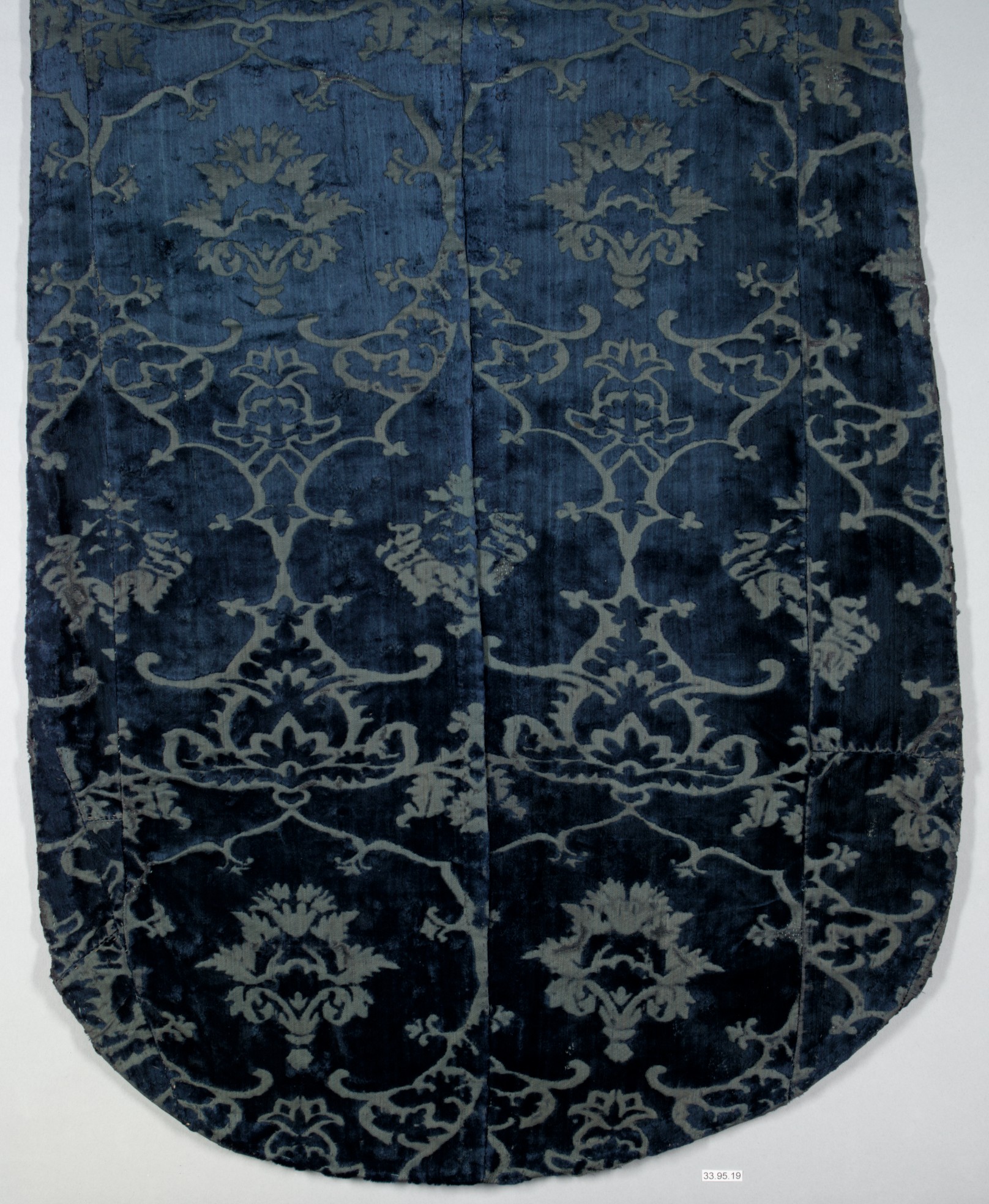
What distinguishes this piece from lesser silk garments is the surface treatment. The Lab has employed a technique known as *jia juan*—a resist-dye method that involves folding the fabric into precise, geometric patterns before immersion in natural indigo and madder root dyes. The result is not a loud print, but a subtle, chameleonic marbling that shifts from deep aubergine to midnight blue depending on the angle of light. This is not a fabric that announces itself; it whispers. The pattern is a ghost of the Silk Road’s cartography, an abstracted map of trade winds and mountain passes, rendered in the language of pigment and fiber.
Furthermore, the weight of the silk has been calibrated to achieve a specific acoustic quality. When the wearer moves, the fabric emits a soft, rustling whisper—a sound the Lab’s atelier refers to as “the breath of the loom.” This auditory dimension, often overlooked in fast fashion, is a critical component of the couture experience. It creates an intimate, almost secret dialogue between the garment and its environment, reinforcing the piece’s status as a singular, living artifact.
Architectural Silhouette and the Body’s Autonomy
The silhouette is a study in controlled asymmetry. The primary shoulder line is cut on the bias, allowing the silk to stretch and conform to the wearer’s natural slope, while the opposite side is cut on the straight grain, creating a rigid, vertical knife-edge. This deliberate imbalance is not an aesthetic whim; it is a structural commentary on the duality of heritage—the tension between tradition (the straight, disciplined line) and evolution (the fluid, adaptive bias).
The hemline, which grazes the ankle at the front and falls to a train of precisely 42 centimeters at the back, is finished with a rolled hem so fine it is nearly invisible. This detail, which requires over 40 hours of handwork, is a testament to the Lab’s obsession with finish. There are no visible seams, no exposed stitching, no labels that interrupt the flow of the fabric. The construction is so seamless that the garment appears to have been grown, not sewn.
The neckline is a deep, sculptural cowl that functions as a built-in hood when pulled up, or a dramatic portrait collar when left to drape. It is anchored by a single, hand-carved button made of antique Tibetan turquoise, a nod to the piece’s global lineage. This is the only hard material on the entire garment, and its placement—at the nape of the neck, hidden from frontal view—suggests that the piece’s true intimacy is reserved for the wearer, not the spectator.
Contextual Autonomy: The Standalone Imperative
In a standalone study, the absence of a collection’s narrative arc forces a more rigorous interrogation of the piece’s self-sufficiency. Does it survive without a companion garment? Does it tell a complete story? The answer is a resounding yes. This piece does not require a trouser, a skirt, or an outer layer to complete its argument. It is a totalizing object, capable of transforming the wearer’s posture, gait, and even psychology.
This autonomy is rare in contemporary couture, where garments are often designed as fragments to be assembled into a “look.” Katherine Fashion Lab’s approach is closer to that of a sculptor working in marble—each piece is a monolith, a complete statement that demands to be viewed in isolation. The *Global Heritage* silk piece is a prime example of this philosophy. It is a garment that commands a room not through volume or color, but through the sheer intensity of its presence.
The piece also challenges the conventional hierarchy of couture value. In an era where embellishment—beading, embroidery, appliqué—is often equated with luxury, this piece achieves its opulence through subtraction. The value lies not in what is added, but in what is removed: excess fabric, unnecessary seams, decorative flourishes. What remains is a pure, distilled expression of form and material. This is a sophisticated, MBA-level understanding of value creation—where scarcity, craftsmanship, and narrative depth outweigh raw material cost.
Conclusion: A Quiet Revolution
Katherine Fashion Lab’s standalone silk piece is a quiet revolution against the cacophony of modern fashion. It is a treatise on the power of heritage, not as a nostalgic relic, but as a living, breathing language of construction. The garment’s true innovation lies not in its silhouette or its dye technique, but in its philosophical commitment to the integrity of the material and the intelligence of the design.
For the discerning collector, this piece is not an acquisition; it is an investment in a philosophy. It is a wearable artifact that will outlast trends, seasons, and even its own creator. In its folds lie the echoes of ancient looms, the precision of modern engineering, and the vision of a house that understands that true luxury is not loud—it is inevitable. This is couture at its most cerebral, and its most profound.