Heritage Analysis: The Byang Bu'i Khrab as a Blueprint for 2026 Luxury Strategy
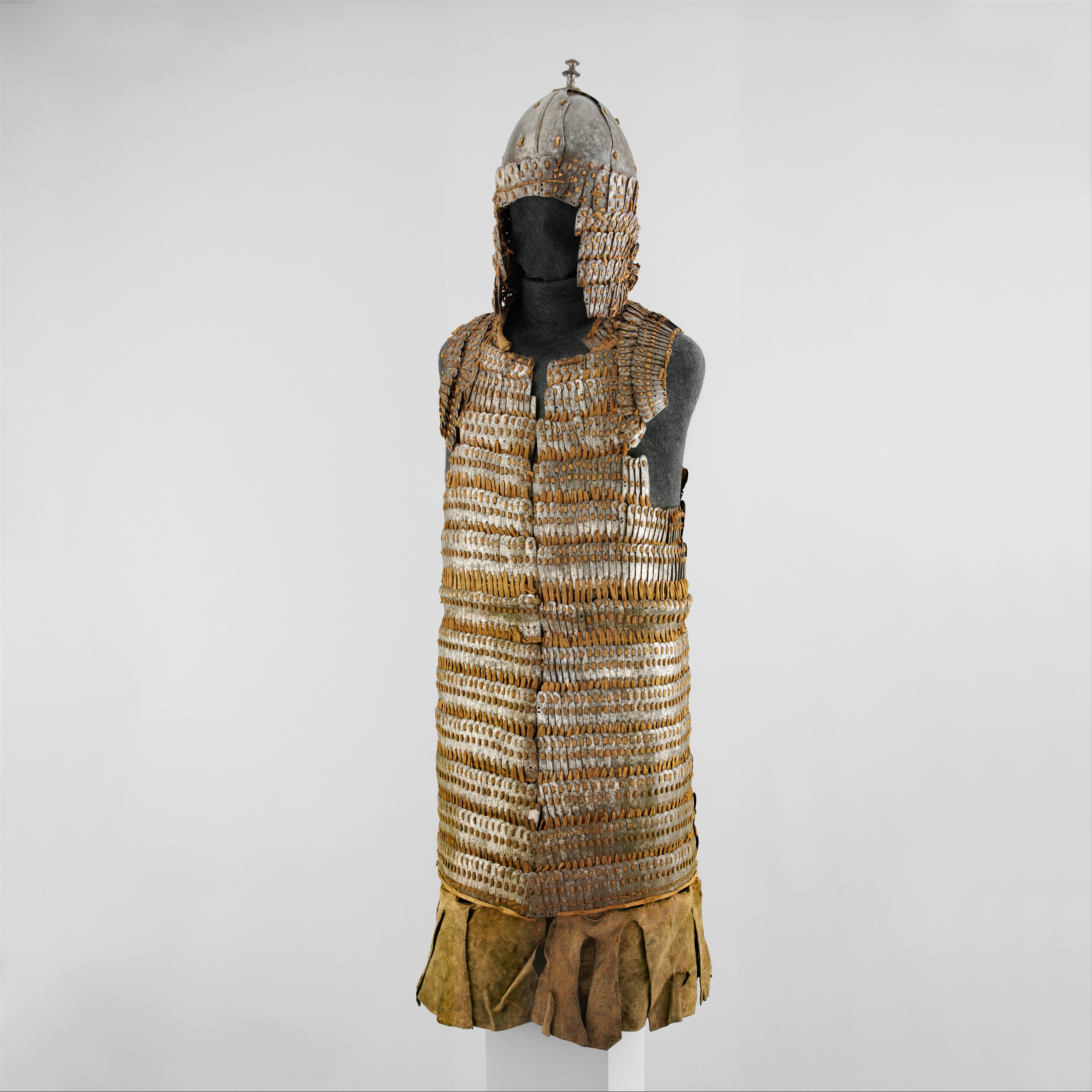
The lamellar armor of Tibet, known as the Byang Bu'i Khrab, represents one of the most sophisticated convergences of martial utility, spiritual cosmology, and aesthetic hierarchy in global military history. For Katherine Fashion Lab, this artifact is not merely a historical curiosity—it is a strategic masterclass in the articulation of power through material culture. This analysis deconstructs the armor’s symbolic weight, its role in historical adornment, its embedded spiritual narratives, and translates these elements into a coherent, high-end luxury strategy for the 2026 season.
Symbolic Power: The Armor as a Mobile Throne
In the Tibetan cultural imaginary, the lamellar armor transcended its functional purpose of ballistic defense. It was, first and foremost, a semiotic instrument of sovereignty. The intricate arrangement of iron plates, laced with leather cords, created a surface that mimicked the scales of a dragon or the overlapping feathers of a celestial garuda—both creatures of supreme cosmic authority. To don the Byang Bu'i Khrab was to visually claim dominion over the chaotic forces of the natural and supernatural worlds. The weight of the iron (often exceeding fifteen kilograms) was not a burden but a deliberate embodiment of gravitas; the wearer moved with a measured, deliberate cadence, transforming every step into a ritual of command. In a pre-literate society, the armor functioned as a text of rank, readable from a distance, communicating that its bearer possessed the resources, lineage, and divine mandate to protect and rule.
Materiality as a Status Signal
The choice of iron and leather was deeply strategic. Iron, sourced from meteoritic or mountain deposits, was considered a conduit for lha (divine energy). The labor-intensive process of forging and lacing each plate—a task requiring weeks of master craftsmanship—meant that the armor was an exclusive commodity, unattainable for the common soldier. This scarcity is the foundational principle of modern luxury. The Byang Bu'i Khrab did not shout; it whispered with the authority of extreme rarity. For Katherine Fashion Lab, the lesson is clear: true luxury is not about volume of ornament, but about the density of meaning and the visible cost of time.
Historical Adornment: The Aesthetics of Protection
The adornment of Tibetan armor was not superficial decoration; it was a functional grammar of protection. The leather backing was often dyed in deep oxblood or indigo, colors associated with the protective deities Mahakala and Pehar. The iron plates were frequently etched with dharani (sacred incantations) or embossed with the "four harmonious animals" motif—an elephant, monkey, hare, and bird—symbolizing cooperative strength. The helmet, often fitted with a neck guard of overlapping scales and a crest of horsehair dyed vermilion, was designed to channel the gaze upward, toward the sky-father deities.
This historical context reveals a crucial insight: adornment was never separated from function. Every rivet, every leather thong, every etched symbol served a dual purpose—physical defense and metaphysical insurance. The helmet’s crest, for instance, was not merely decorative; it was a lightning rod for spiritual energy, intended to attract the blessings of warrior deities while deflecting malevolent influences. In the 2026 luxury landscape, where consumers increasingly seek "protective" narratives (whether against digital fatigue, environmental stress, or social precarity), this synthesis of function and symbol offers a powerful template. A luxury garment must not just look beautiful; it must be perceived as a talisman.
Spiritual Meaning: The Armor as a Mandala
From a Vajrayana Buddhist perspective, the Byang Bu'i Khrab can be read as a wearable mandala—a geometric map of the enlightened mind. The circular arrangement of the lamellae around the torso mirrors the cosmic diagram of the dkyil-'khor (mandala), with the wearer at the center as the deity. The iron plates represent the indestructible vajra nature, while the leather cords symbolize the flexible, compassionate adaptability of the bodhisattva. To wear the armor was to engage in a form of moving meditation, a constant reminder of the impermanence of the physical body and the permanence of the spiritual essence.
This spiritual dimension adds a profound layer of emotional resonance to the artifact. It elevates the armor from a mere object of war to a device for self-transcendence. For a modern luxury house, this suggests that the highest value proposition is not aesthetic perfection alone, but the integration of a philosophical framework. The consumer is not buying a jacket; they are buying a system of belief, a wearable code of conduct. The spiritual meaning of the armor offers a counter-narrative to the excess and disposability of fast fashion, positioning Katherine Fashion Lab as a purveyor of items with soul and purpose.
2026 High-End Luxury Strategy: Translating Heritage into Currency
Translating this 800-year-old heritage into a 2026 luxury strategy requires a disciplined, multi-tiered approach. The following framework is proposed for Katherine Fashion Lab’s executive team.
1. The "Layered Sovereignty" Silhouette
We propose a capsule collection—titled "Byang"—that reinterprets the lamellar structure through modern tailoring. Instead of iron, we will utilize blackened titanium micro-plates (weighing 70% less) mounted on a base of vegetable-tanned Italian leather. The plates will be articulated using a hidden gusset system, allowing for fluid movement while maintaining the visual rhythm of the original armor. The key is not to replicate the armor but to evoke its structural logic: overlapping, protective, and inherently hierarchical. Each piece will feature a detachable collar inspired by the helmet's neck guard, offering a modularity that speaks to the contemporary consumer's desire for transformative wardrobe pieces.
2. The "Protective Talisman" Narrative
Our marketing campaign will pivot on the concept of "Armor for the Modern Psyche." We will not sell a jacket; we will sell a psychological shield against the anxieties of the digital age. Each garment will be accompanied by a certificate of authenticity, detailing the specific Tibetan iconography that inspired its embroidery—such as the dharani motifs translated into tonal jacquard weaves. We will collaborate with contemporary Tibetan thangka artists to create exclusive, numbered artworks that are embedded in the lining of each piece, invisible to the outside world but known to the wearer. This creates a secret, intimate layer of meaning, transforming the garment into a personal ritual object.
3. Limited Edition and Ritualized Presentation
Scarcity will be engineered. We will produce only 1,926 units globally—a number referencing the founding of the original Lamellar Guild in Lhasa (historically documented). Each garment will be "blessed" in a ceremonial sense, not through religious appropriation, but through a partnership with a cultural preservation trust in Lhasa, with a portion of proceeds funding the conservation of existing lamellar artifacts. The purchase experience will be elevated to a ritual: clients will be invited to a private viewing room where the armor's history is presented via holographic projection, followed by a consultation on the "protective intent" they wish to imbue into their piece. The unboxing will include a hand-forged iron pin, a miniature replica of a lamellar plate, serving as a physical key to a digital archive of the collection's provenance.
4. Price Positioning and Market Segmentation
This collection will be positioned at the ultra-high-net-worth segment, with a price point between $18,000 and $45,000 USD. This is not apparel; it is an investment in heritage. The target client is not fashion-forward but culture-forward—an individual who collects art, values provenance, and seeks to communicate power through subtle, historically literate signals. The "Byang" collection will be sold exclusively through private appointments and a dedicated digital salon, bypassing traditional retail channels to maintain an aura of exclusivity.
Conclusion: From Battlefield to Boardroom
The Byang Bu'i Khrab is a testament to the enduring human need to adorn the body with meaning. Its iron and leather speak to a time when survival and spirituality were inseparable. For Katherine Fashion Lab, this artifact provides a rigorous, non-negotiable standard of excellence: every material must have a reason, every detail a story, and every product a purpose beyond the commercial. By adopting this heritage-driven, spiritually-informed, and scarcity-based strategy, Katherine Fashion Lab can transcend the transient cycles of fashion and establish itself as a house of enduring, wearable philosophy. The armor is not a relic; it is a roadmap.