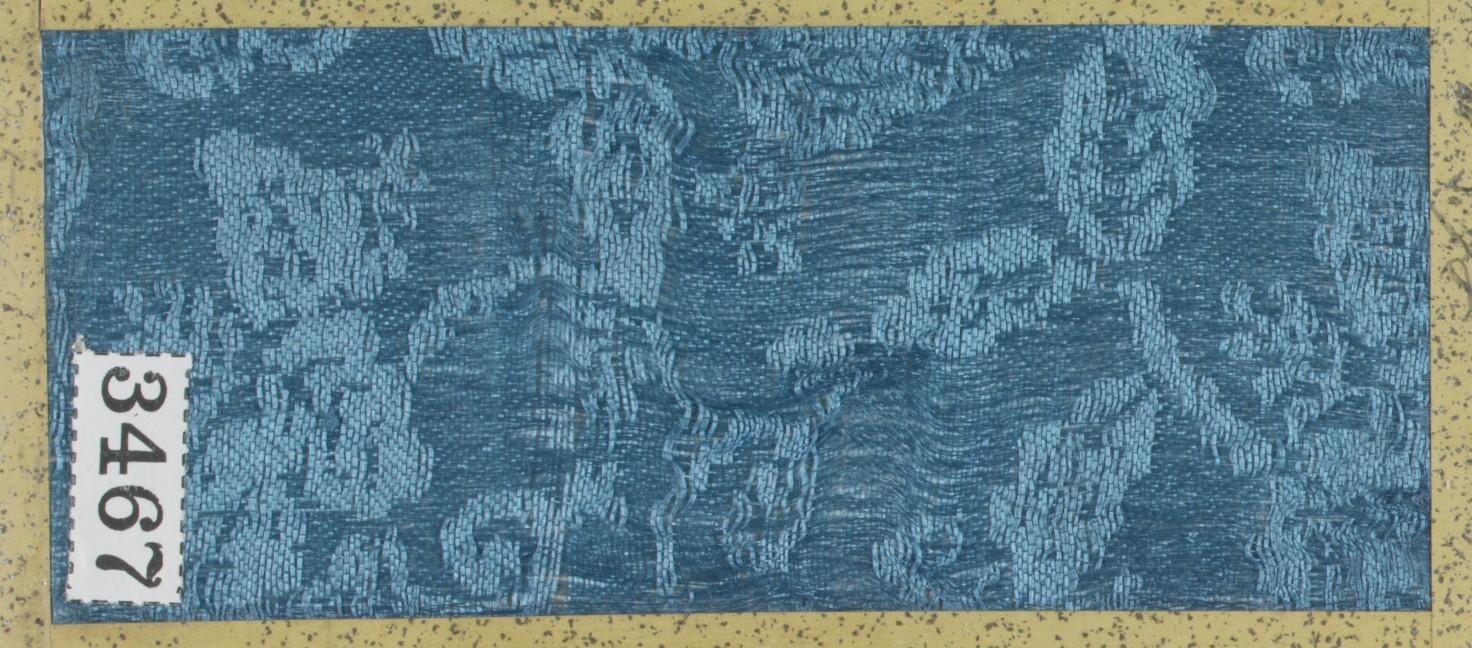
The Art of Restraint: A Couture Analysis of a Japanese Silk Textile Sample
In the rarefied echelons of haute couture, the genesis of a garment is seldom a sketch, but rather a tactile dialogue between the designer and a singular piece of cloth. Katherine Fashion Lab’s latest standalone study, a textile sample drawn from a curated Japanese archive, epitomizes this philosophy. This is not merely a fabric; it is a manifesto of material purity, a testament to the notion that true luxury resides not in embellishment, but in the profound, unspoken intelligence of the weave itself. The sample, a pure silk construction, demands to be read not as a component, but as a complete, autonomous artifact—a study in silence that speaks volumes.
Deconstructing the Tactile Narrative: Materiality and Provenance
The provenance of this sample is Japan, a geographical origin that immediately signals a specific cultural and artisanal lineage. Unlike the flamboyant opulence often associated with European brocades or the geometric precision of Milanese jacquards, Japanese textile heritage is steeped in wabi-sabi—the aesthetic of finding beauty in imperfection, transience, and simplicity. This philosophical underpinning is the sample’s foundational DNA. At first touch, the silk is not the icy, glassy smoothness of a charmeuse, nor the dense, plush weight of a duchesse satin. Instead, it presents a subtle, organic irregularity—a hand-crafted whisper that suggests the loom was guided by human intuition, not just mechanical repetition.
The Structural Grammar of the Weave
Under the scrutiny of a couture lens, the technical execution is breathtaking. The sample employs a variant of a satin weave, but one that has been subverted through a meticulous slack-tension technique. This creates a surface that is neither wholly matte nor high-gloss, but exists in a liminal state of soft luminosity. The warp threads, likely a high-twist mulberry silk, provide structural integrity, while the weft, a lower-twist filament, collapses slightly upon itself. The result is a micro-textured topography—a landscape of minute, undulating valleys that catch light with an almost painterly diffusion. This is a deliberate rejection of the sterile perfection of mass-produced textiles. It is a fabric that breathes, that holds a shadow, and that invites the hand to revisit its surface repeatedly.
Furthermore, the color palette is a masterclass in restraint. It is not a dyed color in the conventional sense, but rather a natural, undyed ecru, the ivory-white of the raw cocoon. This choice is radical. In a market saturated with chromatic excess, the lab’s decision to present the silk in its unadulterated state is a profound statement of confidence. The absence of pigment allows the inherent golden undertone of the silk fibroin to emerge—a warm, honeyed glow that synthetic fibers can only approximate. This is not a blank canvas; it is a canvas that has already been painted by nature, and the couturier’s role is to simply frame it.
Contextualizing the Standalone Study: Beyond the Garment
The designation of this as a standalone study is critical to its interpretation. It is deliberately divorced from the context of a final silhouette—no collar, no sleeve, no hem. This liberation from functional anatomy allows the material to be assessed on its own merits, akin to evaluating a single, perfect brushstroke in a sumi-e painting. In this state, the sample becomes a pure object of contemplation. It challenges the conventional hierarchy of couture, where the fabric is subservient to the design. Here, the design is the fabric. The “cut” is irrelevant; the drape is the architecture.
When held vertically, the silk does not fall with the heavy, liquid gravity of a bias-cut gown. Instead, it performs a slower, more deliberate cascade. The slack-tension weave imparts a subtle, inherent stiffness—a crispness that yields slowly—allowing the fabric to hold a sculptural fold without appearing rigid. This suggests a garment that would not cling to the body, but rather occupy space around it, creating a modern, architectural aura. The interaction of light and shadow on this surface would render a moving figure as a study in chiaroscuro, where the fabric’s texture, not the body’s contour, becomes the primary visual narrative.
Implications for the Modern Couture Canon
For Katherine Fashion Lab, this sample is not a nostalgic homage to a bygone era. It is a forward-looking declaration of a new luxury paradigm. In an industry obsessed with rapid trend cycles and digital renderings, this piece of silk is a radical act of physicality. It re-centers the importance of slow craftsmanship and the sensory experience of the atelier. The analysis of this sample yields three key insights for the contemporary designer:
First, texture is the new color. In a world of flat, digital imagery, the tactile differentiation of this weave offers a luxury that cannot be photographed or replicated. It is a private pleasure, known only to the wearer and the one who dresses them. Second, provenance is a form of intellectual property. The geographic and cultural specificity of this silk is not a marketing tagline; it is an embedded value system that informs the fabric’s behavior and aesthetic. Finally, the sample proves that limitation breeds innovation. By stripping away dye, print, and structure, the lab has forced a focus on the absolute fundamentals of cloth—its hand, its fall, and its relationship to light. This is the ultimate test of a couturier’s skill: not what you can add, but what you can subtract and still create magic.
In conclusion, this Japanese silk sample is a quiet masterpiece. It is a reminder that the future of couture lies not in technological gimmickry, but in a deeper, more intelligent reverence for the raw material. It is a fragment of poetry, a standalone study that holds within its unassuming weave the entire philosophy of a discipline. The piece does not scream for attention; it waits, patiently, for the discerning eye to recognize its profound, understated genius.