The Cartography of Absence: Deconstructing Border in Katherine Fashion Lab’s Drawnwork Study
In the rarefied echelons of contemporary couture, where novelty often masquerades as innovation, Katherine Fashion Lab’s latest standalone study—titled simply Border—presents a formidable counterargument. This is not a collection of garments in the conventional sense, but a rigorous, almost archaeological investigation into the very concept of delineation. By anchoring the work in the twin disciplines of drawnwork and punto à rammendo, the Lab has transcended the superficiality of trend to produce a thesis on the permeability of identity, the politics of territory, and the poetic violence of the edge. The result is a masterclass in material semiotics, where the needle becomes a stylus inscribing the fragile cartography of the human condition.
Material Dialectics: The Grammar of the Void
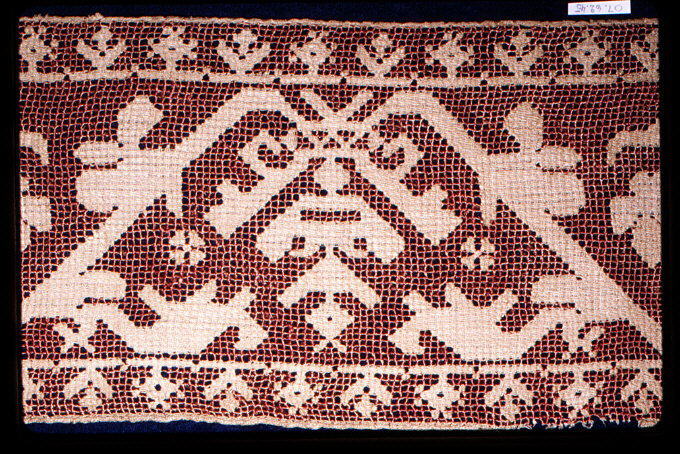
To understand Border, one must first engage with its foundational lexicon. Drawnwork, or punto tirato, is a technique of extreme discipline: specific warp and weft threads are meticulously extracted from a ground fabric, leaving behind a skeletal lattice. This is not destruction for its own sake; it is a deliberate act of negative-space sculpting. The removed threads are not lost but translated—often re-stitched into intricate patterns using punto à rammendo, the darning stitch that historically repaired and reinforced. In Katherine Fashion Lab’s hands, this repair is not a concealment of damage but a celebration of it. The void becomes the protagonist, and the darning stitch—typically a utilitarian act of mending—is elevated to a philosophical instrument.
The Lab’s choice of materials heightens this dialectic. Working primarily with a base of diaphanous silk organza and raw, unbleached linen, the designers create a tension between the ethereal and the earthly. The organza, with its translucent rigidity, speaks to the artificiality of borders—lines drawn on maps that have no physical reality. The linen, coarse and grounded, evokes the soil, the territory, the physical consequence of those lines. When threads are drawn from this hybrid ground, the resulting apertures are not random; they are choreographed. They form a cartography of thresholds—some wide and gaping like unguarded mountain passes, others fine and tight like the stitching of a diplomatic treaty.
The Semiotics of the Edge: Deconstructing Global Heritage
The study’s origin, designated as “Global Heritage,” is not a claim of universal ownership but an acknowledgment of the technique’s diasporic lineage. Drawnwork appears in the folk textiles of Eastern Europe, the Balkans, and the Mediterranean; punto à rammendo finds its apotheosis in the Florentine and Venetian textile traditions. By fusing these geographically disparate vocabularies, Katherine Fashion Lab refuses the notion of a singular, monolithic border. Instead, the collection posits that every edge is a site of hybridity, a place where cultures do not end but rather begin to negotiate.
Consider the signature piece of the study: a floor-length column dress where the hem is not a clean line but a frayed, drawn-worked horizon. The vertical threads are left exposed, dangling like the roots of a mangrove, suggesting that the border is not a termination but a root system—an interface through which nutrients and identities flow. The bodice, meanwhile, is a masterpiece of punto à rammendo, where the darning stitches are laid in horizontal bands of varying density. Some areas are so densely packed they form an opaque, armored surface—a metaphor for the fortified border. Others are left gossamer-thin, barely holding the structure together, evoking the porous frontiers of cultural exchange that have defined human history.
Architectural Silhouettes and the Politics of Space
From a structural standpoint, Border is a study in controlled collapse. The garments eschew the rigid corsetry of traditional couture in favor of a more fluid, architectural drape. The drawnwork acts as a natural hinge, allowing fabric to fold, fall, and ripple in ways that a solid textile never could. A tailored jacket, for example, features sleeves attached not by a conventional seam but by a band of intricate darning that runs from shoulder to underarm. The effect is of a limb that is both connected and autonomous, a visual pun on the political relationship between a province and its central state.
The color palette is deliberately austere—bone whites, undyed ecrus, and a single, haunting stroke of ink-black on a mourning veil. This chromatic restraint forces the eye to focus on the tactile topography of the surfaces. The shadows cast by the drawnwork become as important as the fabric itself. As the wearer moves, the light shifts through the apertures, creating a kinetic, ever-changing map of light and dark. This is the politics of space made wearable: the border is not a static line but a dynamic field of negotiation, constantly re-inscribed by movement and light.
Standalone Study: A Manifesto Against the Collection
The context of this piece as a standalone study is crucial to its intellectual impact. In an industry obsessed with the seasonal turnover of collections, Katherine Fashion Lab’s decision to isolate Border as a singular, self-contained investigation is a radical act of focus. It allows the work to function not as a series of garments to be consumed, but as a single, sustained argument. There is no commercial pressure to produce a “wearable” range; instead, each piece is a chapter in a larger thesis on the nature of limits.
This curatorial choice elevates the work from fashion to applied philosophy. The garments are not designed to be passively admired; they are designed to be read. The drawnwork is a form of writing, and the darning is a form of rewriting. The wearer becomes a living manuscript, a palimpsest of cultural memory and geopolitical reality. The absence of a full collection means there is no dilution of the central metaphor. Every buttonhole is a checkpoint; every hem, a frontier.
Conclusion: The Needle as a Pen
In the final analysis, Katherine Fashion Lab’s Border is a triumph of intellectual couture. It demonstrates that the most advanced technology available to a designer is not a 3D printer or a digital loom, but the humble needle—when wielded with intent. By drawing threads from the fabric of the world, the Lab has drawn a new map of belonging. The work reminds us that borders, whether geopolitical, social, or psychological, are not immutable facts but human constructions, subject to the same mending, fraying, and re-stitching as the textiles they inhabit. Through the disciplined poetry of drawnwork and punto à rammendo, Katherine Fashion Lab has not merely designed clothing; it has engineered a profound meditation on the spaces that separate us and the threads that, despite everything, continue to bind us together. The void, it turns out, is not empty—it is filled with the potential for connection. And that is the most luxurious material of all.