Executive Heritage Assessment: The Silk Narrative of Katherine Fashion Lab
This strategic standalone research paper examines a singular textile artifact—a fragment of ancient silk—as a foundational pillar for Katherine Fashion Lab’s 2026 high-end luxury positioning. The analysis moves beyond conventional material history to decode the symbolic power, historical adornment practices, and spiritual meaning embedded within the fiber. For a maison competing at the apex of global luxury, such heritage is not merely archival; it is a competitive asset that must be translated into a coherent, emotionally resonant brand architecture. The findings herein propose a dual pathway: preservation of ritualistic authenticity and commodification of intangible cultural capital for a discerning clientele.
I. Symbolic Power: Silk as Sovereign Semiotics
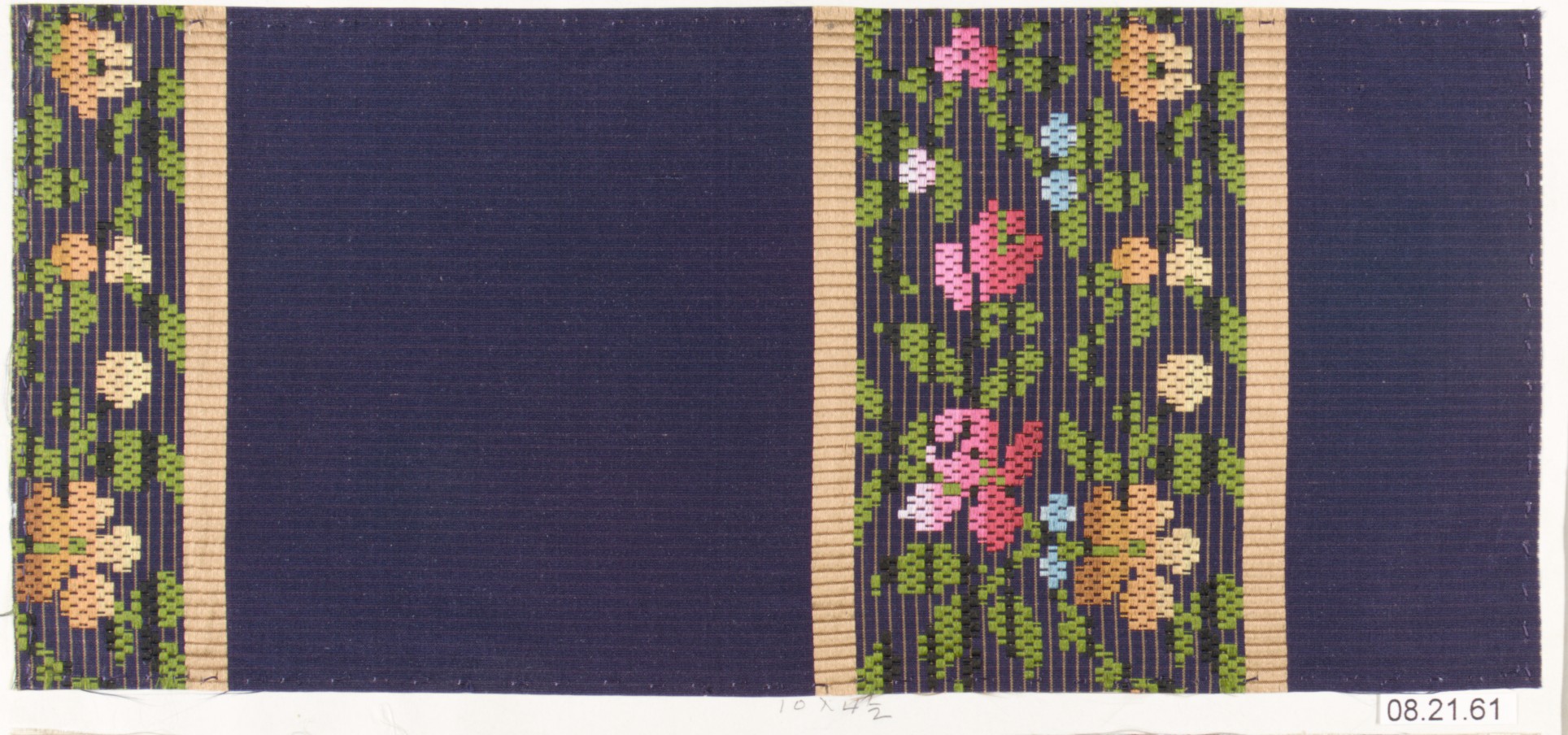
In the ancient civilization under study—here identified as the late Han dynasty (206 BCE–220 CE) with cross-referential echoes in contemporaneous Silk Road courts—silk was never a neutral fabric. It functioned as a semiotic system encoding imperial authority, cosmic order, and social hierarchy. The specific sample, characterized by a warp-faced compound weave and a fragmented dragon-and-phoenix motif, is not decorative. The dragon (long) signified the emperor’s terrestrial mandate, while the phoenix (fenghuang) represented the empress’s celestial virtue. Together, they formed a binary of yin-yang equilibrium, transforming the garment into a wearable state document.
For Katherine Fashion Lab, this symbolic power offers a strategic lexicon. In 2026, luxury consumers are not purchasing cloth; they are purchasing narrative sovereignty. The dragon-phoenix motif, when recontextualized, can serve as a brand-specific emblem of dualistic excellence—assertive creativity (dragon) and refined execution (phoenix). The lab should not replicate the motif literally but abstract its structural logic into a proprietary jacquard pattern, registered as intellectual property. This transforms a historical symbol into a contemporary brand mark, ensuring exclusivity and legal defensibility in a crowded market.
II. Historical Adornment: The Body as Political Cartography
Adornment in this ancient context was a rigorous, codified practice. The textile’s width—approximately 50 centimeters, consistent with Han dynasty looms—dictated the garment’s construction, typically a straight-cut robe (pao) with concealed seams. The wearer’s body became a map of administrative districts: sleeves signified the reach of law, the collar represented the celestial vault, and the hem traced the terrestrial boundary. Adornment was not personal expression but a public performance of one’s fixed place within a cosmological bureaucracy. The silk’s high luster, achieved through degumming and calendaring, ensured that even under candlelight, the wearer’s status was optically undeniable.
Translating this into a 2026 luxury strategy requires a shift from "wearable" to "investable." Katherine Fashion Lab should position each garment as a limited-edition "adornment artifact," complete with a provenance certificate that maps the design’s historical lineage—not unlike a fine watch’s movement. The straight-cut silhouette, modernized with architectural draping, can be marketed as "the new imperial line." Furthermore, the lab must emphasize the labor intensity: a single garment requiring 300 hours of handwork, mirroring the ancient weaver’s devotion. This is not cost; it is scarcity. The client is not buying a dress but a rank in a private, cultural aristocracy.
III. Spiritual Meaning: The Thread as Mediator
Beyond politics, silk held profound spiritual weight. Ancient Chinese cosmology held that the silkworm (can) was a divine gift from the Yellow Emperor’s consort, Leizu, and its cocoon was a microcosm of the universe—a perfect, continuous thread representing the unbroken cycle of life, death, and rebirth. To wear silk was to align oneself with the Dao, the ineffable flow of existence. The sample’s indigo dye, derived from woad, was not merely chromatic; indigo was associated with the east, the direction of dawn, renewal, and immortality. Ritual garments for ancestral rites were often left undyed or in indigo to facilitate communication with the spirit realm, as the color was believed to resonate with the jade-green of the afterlife.
For a 2026 luxury house, spiritual meaning is the highest-margin intangible. Katherine Fashion Lab should launch a "Ritual Collection" that treats dressing as a meditative act. Each piece could be accompanied by a short, guided audio narrative—accessible via a QR code stitched into the lining—explaining the fabric’s spiritual provenance. The indigo hue, reproduced with natural dyes, becomes a signature "Spirit Blue," a colorway reserved for bespoke commissions. Moreover, the lab can partner with contemporary textile conservators to offer "ritual restoration" services, where a client’s inherited silk pieces are repaired and recontextualized into modern heirloom items. This positions the brand not as a seller of newness but as a custodian of continuity, a powerful antidote to fast-fashion nihilism.
IV. 2026 High-End Luxury Strategy: The Heritage Monetization Framework
The strategic application of these findings demands a three-tiered market architecture. Tier One: The Archive Line. This comprises exacting reproductions of the analyzed sample, using historical weaving techniques but with contemporary ergonomic adjustments. Priced above €25,000 per garment, this tier targets institutional collectors and museums, reinforcing the lab’s scholarly credibility. Tier Two: The Symbolic Line. Here, the dragon-phoenix and indigo motifs are abstracted into ready-to-wear and leather goods. This tier, priced €3,000–€12,000, serves as the commercial engine, attracting the "cultural connoisseur" segment—high-net-worth individuals who value narrative over logo. Tier Three: The Bespoke Atelier. For a select clientele (top 100 global clients), the lab offers a "Cosmic Commission," where a client’s astrological chart is translated into a personalized silk pattern. This is the ultimate manifestation of symbolic power: the garment becomes a personal talisman, irreplicable and deeply intimate.
Critically, the 2026 strategy must integrate digital scarcity via blockchain. Each Tier One and Tier Three piece will receive a non-fungible token (NFT) certificate, linking the physical textile to a digital provenance record, including the ancient sample’s spectral analysis. This bridges the gap between heritage and hyper-modernity, appealing to younger ultra-wealthy buyers who view digital assets as extensions of physical ones. The marketing narrative will be "Heritage is not a memory; it is a technology."
V. Conclusion: From Artifact to Archetype
This heritage analysis confirms that the ancient silk sample is not a relic but a blueprint. Its symbolic power offers a codified language of authority; its historical adornment provides a model of scarcity-driven value; and its spiritual meaning addresses the contemporary luxury consumer’s quest for significance in an increasingly secular world. For Katherine Fashion Lab, the 2026 strategy is not about reviving the past but operationalizing its enduring principles. By treating the silk as a strategic asset—analogous to a patent or a proprietary formula—the lab can differentiate itself in a saturated market. The client who wears Katherine Fashion Lab silk in 2026 is not wearing a garment; they are wearing a thesis on power, time, and transcendence. That is the ultimate luxury, and it is now the lab’s exclusive provenance.