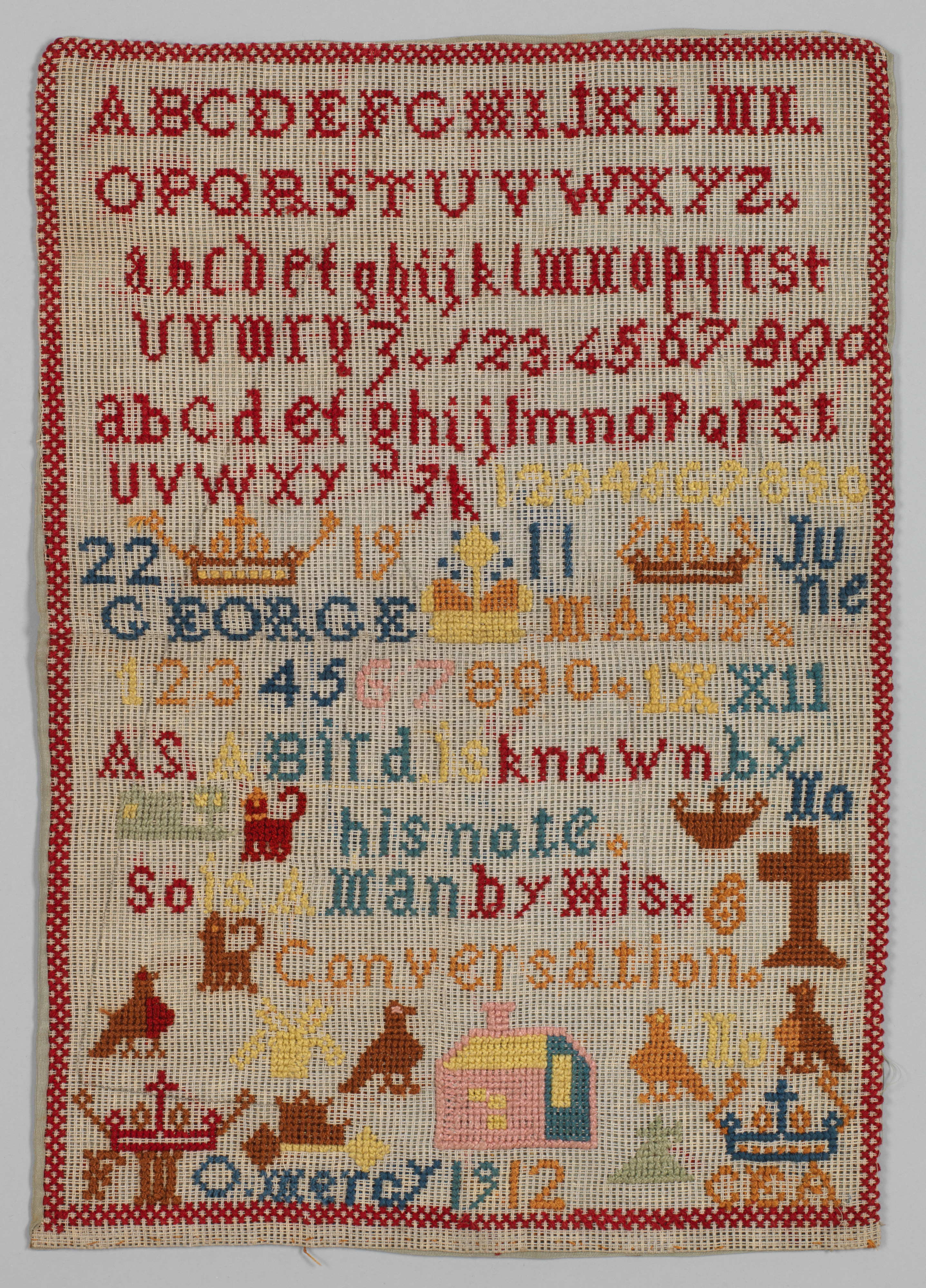
The Sampler: A Cartography of Stitch and Heritage
In the rarefied echelons of contemporary couture, where novelty is often mistaken for innovation, Katherine Fashion Lab’s latest standalone study, The Sampler, presents a profound counter-argument. This is not a garment in the traditional sense, nor is it a mere textile swatch. Rather, it is a philosophical artifact—a deliberate, introspective cartography of global craft, executed in silk on linen canvas. By isolating the sampler from the context of a collection, the Lab elevates it from a preparatory exercise to a complete, autonomous statement on the value of process, memory, and the enduring dialogue between hand and material.
Deconstructing the Global Lexicon
The immediate visual impact of The Sampler is one of disciplined chaos. The linen canvas, stretched and treated to a bone-like rigidity, serves as a neutral ground—a tabula rasa upon which a myriad of global traditions are inscribed. Unlike the homogeneous, digitized prints that dominate fast fashion, each motif here is a hand-executed testament to cultural memory. The eye travels across the surface with the same reverence one might afford a medieval manuscript or a Polynesian navigational chart.
Katherine Fashion Lab’s design intelligence lies in the curatorial selection and juxtaposition of these elements. One quadrant might feature the dense, geometric precision of Eastern European Hutsul embroidery, its black and crimson threads forming protective solar symbols. Adjacent to it, the fluid, almost calligraphic silk floss stitches of a Chinese Suzhou embroidery depict a stylized dragon’s scale, rendered in iridescent threads that shift from jade to pearl under gallery lighting. The inclusion of Japanese Sashiko—typically a utilitarian running stitch—is recontextualized here not as repair, but as a rhythmic, meditative baseline that anchors the more flamboyant passages. This is not cultural appropriation; it is a systematic homage, a curatorial practice that acknowledges provenance through the very tension of their cohabitation.
Material Dialectics: Silk and Linen
The materiality of the piece is where its intellectual rigor becomes tactile. The choice of silk on linen canvas is a deliberate dialectic. Linen, derived from the flax plant, is the fabric of labor, of peasantry, of the earth. It possesses a natural slub and a certain austerity. Silk, conversely, is the fiber of empire, of luxury, of the ethereal. Its smooth, lustrous surface catches light with an almost liquid grace. The friction between these two textiles is the conceptual core of the study.
Where the silk thread pierces the linen ground, it creates a slight tension—a physical resistance that speaks to the imposition of refined artistry upon rugged utility. The Lab’s technical mastery is evident in the handling of this tension. The stitches are not merely laid upon the surface; they are negotiated with the substrate. In areas where the linen weave is coarse, the silk threads are twisted tighter, creating a raised, almost sculptural relief. In finer sections, the silk lies flat, merging with the canvas to create a trompe-l'oeil effect. This manipulation of texture transforms the piece from a two-dimensional image into a topographic map of tactile sensation, inviting the viewer to consider the physical labor embedded in every centimeter.
The Grammar of Standalone Study
The decision to present this as a standalone study is a critical curatorial move. In the conventional fashion cycle, a sampler is a means to an end—a proof-of-concept for a future garment. By severing this utilitarian link, Katherine Fashion Lab forces a re-evaluation of process as product. This is the antithesis of the disposable fashion paradigm. There is no silhouette here to distract the eye, no body to impose a fleeting narrative of desire. Instead, the work demands a slower, more forensic gaze.
This autonomy allows the piece to function as a visual thesis on the economics of attention. In a world of algorithmic production, the sampler stands as a monument to the inefficiency of the human hand. Each stitch is a unit of time, a moment of focused intention. The piece’s value is not derived from its material cost alone, but from its temporal density. The juxtaposition of disparate cultural techniques—the Ukrainian cross-stitch, the Indian Aari work, the French boutis—creates a meta-language of needlework. It asks the viewer to decode the grammar of each tradition, to recognize the shared human impulse to ornament, to protect, and to narrate through fiber.
A New Paradigm for Couture Value
From a strategic business perspective, The Sampler represents a radical repositioning of luxury. The Lab is not selling a product; it is selling epistemological scarcity. In an era of infinite reproducibility, true luxury is found in the irreproducible—the slight irregularity of a hand-drawn line, the subtle variation in thread tension that no machine can replicate. This study positions Katherine Fashion Lab not merely as a fashion house, but as an archive of cultural intelligence.
The composition’s overall structure is neither symmetrical nor random. It follows a hidden logic, a rhythmic cadence that moves from dense, dark clusters of stitching to open, breathable fields of linen. This pacing is reminiscent of musical notation, with the silk threads acting as notes on a staff of woven flax. The negative space of the linen is not empty; it is the silence between notes, essential for the rhythm to exist. This mastery of negative space demonstrates a mature design philosophy that understands restraint is as powerful as embellishment.
Ultimately, The Sampler is a mirror held up to the industry. It critiques the frantic pace of trend cycles by insisting on the validity of the slow, the studied, and the global. It is a piece that will not be understood in a glance, nor digested in a single viewing. It demands a relationship. For the collector, it is not an asset to be flipped, but a legacy piece—a document of human skill at the twilight of the artisan era. Katherine Fashion Lab has not created a textile; it has created a manifesto in thread, arguing persuasively that the future of couture lies not in the new, but in the profound re-reading of the ancestral.