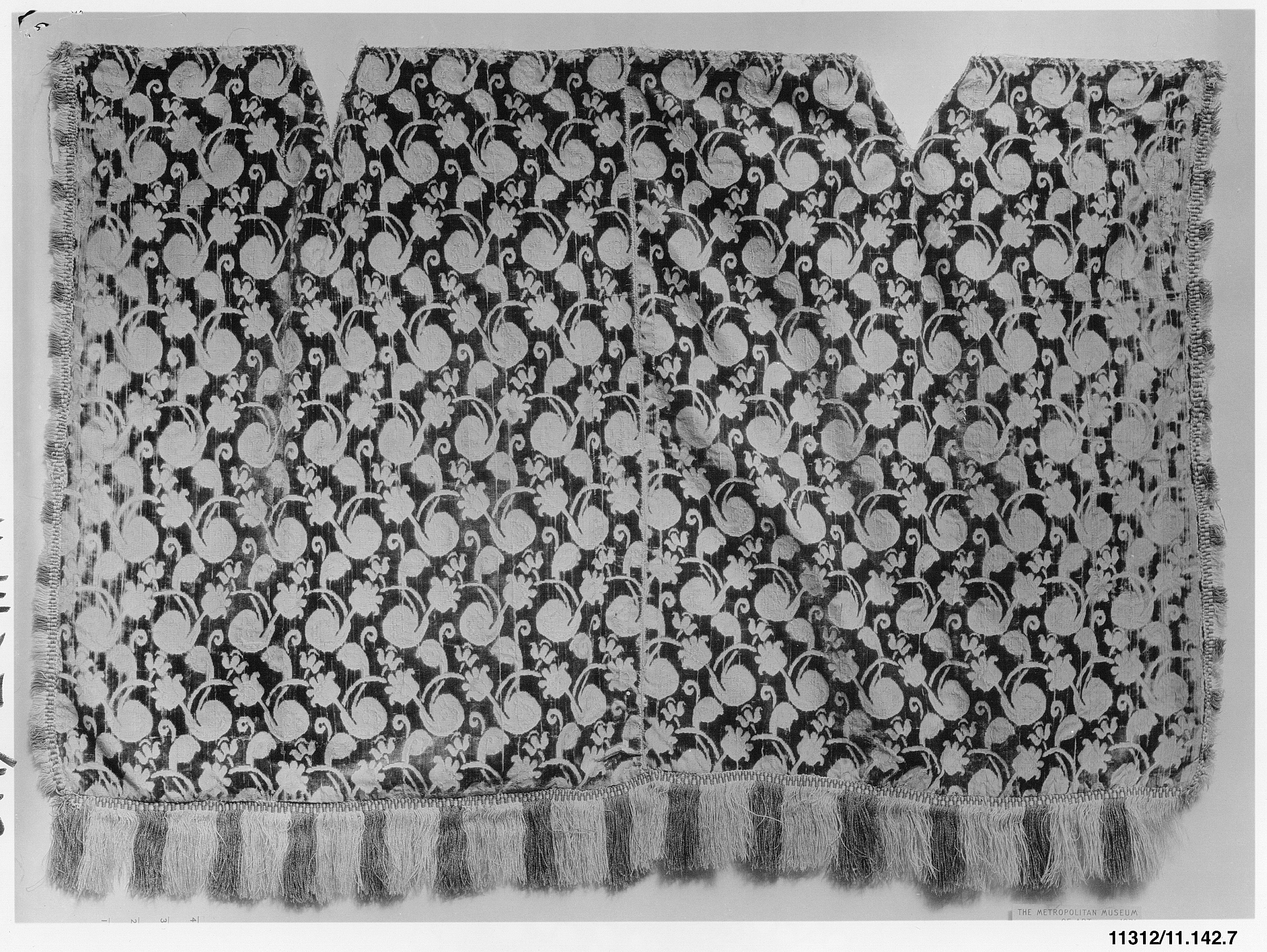
The Art of Origin: Deconstructing Katherine Fashion Lab’s Silk Standalone
In the rarefied echelons of contemporary couture, where novelty often eclipses narrative, Katherine Fashion Lab presents a compelling counter-narrative. The subject of this analysis—a standalone silk piece drawn from the house’s Global Heritage collection—is not merely a garment but a thesis. It is a study in how a single, elemental material can be transformed into a vessel of cross-cultural memory, technical virtuosity, and quiet provocation. Stripped of the theatrical distractions of a full runway show, this piece demands a focused, almost archaeological examination. It asks us to reconsider what constitutes luxury in an age of overproduction: not excess, but essence.
Materiality as a Lexicon: The Silk Substrate
At first touch, the fabric is the protagonist. Katherine Fashion Lab has sourced a 24-momme mulberry silk, a weight that defies the ephemeral fragility often associated with the fiber. This is not the whisper-thin charmeuse of lingerie; it is a structural silk, one that holds a crease with the precision of a tailored wool yet drapes with the fluid gravity of liquid metal. The hand-feel is cool, almost mineral, a result of a proprietary degumming process that removes the sericin without stripping the natural luster. The result is a surface that catches light not as a glare, but as a diffuse, internal glow—a phenomenon the atelier refers to as “subcutaneous luminosity.”
This choice of material is a deliberate act of global synthesis. The raw silk is cultivated in the Deccan Plateau of India, where the Bombyx mori silkworms are fed on castor leaves, yielding a slightly coarse, naturally ecru filament. The yarn is then shipped to a historic weaving atelier in Como, Italy, where it is dyed using a low-impact, indigo-based pigment derived from Japanese ai plants. The piece’s final color—a deep, mercurial midnight blue that shifts to violet under incandescent light—is thus a cartography of three continents. The fabric is not just a medium; it is the message, encoding a silent dialogue between agrarian labor, industrial craftsmanship, and artisanal dyeing traditions.
Silhouette and Structure: The Architecture of Absence
Standing as a standalone piece, the garment eschews the typical couture silhouette of exaggerated volume or restrictive corsetry. Instead, it operates on a principle of negative space. The cut is a study in biomimicry, referencing the wing structure of the Attacus atlas moth, whose wingspan is the largest in the world. The bodice is cut on the bias, creating a spiraling torque that wraps the torso without a single dart or seam at the waist. The fabric’s natural tensile strength allows it to cling to the body’s architecture while simultaneously releasing—a paradox of restraint and freedom.
The most arresting feature is the asymmetric collar, which folds over itself like a Japanese furoshiki knot, but executed with the crisp precision of a Savile Row lapel. This is not a draped scarf; it is a sculpted plane that extends from the left shoulder, sweeping across the clavicle and terminating in a sharp, knife-edged point at the right hip. The construction required over 40 hours of hand-basting and steam-shaping, a process the atelier calls “fabric choreography.” The sleeves, or rather the absence of them, are equally deliberate. The armholes are cut so high and deep that they create a continuous, unbroken line from the neck to the wrist, suggesting a modern reinterpretation of the kimono sleeve, but stripped of its volume. The result is a garment that feels both ancient and futuristic—a relic from a civilization that mastered time.
Ornamentation as Palimpsest: Embroidery and Negative Detail
In a move of radical restraint, Katherine Fashion Lab has forgone the heavy beadwork and crystal encrustation typical of haute couture. Instead, the ornamentation is subtractive. Using a laser-cutting technique refined in-house, the atelier has burned away the top layer of the silk in a pattern that mimics the fractal veins of a dried lotus leaf. This is not applied decoration; it is revealed through subtraction. The pattern is irregular, almost organic, with the density of the perforations increasing near the hem and fading to near-solidity at the shoulders. The effect is a trompe-l’oeil of dappled light, casting shadows onto the skin beneath—a second, transient layer of textile that exists only in motion.
This technique, which the lab terms “bioluminescent etching,” is a direct reference to the Songket weaving traditions of Southeast Asia, where gold threads are woven into the fabric to create raised motifs. Here, the “gold” is replaced by light itself. The negative space becomes the precious metal. The only physical embellishment is a single line of hand-rolled silk cord, in a contrasting vermilion red, that traces the inner edge of the collar. This is a nod to the Kantha embroidery of Bengal, where running stitches are used to mend and layer old saris. In this piece, the red cord is not a repair but a signature—a single, unbroken thread that runs the entire length of the garment, symbolizing the continuity of heritage across rupture.
Contextual Analysis: A Standalone Counterpoint to Fast Fashion
To view this piece solely as a garment is to miss its polemic. In the context of a global fashion industry that churns out 100 billion garments annually, a standalone piece of this nature is a form of sartorial protest. It is not designed for mass reproduction; the laser-etched pattern is unique to each garment, as the heat of the laser reacts differently to the natural irregularities of the silk. No two pieces are identical. This is serial uniqueness, a concept that challenges the very notion of the “collection.”
Furthermore, the piece functions as a temporal bridge. The silk’s journey from India to Italy to Japan is a microcosm of the ancient Silk Road, yet the production methods—laser cutting, digital pattern mapping, and climate-controlled dye vats—are firmly of the 21st century. The garment does not romanticize the past; it remediates it. It asks the wearer to consider their role not as a consumer of a finished product, but as a custodian of a living process. The deep indigo color will fade gracefully over time, not as a defect, but as a patina—a record of the wearer’s own history. In this sense, the piece is never truly finished. It is a collaborative artwork, completed only through wear and time.
Conclusion: The Luxury of Meaning
Katherine Fashion Lab’s standalone silk piece is a masterclass in economy of means. It achieves a profound emotional and intellectual resonance using only a single material, a single color, and a single, radical silhouette. It does not shout; it whispers with the authority of a museum artifact. In its construction, we see the precision of an engineer; in its ornamentation, the patience of a monk; in its cultural references, the breadth of a world historian.
This is couture at its most intellectual—a garment that demands not just admiration, but contemplation. It is a standalone study, yes, but it is also a standalone statement: that true luxury is not about opulence or excess, but about the depth of intention woven into every thread. For the discerning collector, this piece is not an acquisition; it is an inheritance. It is a future heirloom, destined to be passed down not because it is expensive, but because it is meaningful. And in an era of disposable everything, that is the most radical luxury of all.