Heritage Analysis: The Japanese Letter Box as a Strategic Artifact of Symbolic Power
Introduction: Beyond the Object, Toward a Narrative of Authority
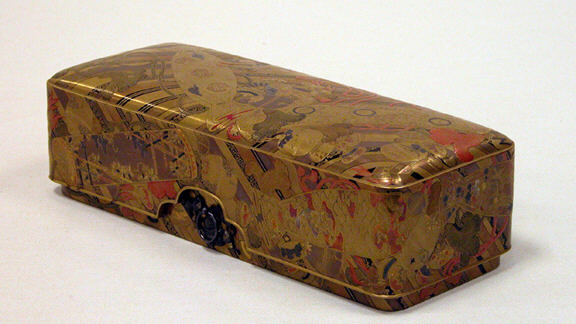
The Japanese letter box, executed in gold, silver, red, and black togidashimaki-e, hiramaki-e, takamaki-e, and cut-out gold foil application on a black and gold ground, is not merely a receptacle for correspondence. Within the context of Katherine Fashion Lab’s 2026 high-end luxury strategy, this artifact functions as a masterclass in the articulation of symbolic power through material hierarchy and ritualized function. For the modern luxury house, this object offers a strategic blueprint for transcending mere product utility, transforming everyday acts into ceremonies of status. The letter box’s dual nature—private storage and public display—mirrors the contemporary luxury consumer’s desire for objects that signal interior wealth while projecting exterior authority. This analysis deconstructs the artifact’s historical and spiritual DNA to extract actionable principles for a 2026 collection narrative centered on discretion, protection, and curated legacy.
Historical Adornment and the Architecture of Prestige
The technical virtuosity of the letter box—employing togidashimaki-e (polished lacquer), hiramaki-e (flat sprinkled design), and takamaki-e (relief lacquer)—represents a pinnacle of Japanese craft that was historically reserved for the warrior aristocracy and the imperial court. The use of cut-out gold foil application on a black ground is particularly significant; it demonstrates a deliberate manipulation of light and shadow to create an impression of depth and hidden value. In historical terms, such an object was not a personal accessory but a diplomatic instrument, used to exchange poetry, political missives, and ceremonial gifts. The box’s adornment was a coded language of wealth and refinement, understood by the recipient as a measure of the sender’s social capital.
For Katherine Fashion Lab, this historical precedent informs a strategic pivot away from ostentatious branding toward subtle, material-based signaling. The 2026 luxury consumer, particularly in the Asian and Middle Eastern markets, is increasingly fatigued by visible logos. The letter box teaches us that true prestige lies in the invisible—the weight of the lacquer, the precision of the gold inlay, the tactile sensation of a surface that took months to perfect. The strategic application here is to develop a capsule collection of "ritual objects"—not handbags or shoes, but items like cardholders, jewelry cases, or even small travel altars—that employ similar layering techniques. The heritage value is not in copying the motif but in replicating the labor intensity and material opacity that made the original so powerful.
Spiritual Meaning and the Amuletic Function
The presence of amulets and charms within the box elevates its function from storage to spiritual protection. In Japanese culture, charms (omamori) and amulets (ofuda) are not decorative; they are conduits for divine energy, offering protection against misfortune, ensuring safe passage, and attracting prosperity. The placement of these charms within a letter box—a space associated with communication and personal expression—suggests that the act of writing and receiving was itself considered a vulnerable, spiritually charged exchange. The box, therefore, served as a ward against spiritual and social harm, a protective vessel for the owner’s intentions and relationships.
This spiritual dimension offers Katherine Fashion Lab a powerful narrative for 2026: the luxury object as a talisman for the modern age. In an era of digital surveillance and constant connectivity, the desire for a private, protected space is paramount. The strategy should position the brand’s high-end offerings as "amuletic carriers"—objects that combine the aesthetic rigor of lacquerware with the functional purpose of safeguarding one’s digital and emotional well-being. For instance, a 2026 "Sanctuary Series" could feature a modern interpretation of the letter box, designed to hold a smartphone or passport, but crafted with the same gold and black lacquer techniques. The marketing narrative would emphasize not just the craftsmanship but the intention of protection—a direct translation of the Japanese charm’s spiritual function into a secular, luxury context. This positions the product as an essential tool for the high-net-worth individual navigating a chaotic world, offering a sense of control and sacred privacy.
Strategic Application for 2026: The "Silent Power" Collection
Drawing from the artifact’s symbolic and spiritual layers, Katherine Fashion Lab’s 2026 high-end strategy should be structured around three core pillars: Material Hierarchy, Ritualized Function, and Protective Aesthetics.
First, Material Hierarchy: The letter box’s use of gold and silver against a black ground creates a visual tension that denotes exclusivity. For 2026, the brand should limit the use of metallic accents to a select range of "Heritage Icons," ensuring that these pieces are not mass-produced. The strategy is to create a scarcity narrative—each piece, like the original lacquer box, requires a specific number of artisan hours, which will be communicated through a digital "provenance passport." This aligns with the luxury market’s shift toward investable items rather than disposable trends.
Second, Ritualized Function: The letter box’s original purpose was to slow down communication—to make writing and reading a deliberate act. In 2026, Katherine Fashion Lab can counter the speed of digital life by designing objects that reintroduce ceremony. A "Correspondence Ritual Kit" could include a lacquered tray, a gold-foil pen, and a seal, all housed in a box inspired by the artifact. This is not nostalgia; it is a strategic differentiation against competitors who focus on casual, everyday luxury. The brand positions itself as the curator of meaningful moments, not just accessories.
Third, Protective Aesthetics: The amuletic nature of the box suggests that luxury can offer psychological safety. The 2026 strategy should incorporate a "Guardian" motif—subtle, abstract representations of protective symbols (e.g., the diamond shape of a Japanese arrowhead, or the spiral of a whirlpool) integrated into the design of limited-edition jewelry and small leather goods. The marketing language will avoid overt religious references but will emphasize "energetic shielding" and "personal sanctuary," appealing to a global audience’s universal desire for security. This is a high-end luxury strategy that taps into the wellness and spiritual wellness trend, but with a sophisticated, historical anchor that prevents it from feeling superficial.
Conclusion: From Artifact to Asset
The Japanese letter box with amulets and charms is a profound reminder that true luxury is not about visibility but about potency—the power to protect, to signify, and to endure. For Katherine Fashion Lab’s 2026 strategy, this artifact provides a rigorous framework: employ materials that demand respect, design functions that honor tradition, and embed a spiritual narrative that speaks to the modern soul’s need for sanctuary. By translating these historical principles into a contemporary language of exclusive materials and ritualized utility, the brand can achieve a market position that is not merely fashionable but authoritative. The letter box is not an antique; it is a strategic asset, proving that the most valuable adornment is one that carries meaning beneath its surface.