The Apocalypse in Gold: A Couture Analysis of the Fifth Seal
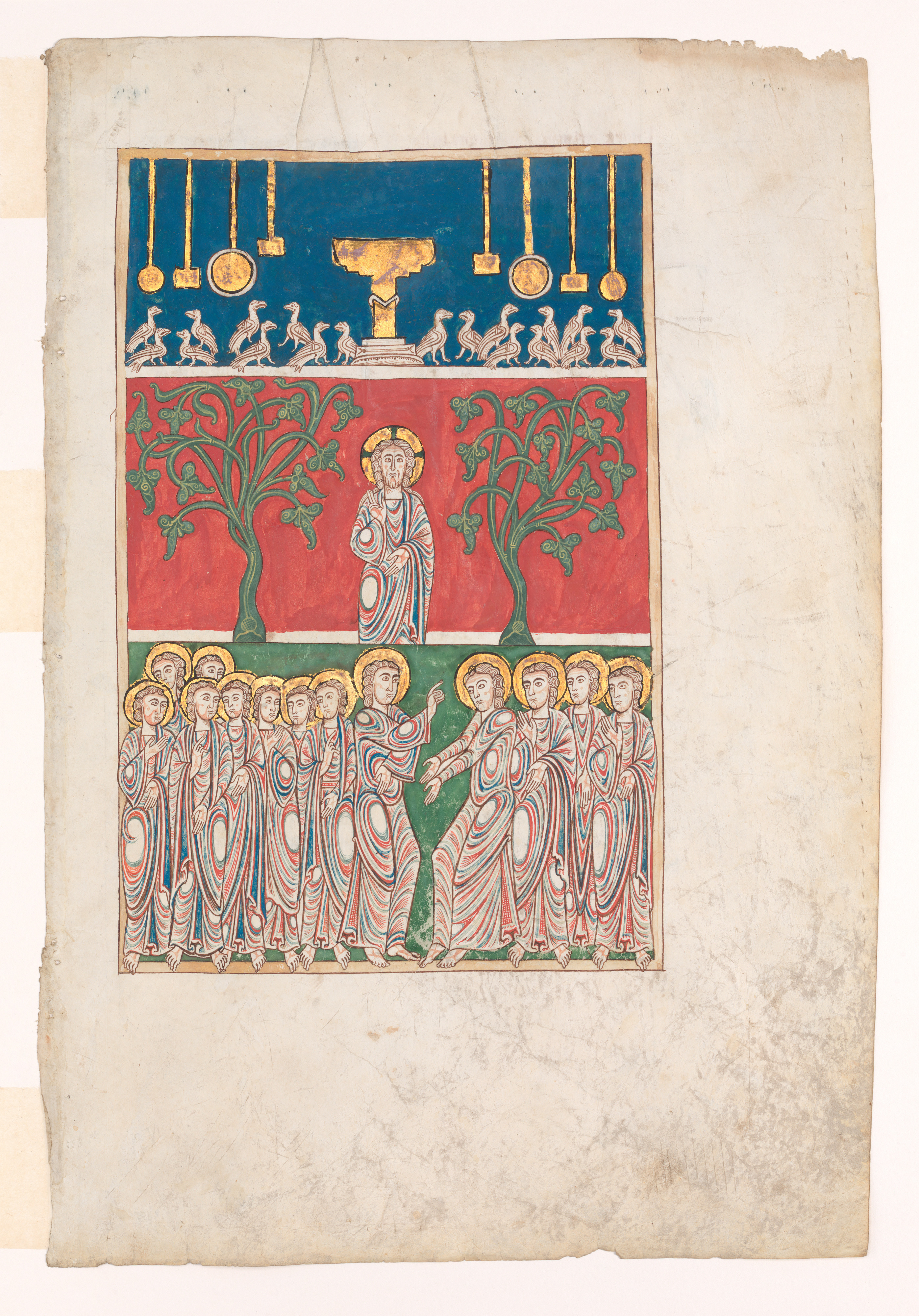
In the hallowed intersection of medieval devotion and contemporary fashion, Katherine Fashion Lab presents a singular study: a leaf from a Spanish Beatus manuscript depicting the Opening of the Fifth Seal. This is not merely a relic of the past; it is a profound masterclass in the aesthetics of revelation, a visual score for the high drama of the apocalypse. Rendered in tempera, gold, and ink on parchment, this fragment—a standalone study—transcends its liturgical origins to become a foundational text for understanding how sacred terror, chromatic opulence, and graphic precision can be translated into the language of couture. For the discerning designer, this leaf is not an artifact to be admired from a distance but a pattern to be deconstructed, its very molecules of pigment and gold leaf offering a blueprint for garments that speak of cosmic finality and divine intervention.
The Chromatic Lexicon: Tempera as a Palette of Finality
The first whisper of couture analysis emerges from the tempera itself. Unlike the fluid, atmospheric washes of later oil painting, tempera demands a disciplined, almost architectural application. Each stroke is deliberate, a pigment suspended in a binding agent that dries swiftly, leaving a matte, velvety surface that feels both ancient and avant-garde. In the context of high fashion, this translates to a rejection of gradient softness in favor of hard-edged, declarative color blocks. The leaf’s palette—likely dominated by vermilion, ochre, and lapis-derived blues—is not a naturalistic spectrum. It is a hieratic palette, where color functions as a rank, an emotion, and a prophecy. A couture interpretation would not shy away from these saturated, almost jarring juxtapositions. Consider a bias-cut gown in a deep, blood-orange vermilion, collared with a rigid, cobalt-blue yoke, echoing the manuscript’s separation of celestial and earthly planes. The tempera’s inherent opacity demands fabrics with a similar refusal to diffuse light—heavy duchesse satin, stiffened silk gazar, or even a micro-suede that absorbs rather than reflects, forcing the wearer to become a figure of absolute presence.
Furthermore, the graphic line of the ink underlay is paramount. In the Beatus tradition, the ink does not merely outline; it defines the energy of the composition. The figures of the martyrs beneath the altar, their souls crying out for justice, are rendered with a taut, expressive contour that suggests both physical suffering and spiritual exaltation. For the modern atelier, this translates to a study in structural seaming. Instead of concealing construction, the couture piece would celebrate it—exposed topstitching in a contrasting, metallic thread, or inset panels of black guipure lace that mimic the ink’s calligraphic urgency. The garment’s silhouette would be defined by these lines, much as the manuscript’s figures are defined by their outlines. A tailored jacket, for instance, could feature a sharply angled princess seam that arcs from the shoulder to the hip, mimicking the dramatic swoop of an angel’s wing, while a contrasting black piping traces the edge, turning a simple construction detail into a statement of apocalyptic geometry.
The Gilded Imperative: Gold Leaf as Structural Volume
No analysis of this leaf—or of Katherine Fashion Lab’s philosophy—would be complete without a deep reverence for the gold. In the manuscript, gold is not a decorative afterthought; it is the divine substrate, the light of the Empyrean that illuminates the chaos of the earthly realm. Applied as wafer-thin leaf, it catches the ambient light, creating a shifting, living surface that changes with the viewer’s perspective. This is the couture equivalent of metallic illusionism. A garment that channels this energy does not simply use gold fabric; it engineers a surface that behaves like the leaf itself. Consider a hand-embroidered bodice where thousands of tiny, irregular sequins—some burnished, some matte—are applied in a mosaic pattern, mimicking the way the gold leaf fractures over the parchment’s uneven surface. Or a full-length opera coat in a metallic lamé, but one that has been artfully crushed and manipulated to create shadows within the light, preventing a flat, vulgar shine. The gold is not worn; it is inhabited. It becomes an armor of faith, a carapace that deflects the profane world.
The placement of the gold in the original leaf is equally instructive. It is reserved for the most sacred elements: the altar, the haloed figures, the celestial architecture. This is a lesson in selective opulence. In couture, this translates to the strategic use of precious materials. A gown might be cut in a stark, matte black wool, but with a fully beaded, gold-encrusted panel that descends from the left shoulder, echoing the position of the altar in the composition. This creates a visual hierarchy, drawing the eye to the point of spiritual climax. The gold is not a uniform wash; it is a focal point, a source of power. The wearer becomes a walking manuscript, with the narrative of sacrifice and vindication written in light across the fabric.
From Parchment to Silhouette: The Architecture of Revelation
The composition of the Fifth Seal is famously dynamic—a swirling vortex of angels, martyrs, and cosmic disturbances. Yet, within this chaos, there is a rigorous underlying structure. The Beatus master understood that to depict the end of the world, one must impose an ironclad formal order. This is the dialectic of control and release that defines the highest form of couture. The silhouette inspired by this leaf would be one of contained energy. Think of a sculptural gown with a high, constricting neckline and a full, architectural skirt that resembles a bell or a chalice. The upper body is bound, disciplined, reminiscent of the rigid frontal poses of the saints. The lower half expands, suggesting the release of the four winds of the apocalypse. The use of boning and corsetry becomes a metaphor for the divine order imposed upon the chaos of human history.
Moreover, the parchment itself offers a textural inspiration. Its surface is not perfectly smooth; it has a tooth, a slight undulation, a memory of the animal skin from which it was made. This organic imperfection is a counterpoint to the rigid geometry of the composition. A couture fabric that mimics this would be a raw silk or a slubbed shantung, where the irregular yarns create a subtle, natural texture that prevents the garment from feeling synthetic or mass-produced. The garment should feel handcrafted, almost as if it were scraped and prepared by an artisan, just as the vellum was. The seams would be hand-finished, the hems rolled, the buttons crafted from carved horn or bone—all details that honor the manuscript’s humble yet exalted materiality.
The Standalone Study: A Manifesto for the Modern Muse
Finally, the context of this piece as a standalone study is crucial. It is not part of a continuous narrative; it is a singular, potent image meant for deep contemplation. This is the essence of the modern couture piece. It is not a mere garment for daily utility; it is a wearable thesis, a conversation starter, an object of intense focus. The woman who wears a gown inspired by this leaf is not dressing for a party; she is dressing for a coronation of the self. She understands that fashion, at its most profound, is a ritualistic act. She is the martyr, the angel, and the altar all at once. She wears the gold not as jewelry, but as a declaration of her own inner light. She wears the tempera colors not as a trend, but as a commitment to emotional and spiritual clarity.
In conclusion, the Beatus leaf is a masterclass in the alchemy of creation. Katherine Fashion Lab’s analysis reveals that true couture is not about fabric and thread, but about transmuting belief into form. The tempera teaches us about the power of flat, declarative color. The gold teaches us about the necessity of divine light. The ink teaches us about the strength of the defining line. And the parchment teaches us about the beauty of a foundation that is both fragile and enduring. To wear this inspiration is to carry a fragment of the apocalypse within one’s wardrobe—not as a prophecy of doom, but as a promise of ultimate revelation and transcendent style. The Fifth Seal is open, and through the lens of couture, it reveals a vision of fashion that is unapologetically sacred, rigorously intellectual, and breathtakingly beautiful.