The Anatomy of Heritage: Deconstructing the Dish as a Couture Artifact
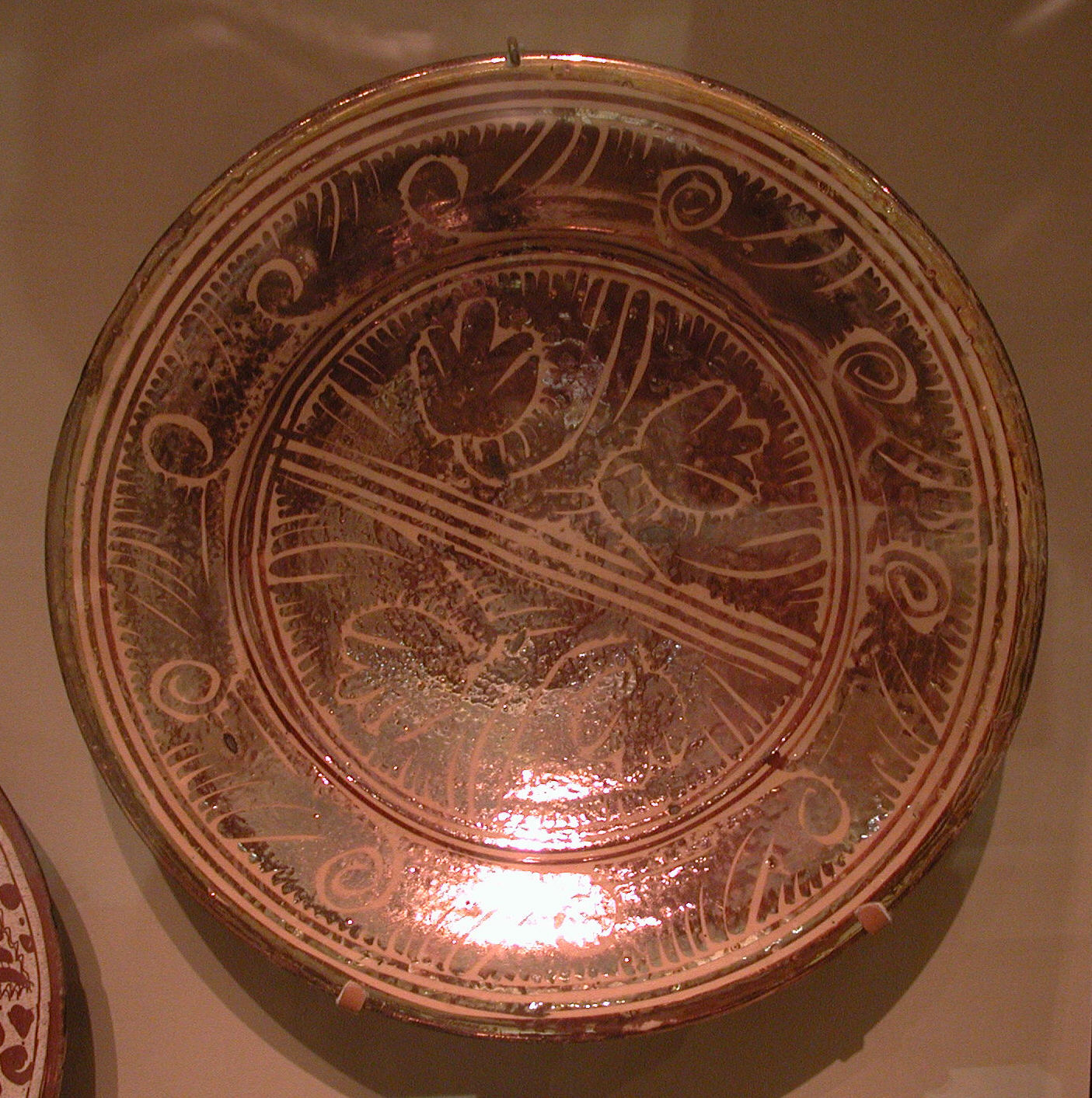
In the rarefied echelons of fashion scholarship, the material world is often parsed through the twin lenses of textile and silhouette. Yet, Katherine Fashion Lab’s latest standalone study—an intensive analysis of a singular object—compels us to reconsider the very definition of couture. The subject is not a gown, nor a draped fabric, but a dish. More precisely, a tin-glazed and luster-painted earthenware plate, culled from the vast lexicon of Global Heritage. At first glance, the object appears to be a relic of domestic utility, a static artifact of culinary history. However, under the Lab’s rigorous deconstruction, this dish emerges as a profound masterclass in structural engineering, surface ornamentation, and the semiotics of value—principles that are startlingly homologous to the highest forms of haute couture.
The Silhouette of the Vessel: A Study in Structural Logic
To begin, we must treat the dish not as a flat canvas but as a three-dimensional garment for the table. The tin-glazed earthenware base provides the foundational toile, the unadorned canvas upon which the designer—in this case, an anonymous artisan of the 16th or 17th century—would build. The glaze itself, a lead-silicate matrix opacified with tin oxide, serves a dual purpose: it is both the structural sealant and the pristine white ground, akin to the crisp, starched muslin used in a couture atelier. The dish’s rim, often scalloped or gently undulating, functions as the neckline or hem of the piece, dictating the optical weight and the way the eye travels. A deep, well-defined cavetto (the bowl’s interior curve) provides volume and shadow, reminiscent of a perfectly engineered bustle or a structured peplum. The foot ring, the unseen base, is the equivalent of a meticulously concealed interior corset—it elevates the entire composition, offering balance and a sense of gravity-defying poise.
This structural analysis reveals that the dish is not a passive object. Its architecture is a deliberate negotiation between fragility and function. The earthenware body, porous and humble, is rendered impermeable and luminous only through the alchemy of its glaze. In couture terms, this is the transformation of a raw, unglamorous material—say, a coarse wool or raw silk—into a sculpted, liquid-metal evening gown. The dish’s ability to hold its shape under the stress of thermal shock and repeated handling speaks to an engineering acumen that mirrors the tensile strength required in a structured ball gown. Every curve is load-bearing, every contour is a calculated response to the physics of use, much as a couturier calculates the drape of a bias-cut skirt against the human form.
Luster as Embroidery: The Grammar of Light
The most arresting feature of this artifact is its luster-painted surface. This technique, a hallmark of Hispano-Moresque and later Italian Renaissance ceramics, involves applying metallic oxides—silver, copper, or gold—over the tin-glaze and firing the piece in a reducing atmosphere (one starved of oxygen). The result is a thin film of metal that catches light with an iridescent, almost oily sheen. In the Katherine Fashion Lab’s lexicon, this is not mere decoration; it is textile embellishment of the highest order. Luster is the ceramic equivalent of goldwork embroidery, or passementerie—the intricate, metallic threads that define the opulence of a Dior or Chanel evening jacket.
Consider the pattern: often a central medallion, surrounded by radiating foliate scrolls or pseudo-Arabic calligraphy. This is not a random scattering of motifs. It is a hierarchical composition, a visual narrative that directs the gaze from the periphery to the core. The luster paint, applied with a fine brush, creates a play of positive and negative space, where the metallic highlights function as the haute couture beadwork—each stroke a deliberate, irreplaceable gesture. The artisan’s hand is visible in the irregularity of the brushwork, a testament to the value of the imperfect, which in fashion we now celebrate as the "hand of the maker." The luster’s changing appearance under different lighting conditions—from copper-gold to a silvery-mother-of-pearl—offers a dynamic, kinetic quality. This is the same effect sought by designers who employ iridescent sequins or holographic foils, but executed with a chemical precision that modern synthetics cannot replicate.
Global Heritage as a Supply Chain of Aesthetics
The provenance of this dish—its origin in "Global Heritage"—is not a vague romanticism. It is a precise cartography of cultural exchange. Tin-glazing technology traveled from the Islamic world through the Iberian Peninsula, while luster techniques were perfected in Persia and later adopted by the workshops of Valencia and Deruta. This object, therefore, is a palimpsest of trade routes, conquests, and artistic appropriation. For the contemporary fashion strategist, this offers a critical lesson in supply chain aesthetics. The dish is not a single-authored work; it is a collaborative output of civilizations. Its presence in a standalone study forces us to acknowledge that the most innovative couture is rarely a tabula rasa.
This dish challenges the modern obsession with "newness." In an era of fast fashion and digital rendering, the dish stands as a monument to slow, deliberate production. The multiple firings—first for the biscuit, then for the tin-glaze, then for the luster—represent a timeline of patience that is anathema to the seasonal calendar. Each firing held the risk of catastrophic failure: a cracked body, a blistered glaze, a luster that refuses to develop. The artisanship is a high-stakes gamble, akin to the risk a couture atelier takes when committing to a hand-painted silk faille or a hand-pleated chiffon. The dish’s survival, its unblemished surface, is a testament to a quality control that is both brutal and beautiful. Every piece that failed in the kiln was discarded, meaning the object we study is the victor of a Darwinian process of aesthetic selection.
Contextualizing the Standalone Study: The Dish as a Conceptual Garment
Why a standalone study? Because the dish, removed from the dining table and the museum vitrine, demands to be seen as a pure object of design. In the Lab, we treat it as a maquette for a future collection. The structural logic of its foot ring can inform a new architectural heel. The luster’s metallic sheen can translate into a jacquard woven with actual metal threads. The hierarchical composition of its central medallion can inspire a new placement print for a column gown. The dish is not a relic; it is a generative source code.
Furthermore, the dish’s materiality—its clay, its glaze, its metal oxides—speaks to a growing contemporary concern with tactile authenticity. In a digital world saturated with synthetic polymers, the dish offers a grounding in the elemental. Its weight is substantial; its surface is cool to the touch. This is the luxury of the real. It is the same reason that modern couture clients are drawn to artisanal looms and hand-dyed silks; they crave the evidence of human intervention and geological time. The dish, in its humble earthenware body, carries the memory of the earth from which it was dug, and the fire that transformed it. This is a narrative that no synthetic fiber can claim.
In conclusion, the Katherine Fashion Lab’s analysis of this tin-glazed and luster-painted dish reveals that couture is not a medium but a methodology. It is the application of rigorous structural thinking, masterful surface treatment, and a profound respect for material heritage to any object. This dish is not merely a predecessor to a garment; it is a garment in its own right—a garment for a table, for a wall, for the eye. Its study offers a blueprint for a fashion practice that is intellectually rigorous, culturally literate, and unapologetically obsessed with the poetry of the constructed object. The dish, in its silent, glazed perfection, is wearing the most exclusive couture of all: the couture of time, trade, and transcendent human skill.