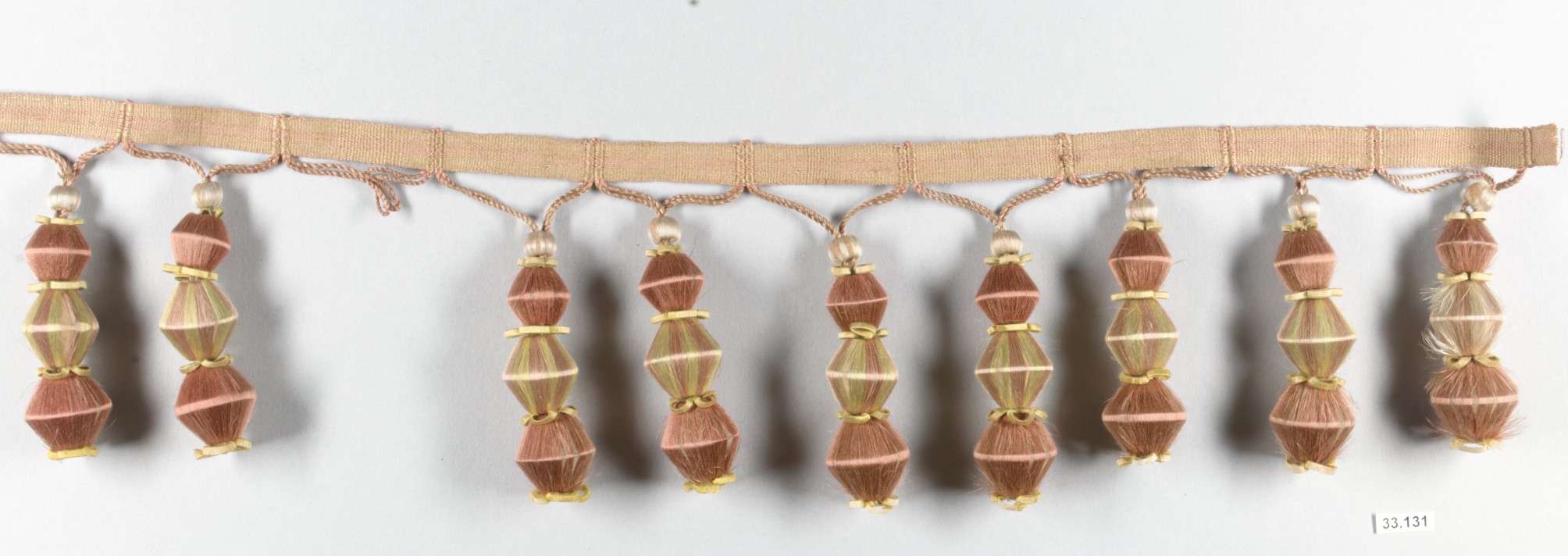
The Kinetic Sculpture: A Couture Analysis of Katherine Fashion Lab’s Fringe Study
In the rarefied echelons of haute couture, where fabric is not merely draped but philosophically interrogated, Katherine Fashion Lab’s latest standalone study on fringe emerges as a masterclass in controlled chaos. This is not the flapper-era shimmer of sequined threads nor the bohemian leather tassels of the 1970s. Instead, the Lab has re-engineered a centuries-old French decorative technique through a lens of architectural precision, pairing the liquid fall of silk with the rigid, organic counterpoint of wood trimming. The result is a garment—or more accurately, a wearable sculpture—that challenges the very notion of movement, gravity, and adornment.
Deconstructing the French Heritage: Fringe as Language
To understand this piece, one must first acknowledge the etymological and artisanal roots of fringe. Originating from the French franger, meaning “to slice” or “to shred,” fringe has historically served as a liminal device—a transition zone between the structured body of a garment and the empty space it commands. In 17th-century French passementerie, fringe was a signifier of aristocratic excess, hand-knotted in gold or silk to denote rank. Katherine Fashion Lab’s interpretation, however, strips away this overt opulence and instead interrogates the tension between stillness and motion. The French origin is not an homage to Versailles but a dialogue with the ateliers of Lyon, where silk weaving reached its pinnacle of technical complexity. The Lab’s choice to use pure, unweighted silk—likely a charmeuse or a fine organza base—allows the fringe to behave not as a static border but as a living, breathing extension of the silhouette.
The Material Dialectic: Silk’s Fluidity vs. Wood’s Rigidity
The genius of this study lies in its adversarial material pairing. Silk, with its inherent protein-based luster and molecular smoothness, offers a gravitational surrender. When cut into fringe, each strand becomes a micro-conduit of light, shifting from champagne to pearl as the wearer moves. It is the epitome of fluidité—a French term that implies not just liquidity but an effortless, almost musical grace.
Contrast this with the wood trimming, which is not merely a decorative afterthought but a structural counterweight. The Lab has sourced a lightweight yet dense hardwood, likely birch or maple, turned into cylindrical or teardrop-shaped beads that terminate each silk strand. This is a radical departure from traditional metal or glass finials. Wood introduces a tactile and acoustic dimension: a soft, percussive click as the beads collide, a subtle resistance against the silk’s freefall. Where silk is alluring and passive, wood is assertive and grounding. The dialectic creates a visual and kinetic rhythm—a pendulum effect that transforms the garment from a static object into a performance instrument.
Standalone Study: The Garment as Thesis
Presented as a standalone study—not part of a seasonal collection—this piece demands to be read as a thesis. It is a deliberate removal from the commercial imperative of wearability. The construction begins with a silk base that is almost architectural in its severity: a high, mandarin collar and a columnar, sleeveless silhouette that hugs the torso without constriction. This austerity is the canvas. The fringe is then applied in graduated tiers, starting at the shoulder line and cascading asymmetrically to the hem, with a deliberate negative space at the left hip. This asymmetry is not arbitrary; it is a compositional device that creates a diagonal vector, drawing the eye diagonally across the body, elongating the form and suggesting a perpetual state of turning.
The wood trimming is not uniformly distributed. Instead, the Lab has clustered the beads at the lowest points of the fringe, creating a weighted hem that pulls the silk taut. In some sections, the fringe is left unadorned, allowing the silk to whisper; in others, the wood beads are spaced at irregular intervals, producing a staccato rhythm. This irregularity is a deliberate rejection of machine-made uniformity, a nod to the fait main (handmade) ethos of haute couture. Each strand is individually hand-knotted, a process that would take a single artisan over 200 hours. The result is a garment that is not merely worn but inhabited.
Kinetic and Optical Effects: The Science of Movement
From a technical standpoint, the genius of this study is its manipulation of kinetic energy. As the wearer walks, the silk strands fan outward, creating a halo of blurred motion, while the wood beads lag behind due to inertia, then snap forward to catch the silk. This creates a double-exposure effect—a ghosting of the body’s movement. The optical illusion is further enhanced by the interplay of light: silk reflects specular highlights, while the matte wood absorbs and diffuses light, creating a chiaroscuro effect that is both dramatic and intimate.
Moreover, the choice of wood introduces an olfactory and auditory layer rarely explored in couture. The natural resins of the wood, when warmed by body heat, release a faint, earthy scent—a stark contrast to the sterile, chemical perfumes often associated with high fashion. The sound, a soft clack-clack, is a private percussion for the wearer, a reminder of the garment’s presence. This multi-sensory approach positions the piece not as clothing but as an instrument, a wearable chime that responds to the body’s tempo.
Cultural and Philosophical Implications
This standalone study also functions as a cultural critique. In an era of fast fashion and disposable trends, the Lab’s insistence on slow, hand-crafted fringe is an act of resistance. The wood trimming, sourced from sustainably managed French forests, is a nod to the terroir—the idea that materials carry a geographical and cultural memory. The silk, woven in a historic Lyon mill, is a direct lineage to the 18th-century guilds that made French silk the envy of the world. By isolating these elements in a single, non-commercial study, Katherine Fashion Lab elevates fringe from a decorative motif to a philosophical argument: that true luxury is not about abundance but about the intentional dialogue between material, motion, and maker.
Conclusion: A New Vocabulary for Adornment
In conclusion, Katherine Fashion Lab’s fringe study is a tour de force of conceptual couture. It succeeds because it refuses to compromise on either technical rigor or artistic vision. The silk provides the poetry; the wood provides the prose. Together, they form a new vocabulary for adornment—one where movement is not an accident but a choreographed event, where sound and scent are as integral as sight, and where the French heritage of passementerie is rebooted for a contemporary, intellectual audience. This is not a garment for the timid. It is a wearable manifesto, a kinetic sculpture that asks us to reconsider the boundary between the body and the space it displaces. For those who dare to wear it, the reward is not just a silhouette but an experience—a fleeting, beautiful collision of nature, craft, and time.