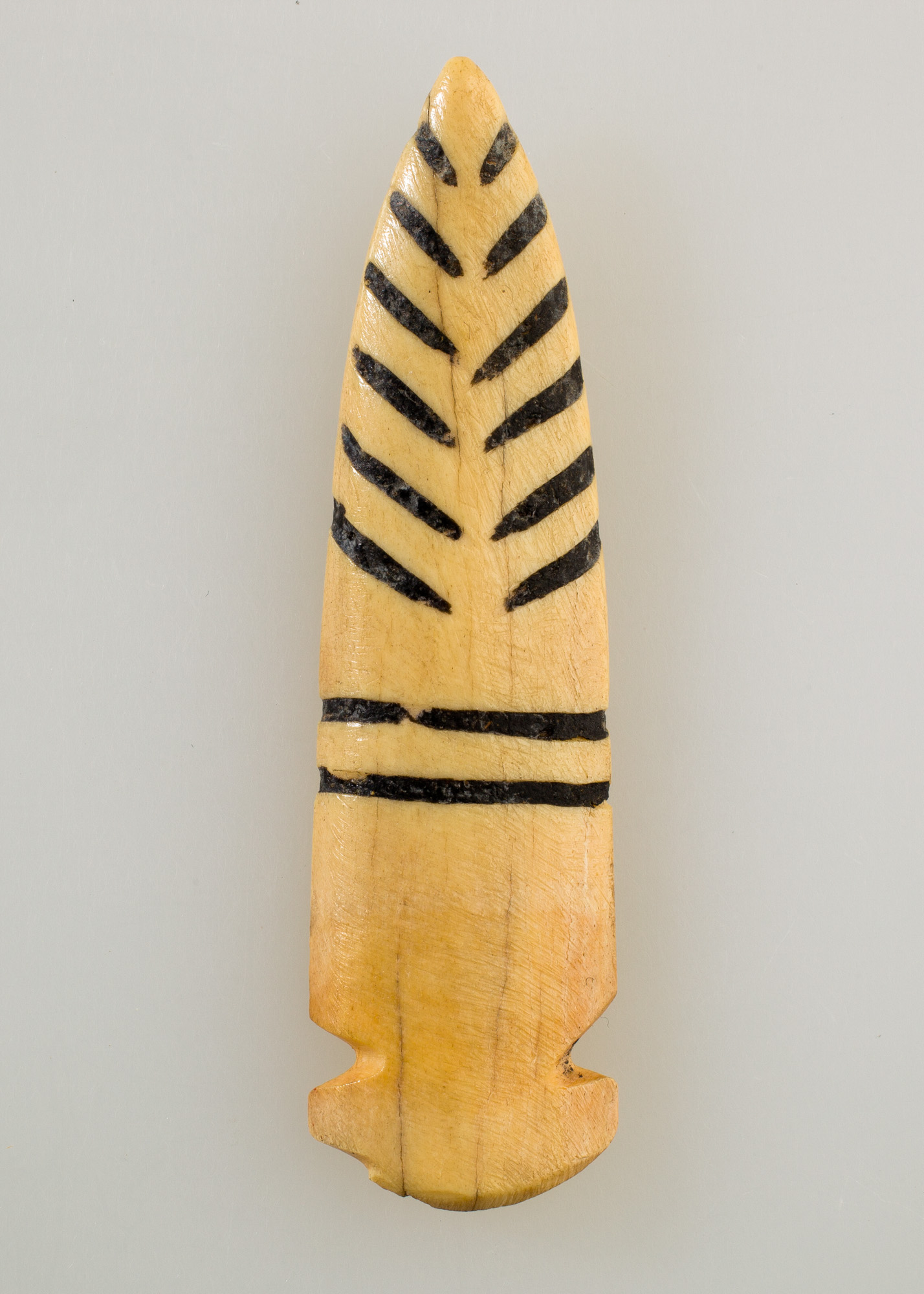
Executive Summary: The Tusk Amulet as a Strategic Heritage Asset
This strategic standalone research paper, prepared for the leadership of Katherine Fashion Lab, analyzes the ancient tusk amulet as a profound heritage object. Moving beyond superficial aesthetic appropriation, we deconstruct its intrinsic symbolic power, historical context as adornment, and enduring spiritual meaning. The objective is to formulate a foundational framework for a 2026 high-end luxury strategy that leverages authentic cultural capital. This analysis posits that the tusk amulet is not merely an artifact but a codified system of values—protection, vitality, and connection to ancestral force—which, when translated through a contemporary luxury lens, can command unparalleled brand authority and consumer devotion in an increasingly meaning-driven market.
Deconstructing Symbolic Power: The Amulet as a Codified System
In the context of ancient civilizations, the tusk amulet operated as a concentrated node of symbolic power. Its efficacy was derived from a confluence of material, form, and ascribed meaning. The medium—bone, specifically ivory or the bone of a powerful animal—was not incidental. It represented a direct transference of essence; the strength, ferocity, and primal life force of the creature were believed to be inherent within its physical remains. To wear a tusk was to harness this bio-spiritual energy, making the adornment an active agent rather than a passive decoration.
The Semiotics of Form and Substance
The tusk’s inherent morphology contributed to its symbolism. Its crescent shape echoed celestial bodies (the moon), symbols of cyclical renewal and feminine power. Its pointed, weapon-like tip suggested penetration, defense, and directed will. As a material, bone sits at the critical intersection of life and death, memory and mortality. It is the lasting framework of a once-living being, making it a perfect vessel for concepts of ancestry, continuity, and the transcendence of the corporeal. This complex semiotics transforms the object from ornament to talisman, its power embedded in its very ontology.
Historical Adornment: From Ritual Object to Status Insignia
The historical journey of the tusk amulet as adornment reveals its dual function in societal structures. Initially, its use was likely circumscribed by ritual and spiritual necessity. Shamans, chieftains, or individuals undergoing rites of passage would wear such amulets to mediate between the human and spirit worlds, or to protect themselves during vulnerable transitions. The adornment served as a public declaration of a non-ordinary state of being or a specific, empowered role within the community.
The Evolution into a Luxury Proto-Brand
Over time, this spiritual currency inevitably translated into social and material capital. The difficulty of acquisition—requiring the hunting of formidable beasts like elephants, walruses, or wild boars—and the skilled craftsmanship needed to carve and polish the tusk made it inherently scarce. Consequently, possession became a clear indicator of status, bravery, and resource access. The tusk amulet evolved into a proto-luxury brand: a visible, non-verbal communicator of elite identity, power, and connection to both natural and supernatural realms. This historical precedent provides a direct through-line to modern luxury's core function: the signaling of distinction through rare, crafted objects laden with narrative.
Spiritual Meaning and the Modern Psyche
The spiritual meaning of the tusk amulet is its most potent, yet most delicate, heritage facet. Core archetypes include: Protection (a physical and psychic shield against malice and misfortune); Vitality (channeling the life-force and sexual potency of the animal); Ancestral Linkage (serving as a conduit to lineage and tradition); and Wisdom (with the elephant tusk, in particular, symbolizing memory, longevity, and intelligence). These are not archaic concerns but enduring human anxieties and aspirations.
Recontextualizing the Sacred for a Secular Age
The modern luxury consumer, particularly within the Gen-Z and Alpha cohorts driving the 2026 market, seeks what sociologists term "post-materialist value." They purchase not just products, but beliefs, identity, and experiential meaning. In a fragmented, digital world, the longing for authenticity, protection, and connection to something primordial is acute. The spiritual lexicon of the tusk amulet can be thoughtfully recontextualized. "Protection" becomes a safeguard against digital overload and existential uncertainty. "Vitality" translates to holistic wellness and personal energy. "Ancestral Linkage" speaks to a curated, intelligent connection to heritage and craft. The spiritual is not presented as dogma, but as a sophisticated, personal mythology that the wearer can inhabit.
Strategic Integration: 2026 High-End Luxury Strategy for Katherine Fashion Lab
For a 2026 launch, Katherine Fashion Lab must avoid literal replication or cultural pastiche. The strategy must be one of conceptual translation and material innovation, positioning the Lab as a house of modern myth-making. The tusk amulet provides the foundational code, not the final product.
Pillar 1: Material Alchemy & Sustainable Iconography
Direct use of ivory is ethically and legally untenable. The strategy must pioneer "Material Alchemy." This involves developing proprietary, sustainable composites that reference the visual and tactile qualities of polished bone or fossil—think lab-grown mineral composites, ceramic polymers infused with organic ash, or etched, recycled metals with a bone-like patina. Each material must be storied, with a name and origin that echoes the amulet's narrative (e.g., "VitaLume Composite," born from a process mimicking fossilization). This demonstrates technological leadership and ethical rigor, key 2026 luxury purchase drivers.
Pillar 2: Form Language & Modular Talismancy
The collection should introduce a new "Form Language" derived from the tusk's symbolism. Think not of literal tusks, but of abstracted crescent silhouettes in jewelry, hardware on bags, and sculptural elements in eyewear and small leather goods. Introduce a system of "Modular Talismancy"—detachable amulets or charms that can be added to necklaces, bracelets, or bags, allowing the consumer to personalize their "armor" and narrative. Each module can be aligned with a modern interpretation of the ancient attributes: a shield form for protection, a helical form for vitality, a nested form for ancestry.
Pillar 3: The Narrative Ecosystem
The launch must be supported by a rigorous narrative ecosystem. This includes white papers on the historical research (leveraging this document), artist collaborations with modern sculptors working with abstract organic forms, and immersive digital content exploring themes of personal mythology and modern protection. The language should be archetypal, not ethnographic. The brand becomes a curator of meaning, offering the consumer not just an object, but a key to a deeper, self-defined symbolic system.
Conclusion: From Artifact to Armature
The ancient tusk amulet offers Katherine Fashion Lab a profound strategic advantage: a deep, multi-layered heritage that speaks directly to the future of luxury. By intelligently decoding its symbolic power, respecting its historical journey as adornment, and thoughtfully reinterpreting its spiritual meaning for a contemporary seeker, the Lab can architect a 2026 collection that is both fiercely modern and ancestrally resonant. The goal is to transform the amulet from a static artifact into a dynamic armature—a supporting framework upon which the modern individual can construct a personal narrative of power, protection, and meaning, thereby securing Katherine Fashion Lab's position as a visionary house at the apex of cultural and commercial relevance.