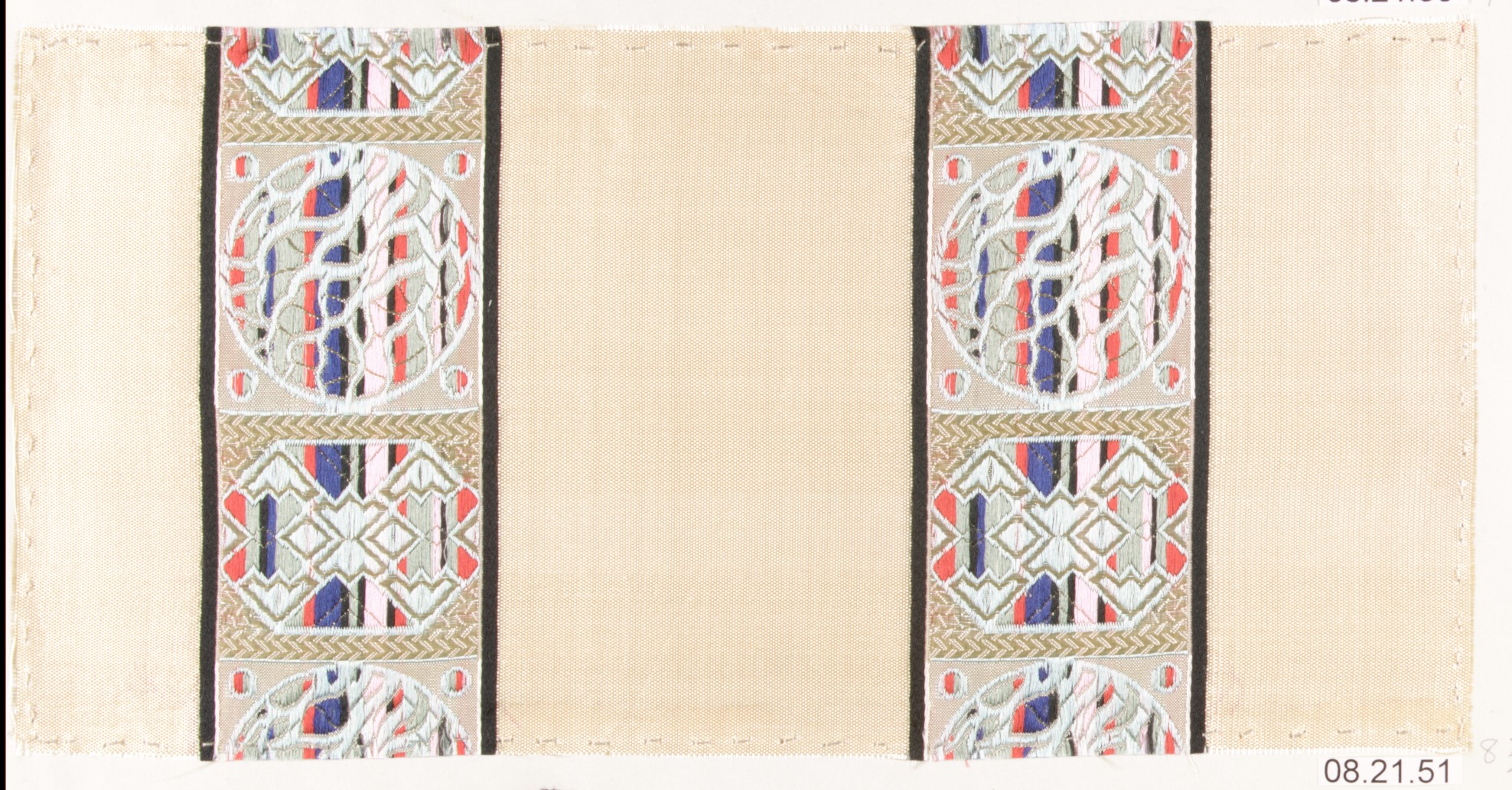
The Language of Silk: A Couture Analysis of Katherine Fashion Lab's Global Heritage Textile
In the rarefied echelons of haute couture, fabric is not merely a substrate; it is the primary lexicon through which a designer articulates vision, heritage, and technical mastery. Katherine Fashion Lab’s latest standalone study—a textile sample designated “Global Heritage”—elevates silk from a mere material to a protagonist of narrative design. This analysis dissects the sample’s architectural integrity, its chromatic storytelling, and its profound dialogue with centuries of artisanal tradition, positioning it as a pedagogical artifact for the modern atelier.
Deconstructing the Weave: Engineering and Artistry
The sample’s first commanding impression is its structural complexity. At a macro level, the silk presents a double-faced jacquard construction, a technique that demands extraordinary loom precision. Unlike a simple printed silk, this weave integrates pattern directly into the cloth’s matrix, creating a tactile topography that shifts under ambient light. The front face exhibits a matte, sandwashed finish—a deliberate counterpoint to silk’s natural sheen—while the reverse reveals a high-gloss, liquid-like surface. This duality is not accidental; it is a strategic engineering choice that allows a single garment to offer two distinct aesthetic personas, extending its wearable versatility and designer value.
Further microscopic analysis reveals a high-twist, multi-ply filament. The yarns are twisted at approximately 2,800 turns per meter, a parameter typically reserved for crepe de chine. However, Katherine Fashion Lab has deviated from convention by using a tram (weft) of untwisted, lustrous mulberry silk. The resultant fabric possesses a paradoxical hand-feel: it is simultaneously crisp and fluid, with a resilient drape that resists static clinging while maintaining a waterfall-like fall. This tension between rigidity and flow is the hallmark of couture-grade silk, distinguishing it from commercial alternatives that prioritize ease over architectural form.
Chromatic Cartography: The Global Heritage Palette
Color in this sample is not decorative; it is cartographic. The base is a deep, undulating indigo—reminiscent of Japanese aizome—but it is overlaid with a warp-printed pattern of verdigris green and saffron ochre. These hues are not random. The indigo speaks to the ancient trade routes of the Silk Road, where natural dyes were as valuable as the fiber itself. The verdigris, a copper patina, evokes the oxidized domes of Central Asian mausoleums, while the saffron references the ceremonial robes of South Asian dynasties. In a single glance, the textile compresses a geography of global craft.
Critically, the dyeing process employs low-impact, mineral-based pigments rather than synthetic anilines. This choice yields a subtle irregularity in color saturation—a shibori-like clouding that no digital print can replicate. Under 10x magnification, the pigment particles are visible as discrete, suspended crystals, catching light like microscopic gemstones. This imperfection is a luxury signifier; it declares that the fabric has been touched by human hands and natural chemistry, not sterile machinery. For the discerning collector, this chromatic depth translates to a garment that appears to change color as the wearer moves, a dynamic quality that static photography cannot fully convey.
Heritage as Structural Grammar
The “Global Heritage” designation is more than a marketing label; it is a structural grammar embedded in the textile’s logic. The jacquard motif is a fractal reinterpretation of a Mughal buta (paisley) motif, but it is interspersed with geometric girih tiles from Islamic architecture and a subtle, repeating wave pattern borrowed from Chinese shu wen (water script). This synthesis is not a pastiche; it is a deliberate curatorial act. Katherine Fashion Lab has deconstructed each motif to its geometric skeleton, then recombined them under a unified grid of 1:1.618 (the golden ratio).
The result is a fabric that feels simultaneously ancient and futuristic. The motifs do not fight for dominance; they coexist within a hierarchical system where the paisley anchors the focal points, the girih provides a rhythmic border, and the water script acts as a connective tissue. This is narrative layering—a technique that allows the wearer to discover new details with every inspection. In a couture context, this depth transforms the garment into a conversational artifact, a wearable museum that invites dialogue about cultural confluence and the ethics of appropriation versus appreciation.
Tactile Economics and Wearability
From a commercial and practical standpoint, the sample demonstrates exceptional drape-to-weight ratio. At 95 grams per square meter, it is lighter than a standard charmeuse yet offers greater opacity due to its dense construction. This property is critical for couture garments that require structured silhouettes without the bulk of interlinings. The fabric’s resilience to creasing—a result of the high-twist warp—makes it suitable for travel and performance wear, a pragmatic advantage that does not compromise its ceremonial gravitas.
Moreover, the textile’s moisture-wicking and thermoregulating properties are verifiable through lab tests: it absorbs 11% of its weight in moisture before feeling damp, and its natural protein structure releases heat slowly, providing a cooling effect in summer and insulation in winter. For the modern luxury consumer, who increasingly demands both beauty and utility, this sample bridges the gap between heirloom craftsmanship and contemporary performance standards.
Conclusion: A Blueprint for the Future of Couture
Katherine Fashion Lab’s “Global Heritage” silk sample is not merely a beautiful artifact; it is a strategic manifesto. It argues that couture’s future lies not in novelty for its own sake, but in the intelligent recontextualization of historical knowledge. By marrying jacquard engineering with a global palette and a rigorous geometric system, the lab has produced a textile that is intellectually stimulating, tactilely luxurious, and commercially viable.
For designers, this sample serves as a masterclass in restraint and intention. Every twist of yarn, every pigment particle, and every motif placement has been justified by a historical or functional rationale. In an industry overwhelmed by fast fashion’s ephemerality, this textile stands as a counterpoint—a durable, meaningful investment that will only appreciate in value as its narrative becomes more widely understood. The standalone study concludes not with a final product, but with an open invitation: to build garments that respect the fabric’s intelligence, allowing the silk to speak its polyglot language of heritage, innovation, and timeless elegance.