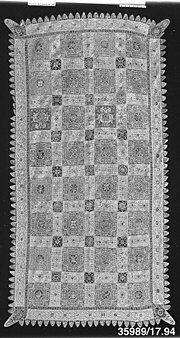
The Architecture of Air: A Couture Analysis of Katherine Fashion Lab’s “Cover”
In the rarefied echelons of haute couture, where novelty often masquerades as innovation, Katherine Fashion Lab’s standalone study, “Cover,” presents a compelling counter-narrative. This is not a garment designed for a fleeting season or a social media moment; it is a rigorous, almost academic, exploration of materiality, heritage, and the very definition of protection. By isolating the piece from a broader collection, the Lab positions “Cover” as a thesis—a singular, focused argument on the dialectic between concealment and revelation, executed through the humble yet exalted medium of linen and the painstaking art of cutwork.
The immediate visual impact of “Cover” is one of deceptive simplicity. At first glance, it reads as a monochromatic study in texture, a whisper of pale ecru against the skin. But this initial perception is swiftly dismantled by the intricate geometry of the cutwork. This is not mere decoration; it is structural storytelling. The piece functions as a modern-day chlamys or a reimagined himation, referencing the draped silhouettes of antiquity, yet its construction is profoundly contemporary. It is a garment that does not cling but rather hovers, creating a micro-architecture around the body—a personal, portable space that is both fortress and veil.
Deconstructing the Global Heritage Narrative
The “Global Heritage” origin is not a superficial nod to exoticism but a deep, material investigation into a shared human lineage of textile craft. The choice of linen is the cornerstone of this narrative. Flax, one of the oldest cultivated crops, carries within its fibers the history of civilizations from the Nile Valley to the Celtic fringes of Europe. In “Cover,” the linen is not treated as a rustic or utilitarian fabric. Instead, it is elevated to a state of almost aristocratic purity. The fabric’s natural slubs and irregularities are not flaws but rather a cartography of its organic origin, a testament to its hand-crafted, non-industrial soul.
This global perspective is further articulated through the cutwork technique. While often associated with European whitework—from the broderie anglaise of England to the punto in aria of Italy—cutwork also finds resonance in the elaborate pierced leatherwork of the Ottoman Empire and the shadow-play textiles of Southeast Asia. Katherine Fashion Lab synthesizes these disparate traditions into a singular, universal language. The cutwork here is not a pastiche; it is a dialogue. Each precisely excised aperture is a deliberate act of negative space, referencing the way light filters through a Moroccan mashrabiya screen or the intricate paper-cutting of Chinese folk art. The garment becomes a portable architectural screen, filtering the world for the wearer, offering a curated perspective on reality.
Materiality as a Philosophical Proposition
The genius of “Cover” lies in its interrogation of what a cover is meant to do. Traditionally, a cover is a shield, a barrier against the elements. Here, the Lab subverts this function. The linen, while substantial, is breathable, and the cutwork apertures create a network of ventilation that makes the garment almost weightless. The cover does not seal the body off; it invites a constant, gentle exchange with the environment. This is a philosophical proposition: protection not as isolation, but as a form of mediation.
The choice of linen is critical to this proposition. Its thermal properties—cool in summer, warm in winter—make it a naturally intelligent fiber, responsive to the body’s needs. The cutwork amplifies this intelligence. The openwork patterns create a dynamic thermal map, where the skin breathes freely where the apertures are dense, and retains warmth where the fabric is solid. This is performance wear in its truest sense, not for the stage, but for the daily performance of being. The garment is a living system, adapting and responding, a far cry from the static, sculptural forms that often dominate couture presentations.
The Standalone Study: A Focused Lens
Presenting “Cover” as a standalone study is a curatorial masterstroke. Removed from the context of a collection, the garment loses its role as a narrative component and becomes the narrative itself. This isolation forces the viewer to confront the piece on its own terms, to engage with its technical prowess and philosophical depth without the distraction of surrounding looks. It is akin to viewing a single, masterful painting in a white cube gallery, rather than as part of a salon hang. The absence of context is, paradoxically, the provision of the richest context: a focused meditation on the object.
This format also allows for a deeper appreciation of the craftsmanship. In a collection, a single garment might be glimpsed for seconds. As a standalone, the viewer can trace the path of each thread, understand the laborious process of marking, cutting, and finishing each aperture. The cutwork is not machine-stamped; it is hand-executed, with each hole meticulously bound and finished. This is a testament to the atelier’s commitment to haute standards. The precision is surgical, yet the result is organic, as if the pattern had grown naturally from the fabric. The time-based nature of the craft—the hundreds of hours required to complete the piece—becomes an intrinsic part of its value, a silent signature of the human hand.
An Artistic and Commercial Dialectic
From a strategic business perspective, “Cover” represents a fascinating dialectic between artistic expression and commercial viability. It is not a readily wearable piece for the mass market; it is a statement object for the discerning collector. However, its value extends beyond its price point. It serves as a powerful brand artifact, a tangible demonstration of the Lab’s design philosophy and technical mastery. It elevates the entire Katherine Fashion Lab brand, positioning it not just as a clothing manufacturer but as a purveyor of wearable art. The piece functions as a loss-leader in the realm of prestige, generating editorial coverage, scholarly interest, and a halo effect that enhances the desirability of the brand’s more accessible offerings.
The material choice also carries commercial wisdom. Linen, while historically significant, is increasingly prized in contemporary luxury markets for its sustainability and eco-credentials. By positioning linen at the forefront of a high-couture piece, the Lab aligns itself with the growing consumer demand for ethical and transparent fashion. The fiber’s low environmental impact—requiring significantly less water than cotton—is a silent but powerful marketing tool, appealing to a new generation of ultra-high-net-worth individuals who prioritize both beauty and responsibility.
Conclusion: A Cover That Reveals
In conclusion, Katherine Fashion Lab’s “Cover” is a masterclass in paradoxical design. It is a cover that exposes, a shield that invites, and a heritage piece that speaks a futuristic language. It is a testament to the enduring power of material and technique when guided by a rigorous intellectual vision. The standalone study format allows the garment to breathe, to communicate its complex narrative of global interconnectedness and artisanal devotion. It is not merely an article of clothing; it is an argument—a beautiful, tactile argument for the return of substance, skill, and soul in an age of fleeting digital noise. The piece does not simply cover the body; it reveals the potential of fashion to be a profound medium of human expression, a wearable philosophy that is as intellectually stimulating as it is visually breathtaking.