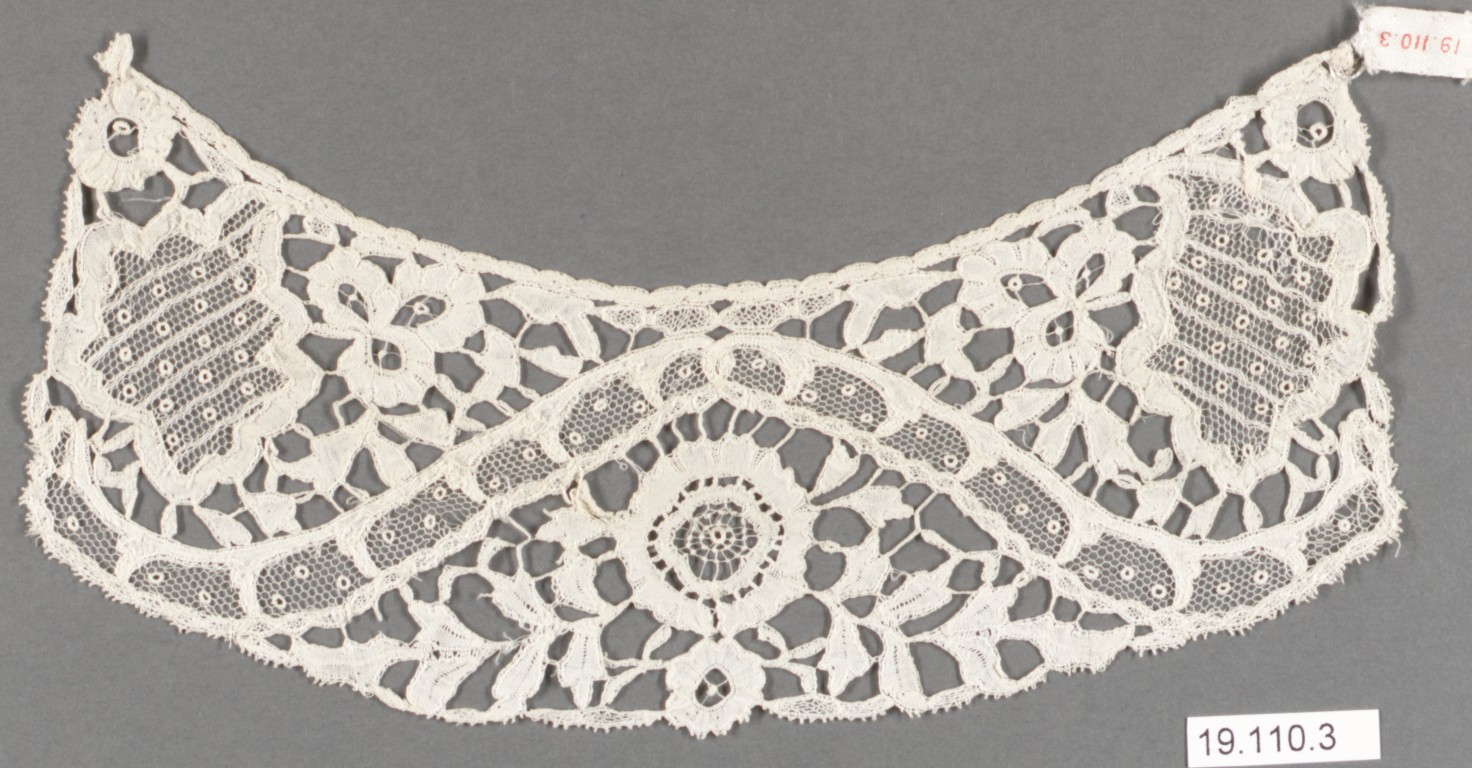
The Architectural Cuff: A Global Heritage in Bobbin Lace
Within the lexicon of couture, the cuff stands as a singular point of convergence between restraint and expression, a micro-architecture that frames the gesture. This second study in Katherine Fashion Lab's cuff series elevates the analysis from foundational form to the pinnacle of artisanal complexity: the bobbin lace cuff. Far more than mere embellishment, the bobbin lace cuff represents a profound synthesis of global heritage, mathematical precision, and narrative depth. It transforms the wrist from a functional joint into a curated gallery, where the intricate language of threads speaks of history, geography, and unparalleled human skill. As a standalone study, we dissect this object not as an accessory to a garment, but as the garment itself—a self-contained world of technique and meaning.
Deconstructing the Lattice: Bobbin Lace as Material Intelligence
Bobbin lace, or pillow lace, is not a fabric to be cut and shaped, but a structure to be built. Its creation is an exercise in four-dimensional thinking, where the interplay of dozens, sometimes hundreds, of individual threads is plotted in a continuous, real-time act of engineering. The process—pinning a pattern to a pillow and manipulating weighted bobbins in a precise, rhythmic sequence—generates a material that is inherently paradoxical: simultaneously robust and ethereal, structured and fluid. For the cuff, this material intelligence is paramount. The lace is not applied; it is the foundational architecture. Its tensile strength, density of pattern, and behavioral memory (how it holds or collapses) must be calculated to endure the dynamic environment of the wrist while maintaining its sculptural integrity. This demands from the designer not just aesthetic vision, but a masterful understanding of structural load, tension mapping, and material response—a true fusion of art and engineering.
A Tapestry of Threads: The Global Heritage Embodied
The bobbin lace cuff serves as a portable archive, its patterns encoding centuries of cross-cultural dialogue. Its origin story is a map of European trade routes and colonial exchange, yet its adoption and adaptation speak to a truly global heritage.
The Point of Origin & The Floral Conquest: The geometric precision of early Italian punto in aria ("stitch in air") reflects a Renaissance fascination with order and symmetry. In contrast, the exuberant floral motifs of Flemish Brussels and Binche lace, often incorporating delicate raised-work (relief), speak to the region's mercantile wealth and access to botanical illustrations from newly explored worlds. A cuff employing these techniques is not merely pretty; it is a display of cosmopolitan knowledge and economic power.
Adaptation & Identity: The migration of lace-making techniques reveals a narrative of cultural resilience. In Peru, Spanish lace techniques merged with pre-Columbian textile traditions, resulting in distinctive black lace or motifs incorporating local flora and symbols. Similarly, the tradition of Honiton lace in England, often used for royal wedding veils, represents a deliberate nationalization of a continental craft for economic and symbolic purposes. A contemporary cuff that consciously references or hybridizes these traditions is engaging in a dialogue about cultural flow, appropriation, and reinterpretation. It asks the wearer to consider which histories are woven into their frame.
The Couture Cuff: Autonomy and Dialogue
As a standalone study, the bobbin lace cuff is liberated from its traditional role as a subsidiary element. This autonomy forces a reevaluation of its function and impact. It becomes a wrist-bound sculpture, demanding to be appreciated on its own formal merits: the interplay of positive and negative space, the rhythm of its repeats, the topography of its textures. In a couture context, this elevates the cuff to the level of a major collection piece, around which an entire narrative or silhouette might be constructed. Its standalone nature also highlights its inherent duality: it is both complete in itself and inherently relational, designed to interact with the skin it encircles and the space it occupies.
This autonomy creates a powerful new dialogue. The cuff converses with the body's architecture—the bony prominence of the wrist, the line of the forearm, the movement of the hand. It engages with other standalone elements—a statement ring, a watch, the bare skin itself—requiring curatorial consideration from the wearer. Furthermore, in modern styling, a historically resonant lace cuff placed against minimalist tailoring or high-tech fabrics creates a potent temporal friction. It is no longer a relic, but a contemporary statement leveraging heritage as a strategic asset.
Strategic Imperatives and Future Threads
For the fashion house, the bobbin lace cuff as a standalone category presents distinct strategic opportunities. It operates as a high-margin, low-volume art object, cementing brand legacy and craftsmanship credentials. It serves as a tangible touchpoint for storytelling, connecting the brand to specific regions, artisans, and historical narratives that can be leveraged in marketing and client experiences. Moreover, it allows for rapid, low-risk experimentation; a new motif, an unexpected material hybrid (lace with titanium thread, for instance), or a radical scale can be tested in the cuff format before committing to a full collection.
The future of this heritage lies in directed innovation. Katherine Fashion Lab identifies key vectors: the digitization of heritage patterns for archival and modification purposes; sustainable sourcing and certification of threads; and collaborative partnerships with global lace-making communities that ensure ethical provenance and inject authentic, evolving narratives into the work. The ultimate challenge is to honor the slow, human-centric process of bobbin lace while positioning it as a vital, relevant, and progressive language in modern couture.
In conclusion, the bobbin lace cuff, in its exquisite complexity, is a microcosm of fashion itself. It is a meeting point of art and science, history and modernity, constraint and flamboyance. This study positions it not as an ornamental afterthought, but as a primary vehicle for cultural intelligence and avant-garde expression. It reminds us that in couture, the smallest canvas can often bear the greatest weight of meaning.