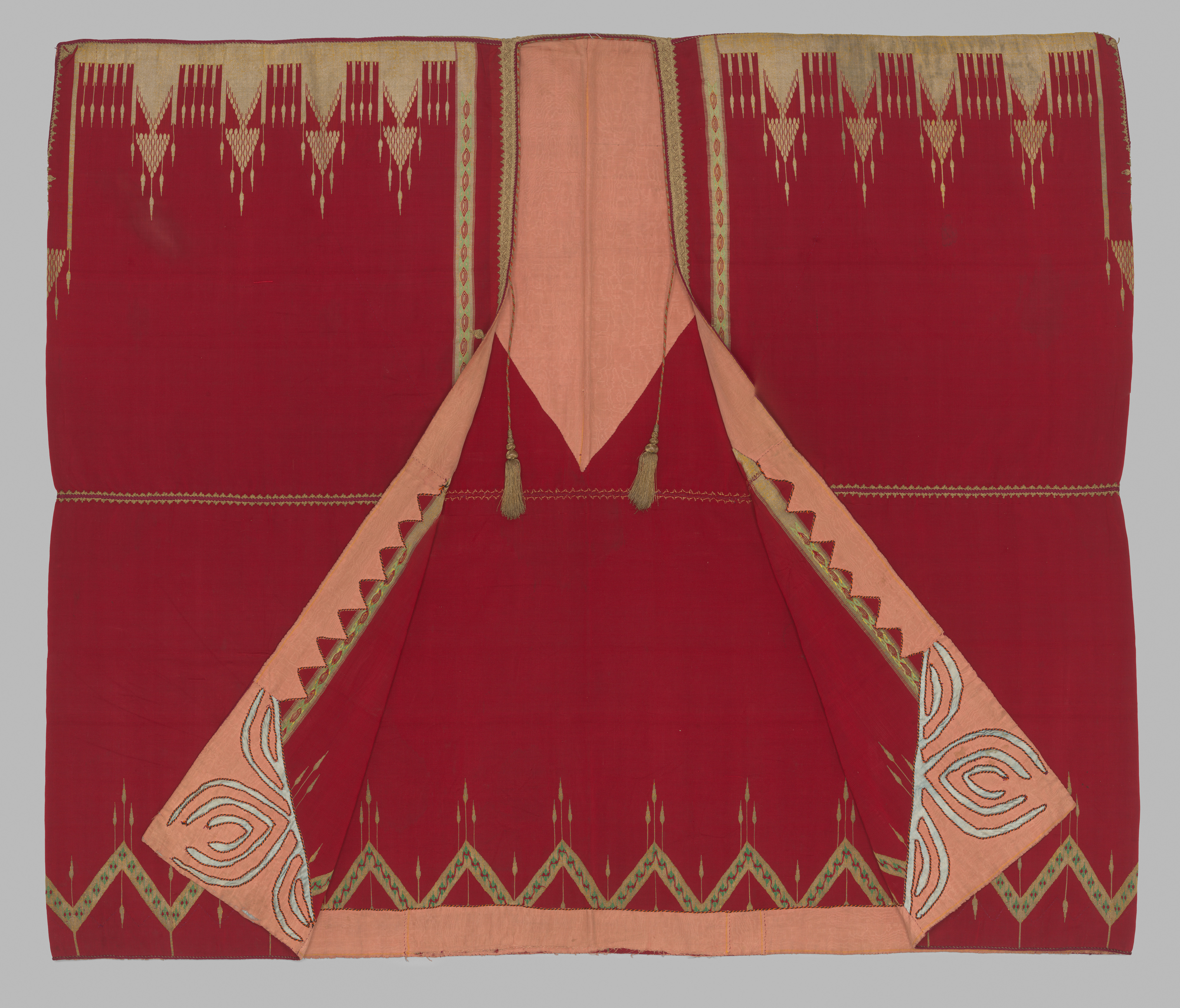
The Abaya Cloak: A Heritage Analysis for Katherine Fashion Lab
The abaya, often perceived in contemporary Western discourse as a monolithic garment of modesty, is in fact a profound artifact of ancient civilization—a living textile chronicle that encodes millennia of cultural intelligence, spiritual philosophy, and artisanal mastery. For Katherine Fashion Lab, the abaya is not merely a product category; it is a strategic heritage asset. This analysis deconstructs the abaya’s symbolic power, its historical adornment techniques, its spiritual resonance, and translates these findings into a 2026 high-end luxury strategy that commands authority in the global market.
Symbolic Power: The Architecture of Dignity
In its earliest iterations, the abaya was not a tool of concealment but a declaration of sovereign presence. Archaeological and textual evidence from ancient Mesopotamian and Levantine civilizations—circa 2000 BCE—depicts draped rectangular cloaks worn by priestesses and ruling elites. These garments were engineered to amplify the wearer’s physical and metaphysical stature. The abaya’s volumetric silhouette, its controlled fall, and its enveloping structure created a moving architecture that demanded spatial deference. This is the core of its symbolic power: the abaya transforms the wearer into a monument of self-possession.
For Katherine Fashion Lab, this historical fact repositions the abaya from a garment of negation to one of assertion. In 2026, the luxury consumer does not purchase modesty; they purchase presence. The Lab’s design language must therefore emphasize structured shoulders, elongated lines, and a deliberate, sculptural volume that echoes ancient ceremonial cloaks. The abaya becomes a wearable statement of unassailable identity—a strategic counterpoint to fast-fashion’s disposable informality.
Historical Adornment: The Textile Lexicon of Power
The materials and weaves specified—silk, cotton, metal-wrapped thread, slit-tapestry weave, plain weave, moiré, satin weave, and embroidery—are not arbitrary choices. Each represents a historical technology of prestige, and their combination constitutes a sophisticated textile lexicon.
Silk and Metal-Wrapped Thread: The Wealth Code
Silk, introduced via the trans-Asiatic trade routes, signified access to distant empires. Metal-wrapped thread—gold or silver gilded around a silk core—was the ancient world’s ultimate signifier of divine and temporal wealth. In a heritage context, these materials were reserved for the highest echelons of society. Katherine Fashion Lab must treat these not as decorative accents but as foundational investments. A 2026 luxury abaya should feature metal-wrapped thread in the structural seams, not merely in surface embroidery, making the garment’s intrinsic value visible to the discerning eye.
Slit-Tapestry Weave and Moiré: The Artisan’s Signature
Slit-tapestry weave, a technique perfected in Coptic Egypt and later refined across the Islamic world, allows for sharp, graphic color transitions without visible seams—a testament to the weaver’s mathematical precision. Moiré, achieved through a double-layer weave that creates a watery, rippling effect, was historically used to evoke the movement of sacred rivers or the shimmer of mirages. These techniques are anti-mass-production; they cannot be replicated by high-speed looms. For Katherine Fashion Lab, these weaves are the ultimate differentiator in a market saturated with printed imitations. The 2026 strategy must foreground these techniques as certified artisan processes, with each garment issued a provenance card detailing the weaver’s lineage and the hours of labor.
Plain Weave and Satin: The Dialectics of Texture
The juxtaposition of plain weave (matte, utilitarian, grounded) with satin weave (glossy, fluid, celestial) creates a tactile dialogue. Historically, this pairing symbolized the union of earthly humility and divine radiance. In a luxury context, this textural contrast offers a sophisticated sensory experience—one that cannot be conveyed through e-commerce imagery alone. Katherine Fashion Lab should leverage this by hosting private tactile salons in 2026, where clients are invited to touch the differential surfaces, thereby converting a historical dialectic into a contemporary brand ritual.
Embroidery: The Narrative Cartography
Embroidery on ancient cloaks was never merely decorative; it was a form of written language. Geometric motifs encoded tribal affiliations, astrological knowledge, and protective invocations. For the Lab, embroidery must be repositioned as narrative cartography. The 2026 collection should feature bespoke embroidery programs where each client’s garment is inscribed with a personal or familial symbol—a modern heraldry. This transforms the abaya from a ready-to-wear item into a heirloom artifact with emotional and historical depth.
Spiritual Meaning: The Garment as a Threshold
Across ancient civilizations, the abaya’s precursor functioned as a threshold garment—worn during rites of passage, spiritual retreats, and transitional states. It was not about hiding the body but about shielding the soul from external dispersion. The act of donning the abaya was a deliberate severance from the mundane, a preparation for a higher state of being. This spiritual technology is the garment’s most enduring value.
In the high-anxiety context of 2026, with pervasive digital surveillance and social fragmentation, the abaya offers a rare commodity: psychic sovereignty. Katherine Fashion Lab must market this not as a religious obligation but as a universal practice of inner focus. The brand’s communication strategy should frame the abaya as a "chamber for the self"—a garment that creates an acoustic and visual boundary, allowing the wearer to reclaim agency over their attention and presence. This narrative elevates the product beyond fashion into the realm of wellness and self-mastery, aligning perfectly with the luxury market’s pivot toward holistic well-being.
2026 High-End Luxury Strategy: From Artifact to Authority
To translate this heritage into commercial dominance, Katherine Fashion Lab must adopt a five-pillar strategy:
Pillar One: Heritage Provenance as Certification
Every abaya will include a digital and physical provenance ledger, tracing its specific weave, dye, and embroidery motifs to historical precedents. This is not a marketing gimmick but a legal-grade certification system, making the garment a collectible asset akin to fine art. In 2026, the luxury buyer is an investor; the Lab must provide an asset with documented lineage and resale value.
Pillar Two: The "Sovereign Silhouette" Design Doctrine
The design team will adhere to a strict doctrine: no silhouette under 120cm in length, no fabric weight under 200gsm, and no closure that compromises the garment’s architectural fall. This doctrine ensures that each piece physically manifests the symbolic power of ancient cloaks, differentiating the Lab from competitors who prioritize skin exposure over spatial impact.
Pillar Three: The "Threshold" Atelier Experience
Flagship stores will be redesigned as "threshold spaces"—quiet, dimly lit, acoustically isolated chambers where clients undergo a private consultation on their spiritual and aesthetic needs before the garment is unveiled. This ritualizes the purchase, aligning with the abaya’s historical role as a transitional object.
Pillar Four: Artisan Equity Program
Katherine Fashion Lab will publicly commit to a profit-share model with master weavers, with a minimum 15% of each garment’s retail price returning to the artisan collective. This is not corporate social responsibility; it is a scarcity strategy. By making the artisan a stakeholder, the Lab secures exclusive access to the world’s remaining slit-tapestry and moiré masters, creating a supply barrier that competitors cannot breach.
Pillar Five: The "Heirloom" Subscription
For 2026, the Lab will launch a limited "Heirloom" tier—only 200 pieces globally—where clients commission a bespoke abaya with embedded personal narratives (family crests, astrological charts, or spiritual invocations) using metal-wrapped thread. Each piece requires six months of production and is delivered with a private archival ceremony. This creates extreme scarcity, high emotional attachment, and a waiting list that functions as a powerful marketing engine.
Conclusion: The Abaya as a Strategic Imperative
The abaya is not a relic; it is a repository of strategic knowledge. Its ancient symbolic power speaks to the enduring human need for presence. Its historical adornment techniques offer unassailable artisanal authenticity. Its spiritual meaning provides a profound answer to contemporary fragmentation. For Katherine Fashion Lab, the 2026 strategy is clear: treat the abaya not as a garment to be modernized, but as a civilizational technology to be honored and reissued. By doing so, the Lab positions itself not as a fashion house, but as the custodian of a wearable heritage—an authority that no fast-fashion or conventional luxury competitor can replicate. The abaya, in the Lab’s hands, becomes the ultimate luxury: a piece of history that is also a piece of the future.