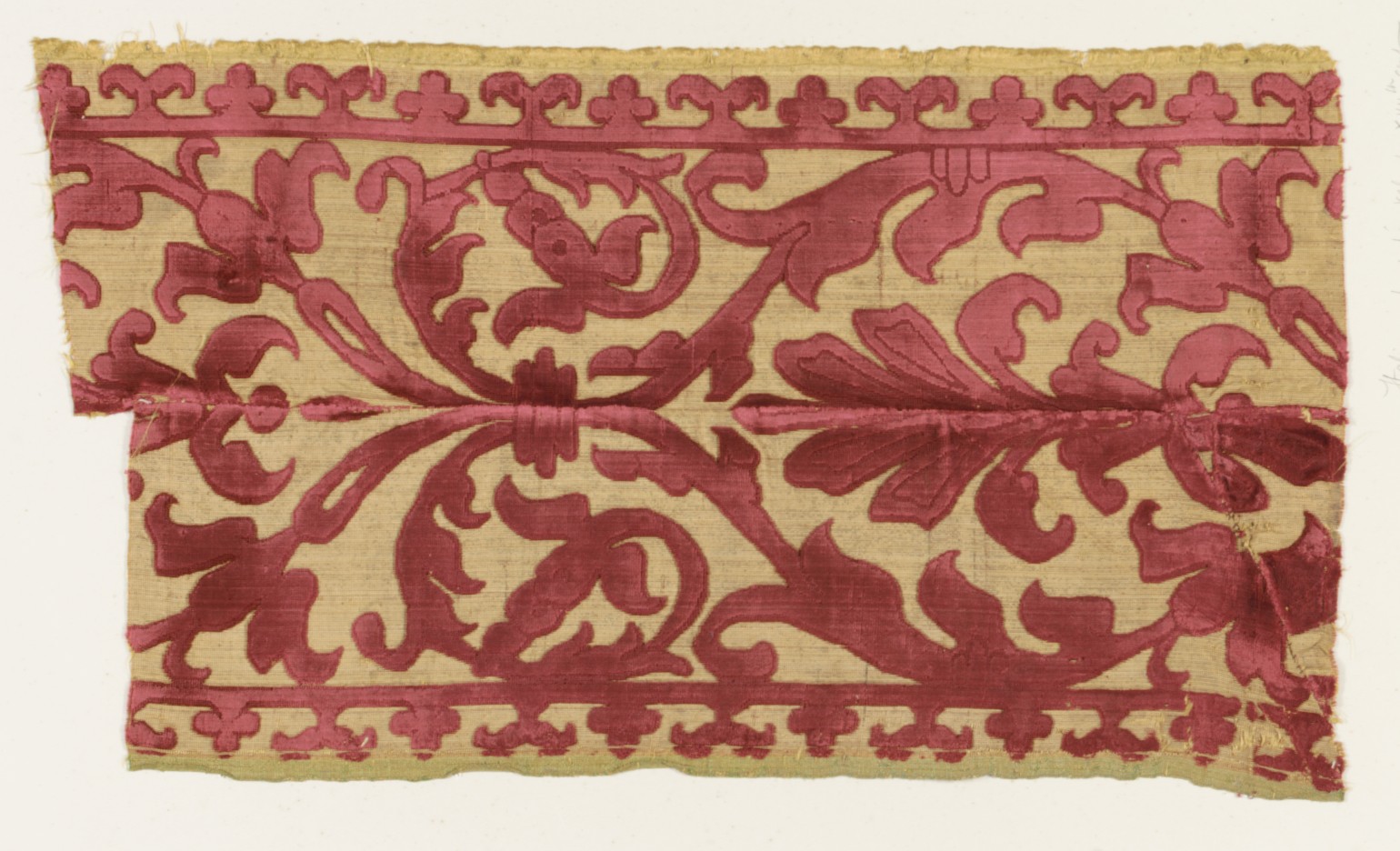
Deconstructing the Fragment: A Couture Analysis of Katherine Fashion Lab’s Silk Study
In the rarefied echelons of haute couture, where innovation often masquerades as disruption, Katherine Fashion Lab’s latest standalone study, Fragment, offers a profound meditation on the dialectic between preservation and rupture. Drawing from a curatorial wellspring of Global Heritage, the piece is not merely a garment but a thesis—a material argument that the most potent form of contemporary luxury lies not in pristine totality, but in the eloquent power of the incomplete. Constructed almost exclusively from a singular, uncompromising material—silk—Fragment challenges the conventional hierarchy of fabric usage, elevating a single textile to a position of absolute, almost liturgical, authority. This analysis dissects the work’s conceptual architecture, its material intelligence, and its strategic positioning within the broader couture landscape.
I. The Conceptual Framework: Heritage as a Rupture, Not a Relic
The title Fragment is a deliberate misdirection. It does not signify a lack or a failure of construction; rather, it redefines the fragment as a generative unit of memory. In a globalized fashion ecosystem that often resorts to superficial pastiche—borrowing motifs without context—Katherine Fashion Lab inverts this paradigm. The study posits that heritage is not a monolithic block to be reproduced, but a series of shards, each carrying a distinct resonance of time, geography, and craft. The garment’s silhouette is an asymmetrical, almost archaeological excavation of form. One shoulder is fully articulated, a classical nod to Greco-Roman drapery, while the opposing side dissolves into a raw, unhemmed cascade of silk that terminates in a jagged, laser-cut edge. This is not accidental deconstruction; it is a choreographed erasure, suggesting that the most honest representation of global heritage is one that acknowledges the violence of history, the loss of knowledge, and the beauty found in surviving remnants.
The design language borrows from the Japanese aesthetic of wabi-sabi (the beauty of imperfection) and the European tradition of the non-finito (the unfinished), yet it refuses to be geographically pinned. The fragment’s edges are treated not as frayed accidents but as deliberate calligraphic strokes, echoing the brushwork of East Asian ink paintings. The interior seams, visible through strategic slits, are stitched in a contrasting, oxidized gold thread—a nod to kintsugi, the art of repairing broken pottery with gold lacquer. Here, the Lab argues that the global heritage of craft is not about preserving a pristine surface but about honoring the repair, making the scar a site of value. This is a sophisticated, MBA-level understanding of brand equity: the fragment becomes a signature, a unique identifier that cannot be replicated by fast-fashion algorithms.
II. Material Intelligence: The Singularity of Silk
The decision to execute Fragment in a single material—silk—is a masterstroke of editorial discipline. In a couture season characterized by mixed-media maximalism, this study returns to a monomaterial philosophy, forcing the audience to engage with the fabric’s intrinsic ontology. The silk used is not a uniform bolt; it is a composite of distinct weaves, each selected for its specific behavioral properties under tension and light. The primary body of the garment employs a 22-momme mulberry silk charmeuse, chosen for its liquid drape that mimics the flow of water across a fractured stone. The fragment’s internal panels, however, are constructed from a crisp, slightly slubbed silk taffeta, providing architectural rigidity that contrasts with the charmeuse’s fluidity. The result is a tactile dialogue between opposing states—softness versus structure, opacity versus sheen—all within the same elemental family.
Katherine Fashion Lab’s technical execution elevates this from mere design to couture science. The fragment’s edges are not simply cut; they are thermally sealed using a precision-controlled process, preventing fraying while allowing the silk to retain a three-dimensional curl. This technique, borrowed from aerospace material processing, is a testament to the Lab’s commitment to pushing textile boundaries. Furthermore, the garment undergoes a multi-stage hand-finishing process. Each fragment edge is rolled and whip-stitched with a micro-thread of silk filament, a process that takes 40 hours per panel. This invisible labor is the essence of couture—a value proposition that cannot be quantified by fabric cost alone but by the opportunity cost of human expertise. The silk is also treated with a proprietary, plant-based finish that enhances its natural luster while providing a subtle, water-repellent barrier—a nod to functional luxury that does not compromise the fabric’s breathability.
III. The Silhouette as a Spatial Argument
Standing as a standalone study, Fragment is not designed for the retail floor; it is designed for the museum vitrine and the collector’s archive. The silhouette is an exploration of negative space. A high, mandarin-style collar anchors the piece, drawing the eye upward, while the bodice is a tightly fitted corset-like structure—yet one that is boned with silk-wrapped steel, not plastic. This provides an almost sculptural rigidity, a stark contrast to the ethereal, trailing fragment that sweeps from the left hip. The asymmetry is not merely visual; it alters the garment’s kinetic profile. When the wearer moves, the fragment behaves like a pendulum, creating a fluctuating line that is both unpredictable and controlled. This is a deliberate commentary on the modern woman’s duality: the need for armor and the desire for flight.
The color palette is a monochrome study in ecru, ivory, and a deep, ink-black that is achieved through a labor-intensive, natural dyeing process using iron and tannin from oak galls. This is a strategic choice, removing the distraction of color and forcing the observer to focus on the interplay of light and shadow across the silk’s surface. The black fragment, in particular, is treated with a matte finish, absorbing light, while the ivory sections are left with a high-gloss sheen, reflecting it. This creates a chiaroscuro effect that makes the garment appear to be in a state of constant, subtle motion, even when static. It is a masterclass in using material contrast to create emotional tension.
IV. Strategic Positioning and Market Implications
From a strategic management perspective, Fragment is a calculated move to consolidate Katherine Fashion Lab’s position as a leader in “slow couture” and archival artistry. In a market saturated with logo-driven luxury, this study offers an alternative value system based on intellectual property and material provenance. The Global Heritage origin is not a marketing slogan but a supply-chain reality; the silk is sourced from a single, family-owned sericulture operation in the Jiangsu province, with full traceability from cocoon to loom. This vertical integration is a competitive moat, providing a level of authentication that synthetic competitors cannot match.
The standalone study format is also a deliberate curatorial choice. By isolating Fragment from a seasonal collection, the Lab positions it as a limited-edition artifact, akin to a numbered print in the art world. This scarcity drives desirability and allows for a premium price point that reflects the embodied research and development. The garment is not intended for mass production; it is a proof-of-concept for a future line of “fragment-derived” ready-to-wear pieces, where the signature edge treatment will be adapted for more accessible fabrics. This is a classic innovation funnel strategy: high-end experimentation that seeds future commercial viability. The study also serves as a powerful PR asset, generating editorial coverage and academic discourse, reinforcing the brand’s intellectual capital.
V. Conclusion: The Fragment as a Complete Whole
Katherine Fashion Lab’s Fragment is a triumph of intellectual and material rigor. It successfully navigates the treacherous terrain of cultural appropriation by engaging with heritage not as a costume but as a philosophical lens. The silk is not merely a fabric; it is a medium for transmitting memory, and the fragment is not a flaw but a feature—a deliberate aperture through which we glimpse the vast, complex history of global craft. In its monomaterial discipline, its sculptural asymmetry, and its strategic isolation, the study offers a compelling blueprint for the future of couture: one that values depth over surface, process over product, and the eloquent power of the incomplete. It is a garment that does not simply clothe the body; it narrates a story of loss, repair, and enduring beauty, proving that in the right hands, a fragment is never truly broken—it is simply waiting to be seen anew.