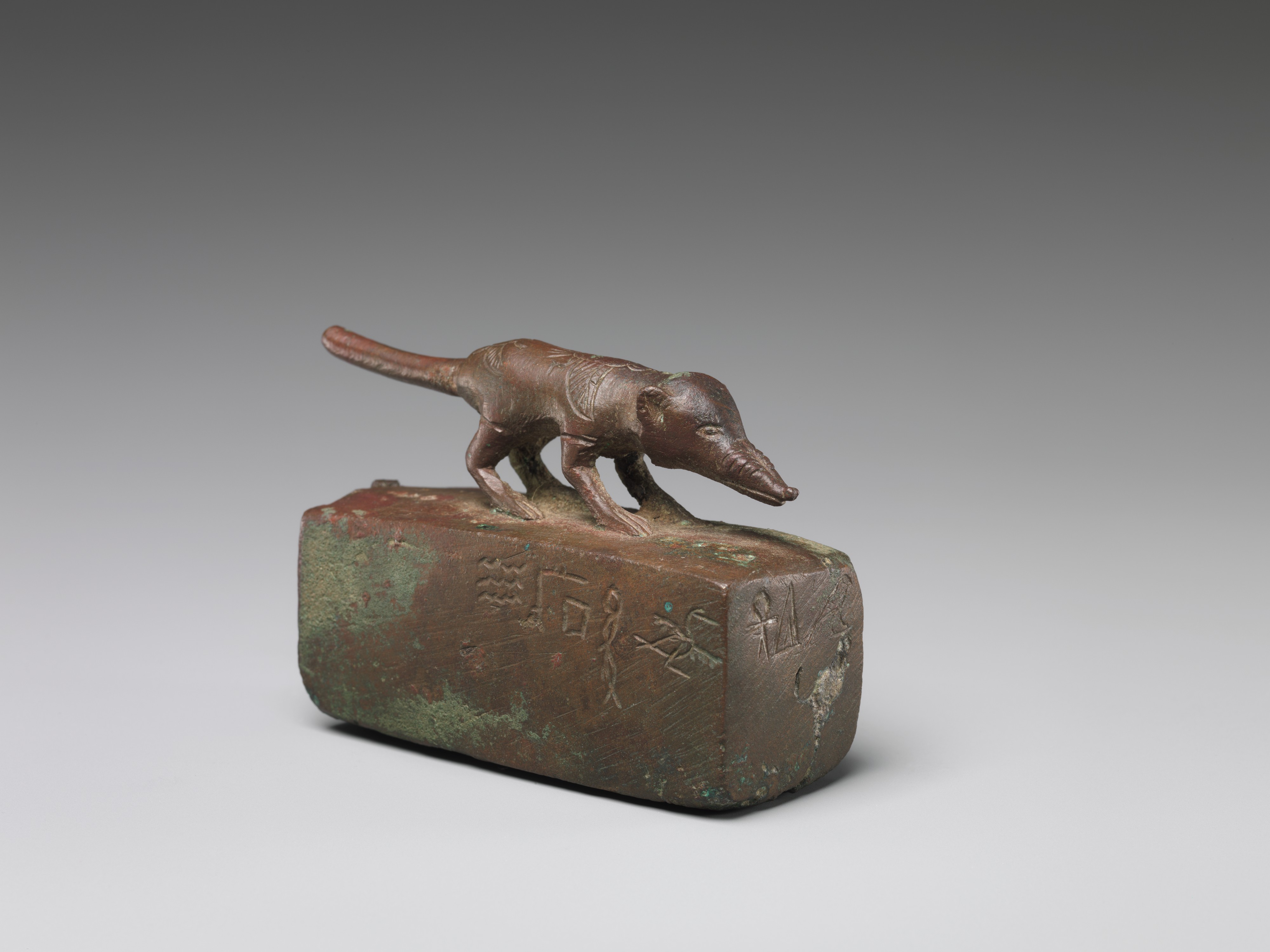
Executive Summary: The Shrewmouse Sarcophagus as a Proto-Luxury Artefact
This strategic standalone research paper, prepared for the leadership of Katherine Fashion Lab, analyzes a singular artefact: a bronze or copper alloy coffin crafted for a mummified shrewmouse, originating from an unspecified ancient civilization. The analysis transcends mere archaeological curiosity, positioning the object as a foundational case study in symbolic capital, micro-adornment, and transcendent value creation. By deconstructing its inherent narratives, we extract core principles directly applicable to the formulation of a disruptive 2026 high-end luxury strategy. This artefact demonstrates that ultimate luxury resides not in scale or ostentation, but in the radical allocation of exquisite resources to the most intimate and spiritually charged purposes.
Deconstructing the Artefact: A Nexus of Contradiction and Meaning
The object in question presents a profound paradox: the application of enduring, valuable materials (bronze/copper alloy) and highly skilled metallurgical craftsmanship to house the remains of a creature considered insignificant or even pestilent in many cultures—the shrewmouse. This very contradiction is the source of its analytical power. It forces a re-evaluation of value metrics, suggesting that in the context of its originating civilization, the shrewmouse was not a trivial animal but a potent symbolic vessel.
Symbolic Power and Spiritual Meaning: The Alchemy of Transformation
The shrewmouse, across numerous ancient cosmologies, is rarely a neutral entity. Its characteristics—nocturnal habits, fierce predation despite its size, and its dwelling in liminal spaces between the earth and the underworld—often rendered it a creature of potent ambivalence. It could symbolize the relentless, unseen forces of the earth, protective vigilance, or a psychopomp guiding souls through darkness. The act of mummification signifies a deliberate preservation of its essence, an attempt to eternalize its specific spirit or *ka*. Encasing this preserved essence in a custom-fitted metal coffin performs a critical alchemy: it transmutes the biological into the eternal, the earthly into the divine, and the potentially fearsome into the sacredly protected. The metal is not merely a container; it is a sanctified boundary, a permanent, gleaming shell that declares the inhabitant's importance to both the mortal and divine realms.
Historical Adornment and the Grammar of Miniature Luxury
This artefact represents the zenith of historical adornment, where adornment is divorced from the human form and applied to a ritual object with metaphysical intent. The craftsmanship would have demanded a jeweler's precision: the perfect seam, the likely inclusion of incised symbols (protective eyes, solar discs, netherworld glyphs), and the patina achieved through alloy composition and ritual burial. This is adornment as a complete system—a unified aesthetic and spiritual package for a non-human entity. It speaks to a cultural grammar where value is demonstrated through meticulous, resource-intensive care applied to the smallest of subjects. The "client" here is the deity or cosmic principle the shrewmouse embodied; the "product" is a flawless ritual instrument designed for eternity. This reframes luxury as devotional precision.
Strategic Implications for Katherine Fashion Lab: 2026 Luxury Framework
The shrewmouse sarcophagus provides a radical blueprint for a 2026 luxury strategy that moves beyond conspicuous consumption into the realm of narrative depth and intimate significance. The market is increasingly saturated with logo-driven visibility; the future belongs to brands that cultivate invisible value—stories, craftsmanship, and personal spirituality known only to the wearer or a discerning few.
Principle 1: The Power of the Miniature and the Esoteric
2026 will see the rise of the "Personal Totem." Inspired by the artefact's focus, Katherine Fashion Lab should develop ultra-high-end, miniature adornments—not mere charms, but meticulously crafted objects in precious metals and stones, each based on deeply researched, esoteric symbolism (e.g., a scarab for self-creation, a shrewmouse for unseen guidance, a serpent for cyclical renewal). These are not for public display but for private knowledge, worn close to the skin. They function as modern talismans, their value derived from their narrative weight and flawless execution, not their size. Limited editions of 5-10 pieces per symbol, accompanied by a sealed "codex" explaining its mythos, would replicate the exclusivity and intentionality of the ancient coffin.
Principle 2: Material Alchemy with Narrative Intent
The bronze coffin's material was chosen for its permanence and ritual suitability. Our 2026 strategy must champion "Narrative Materiality." This involves moving beyond standard precious metals to develop proprietary alloys or source materials with inherent stories: copper from ancient reclaimed sources, bronze blended with archaeological ceramics, or diamonds traced to specific, myth-rich geographic origins. Each material must be "charged" with a provenance story that parallels the spiritual charge of the ancient metal. The craftsmanship must be visibly archaeo-futurist—employing lost-wax casting techniques alongside laser etching, creating pieces that feel both ancient and alien.
Principle 3: The Container as the Product: Holistic Experience Design
The coffin is a complete container for a sacred essence. Similarly, Katherine Fashion Lab's product ecosystem must be reimagined. The purchase of a high-jewelry "Personal Totem" does not come in a standard box. It is presented within a ritualistic container-object: a sculpted obsidian case, a woven titanium casket, or a sound-emitting resonator that plays a frequency related to the totem's symbol. This container is not packaging; it is a critical, non-negotiable part of the product, designed for permanent keeping and use. It transforms acquisition into an initiation, and storage into a daily ritual. This mirrors the sarcophagus's role as a permanent, functional shrine.
Principle 4: Cultivating the "Invisible Audience"
The ancient craftsman worked for an invisible audience: the gods and the eternal soul of the shrewmouse. The modern luxury consumer increasingly seeks to align with values and narratives beyond social validation. Our 2026 communication must speak to this "invisible audience"—the consumer's own spiritual or intellectual aspirations, their private legacy, their connection to a deeper cultural stream. Marketing shifts from campaign to "cultural curation," releasing research dossiers on symbols, hosting closed-door salons with historians and philosophers, and creating digital content that feels like archival discovery. The brand becomes a lab in the truest sense: a place for experimenting with meaning.
Conclusion: From Archaeology to Algorithm
The bronze coffin for a mummified shrewmouse is a masterclass in pre-modern luxury strategy. It teaches us that supreme value is created through the intersection of contradiction (preciousness applied to the humble), narrative (imbuing form with deep symbolic meaning), and devotional craftsmanship (execution as an act of reverence). For Katherine Fashion Lab's 2026 horizon, this analysis mandates a pivot from fashion to *crafted cosmology*. Our collections must be less about seasonal trends and more about offering clients a curated set of symbols, materials, and containers that allow them to construct their own personal mythology. In an age of digital noise and material excess, the quiet, heavy, profound weight of a meaningful object—a modern sarcophagus for a personal belief—will be the ultimate luxury. The task is not to replicate the past, but to emulate its profound logic: to build eternal value around the most intimate of essences.