The Art of Insertion: A Couture Analysis of Katherine Fashion Lab
In the rarefied echelons of haute couture, where innovation must converse fluently with tradition, Katherine Fashion Lab’s standalone study on “Insertion” emerges as a masterclass in architectural delicacy. This is not merely a garment; it is a thesis on negative space, a meditation on the seam as a site of creation rather than closure. By juxtaposing the fluid opulence of silk against the geometric rigidity of bobbin lace, the Lab has engineered a piece that transcends seasonal trends, positioning itself as a pivotal commentary on the evolving language of luxury.
Deconstructing Insertion: The Conceptual Framework
The term “insertion” in this context is a deliberate double entendre. On one hand, it refers to the technical couture technique of inserting panels of lace into silk to create a seamless interplay of transparency and opacity. On the other, it speaks to a philosophical insertion—the act of embedding a global heritage narrative into a contemporary silhouette. The garment does not merely display these materials; it interrogates them. The silk, sourced from a heritage mill in Como, is a heavy, liquid charmeuse that drapes with a gravitational pull, while the bobbin lace, handcrafted in the Flemish tradition, provides a stark, tactile counterpoint. This is not an appliqué; it is a structural fusion where each material is co-dependent, neither dominating the other but rather existing in a state of tense, elegant equilibrium.
The study’s genius lies in its refusal to hide its construction. Where traditional couture seeks seamless perfection, Katherine Fashion Lab exposes the insertion points as deliberate, almost calligraphic strokes. The seams are not finished; they are frayed at the edges with surgical precision, suggesting a deconstruction that is both intellectual and visceral. This is a garment that asks to be read, not just worn. It challenges the wearer to consider the labor, the geography, and the history embedded within each stitch.
Materiality as Narrative: Silk’s Fluid Memory
The choice of silk is far from arbitrary. In this standalone study, silk acts as the canvas of memory—a material that remembers every fold, every drape, every body that has ever worn it. The Lab has selected a duchesse satin for its structural base, providing a firm yet yielding foundation, and a chiffon for the floating overlays that catch light like water. This duality within a single fiber family is crucial. The heavier silk grounds the silhouette, offering a sense of permanence, while the lighter layers introduce an ethereal, almost ghostly quality. This is not the shiny, ostentatious silk of red-carpet clichés; it is a matte, almost pearlescent finish that absorbs rather than reflects, inviting closer inspection.
Moreover, the silk’s color palette is a study in restraint: a palette of ivory, bone, and a whisper of pale champagne. This chromatic austerity allows the material’s texture to take center stage. The fabric is not printed or dyed into submission; it is allowed to speak its own language of weave and weight. In an era of digital prints and synthetic shine, Katherine Fashion Lab’s insistence on the purity of silk is a radical, quiet act of rebellion. It reminds us that true luxury is not loud; it is profound.
Bobbin Lace: The Geometry of Heritage
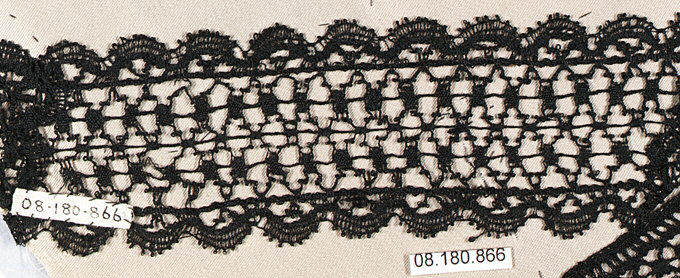
If silk is the fluid subconscious of the piece, bobbin lace is its conscious intellect. Bobbin lace, a craft that peaked in 16th-century Europe, is a testament to human patience and precision. Unlike needle lace, which is built stitch by stitch, bobbin lace is woven by twisting and braiding multiple threads, held taut by weighted bobbins. The result is a fabric of extraordinary geometric complexity—a web of openwork, picots, and cordonnet outlines that feels almost architectural. Katherine Fashion Lab has sourced this lace from a workshop in Bruges, where artisans still practice the craft with bobbins carved from boxwood, a heritage technique passed down through generations.
In this study, the lace is not used as a decorative trim. It is inserted as structural panels, running vertically along the torso and horizontally across the hips, creating a corset-like effect without the rigidity of boning. The lace’s openwork allows glimpses of skin, but it does so with a sense of modesty and control, not exhibitionism. It is a study in the erotics of concealment. The contrast between the lace’s hard-edged geometry and the silk’s soft, yielding drape creates a dynamic tension that animates the garment with every movement. The wearer becomes a living sculpture, with the lace acting as a lattice through which the body’s kinetic energy filters.
Contextualizing the Standalone Study
Placing this piece within the broader context of Katherine Fashion Lab’s oeuvre, “Insertion” represents a significant departure from the brand’s earlier, more overtly theatrical collections. Here, the drama is internalized. The garment’s power lies not in its volume or ornamentation but in its micro-details and the precision of its negative space. This is a design for the connoisseur, for the individual who understands that true couture is a private dialogue between maker, material, and wearer.
Furthermore, the standalone nature of this study is a curatorial decision. By isolating the garment from a larger collection, the Lab forces the viewer to confront it on its own terms. There is no distraction of a runway narrative or a thematic backstory. The piece must stand or fall on the strength of its construction and the coherence of its material dialogue. It succeeds. The insertion technique, here explored as a primary motif, suggests a new direction for the Lab—a move towards a more architectural, almost brutalist approach to softness. It is a paradox that only the most skilled couturiers can navigate.
Technical Mastery and Future Implications
From a technical standpoint, the execution is flawless. The insertion of lace into silk requires a double-needle technique with a stabilizer that is later dissolved, ensuring that the fabrics sit flush against each other without puckering. The hem is a rolled edge, worked by hand, that takes over 40 hours to complete. The internal structure uses a horsehair braid to support the lace panels, preventing them from collapsing under the weight of the silk. These are not visible to the casual observer, but they are the bedrock of the garment’s integrity. This is couture in its truest sense—a discipline where the invisible is as important as the visible.
In conclusion, Katherine Fashion Lab’s “Insertion” is not merely a garment but a scholarly artifact. It successfully bridges the chasm between global heritage and contemporary innovation, proving that tradition is not a constraint but a launchpad for radical creativity. The silk and bobbin lace are not just materials; they are characters in a narrative of cultural exchange. This standalone study will undoubtedly influence future collections, not in its literal form, but in its philosophical approach to material honesty and constructional transparency. It is a quiet, powerful statement that in the rush towards the new, we must not forget the profound eloquence of the old, reimagined with a modern, fearless hand.