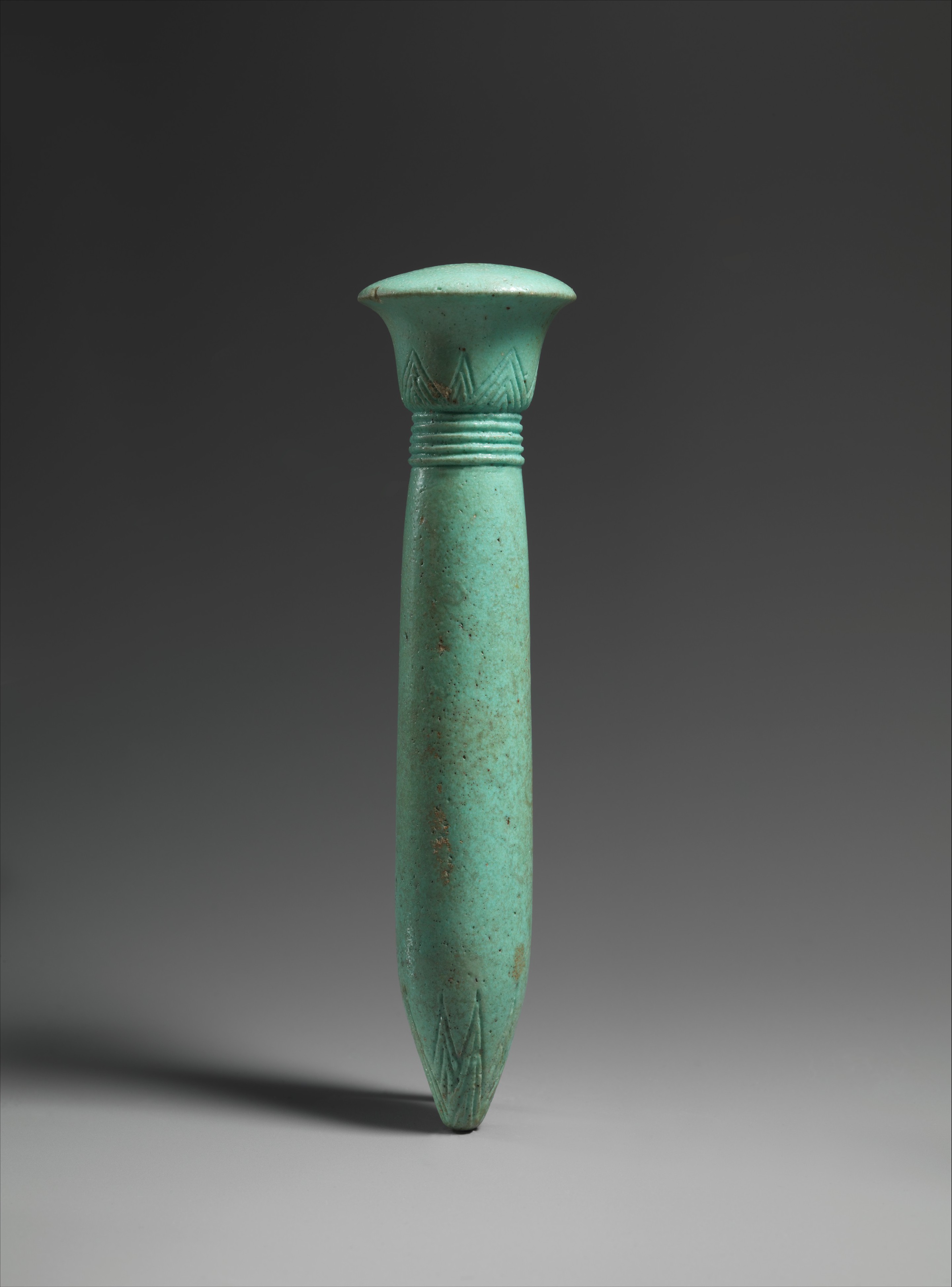
Executive Heritage Analysis: The Papyrus Column Amulet
This strategic standalone research paper examines the papyrus column amulet, a seminal artifact of ancient Egyptian material culture, through the dual lenses of historical significance and contemporary luxury application. For Katherine Fashion Lab, this analysis serves as a foundational document for potential integration into a 2026 high-end collection, where heritage is not merely referenced but recontextualized with intellectual rigor. The papyrus column, known as the wadj amulet, represents a convergence of botanical symbolism, dynastic power, and metaphysical protection that offers a compelling narrative architecture for modern adornment.
Symbolic Power and the Language of Eternal Renewal
The papyrus column amulet derives its symbolic potency from the plant it represents—the papyrus sedge, which flourished along the Nile’s banks and became a metonym for Lower Egypt itself. In ancient cosmology, the papyrus was not a passive botanical motif but an active agent of regeneration. The amulet’s form, typically a stylized column with a flared capital, encodes the concept of perpetual verdancy—the idea that life, like the plant, can be reborn from the waters of chaos. This symbolism was operationalized in funerary contexts: the wadj amulet was placed upon the deceased’s throat to ensure a verdant, untainted rebirth in the afterlife. The color of the faience, a luminous blue-green, was itself a simulacrum of the Nile’s life-giving water and the regenerative hues of new growth. For Katherine Fashion Lab, this offers a potent semiotic layer: the amulet is not merely a decorative object but a wearable declaration of resilience and cyclical renewal—values that resonate profoundly with the post-pandemic luxury consumer’s desire for meaningful, enduring possessions.
The Materiality of Faience: A Technology of Radiance
The medium of faience elevates the papyrus column from simple talisman to a sophisticated technological artifact. Ancient Egyptian faience was a composite of crushed quartz or sand, alkaline salts, and copper-based colorants, fired to produce a self-glazing surface. This process, developed over millennia, yielded a material with a vitreous sheen that mimicked precious stones like turquoise and lapis lazuli but was accessible through controlled industrial production. The faience’s intrinsic luminosity was not accidental; it was engineered to capture and reflect sunlight, creating an effect of divine radiance. In the context of high-end luxury, this aligns with a contemporary emphasis on material innovation and artisanal mastery. Katherine Fashion Lab can position faience-inspired pieces as a bridge between ancient alchemy and modern material science, appealing to clients who value the story of making as much as the final aesthetic. The amulet’s small, portable scale also permits a versatility in design—from discreet pendant to integrated clasp—that supports a capsule strategy of versatile, high-value pieces.
Historical Adornment and the Politics of Protection
Historically, the papyrus column amulet was not a universal trinket but a marker of specific social and spiritual status. While amulets were worn by various strata of society, the quality of faience, the precision of carving, and the inclusion of gold or silver fittings distinguished elite examples. The amulet’s placement on the body—often at the throat, chest, or wrist—was dictated by funerary texts such as the Book of the Dead, which prescribed its use for specific spiritual outcomes. This codified placement transformed the amulet into a prophylactic device, a physical interface between the wearer and the divine. In dynastic courts, the papyrus motif also carried political resonance, symbolizing the unification of Upper and Lower Egypt under a single ruler who commanded the fertility of both lands. Thus, the amulet was simultaneously a personal devotional object and a subtle instrument of statecraft. For a luxury brand, this dual function is instructive: it demonstrates how adornment can operate on multiple registers—intimate, social, and political—without losing coherence. A 2026 collection that references this amulet can thus speak to clients who seek jewelry as a form of personal sovereignty and quiet authority, rather than mere ornament.
Spiritual Meaning: The Amulet as a Portable Sanctuary
The spiritual architecture of the papyrus column amulet is grounded in the concept of heka, or magical efficacy. Ancient Egyptians believed that the amulet’s power was activated by ritual speech, correct material, and proper placement. The wadj specifically was associated with the goddess Isis, who used the papyrus to hide the infant Horus from Set, and with the rejuvenation of Osiris. This mythological anchoring gives the amulet a narrative of maternal protection and triumphant survival. The wearer, by donning the amulet, symbolically entered this mythic drama, claiming its protective energies for their own journey. In a modern luxury context, this translates into a powerful emotional proposition: the amulet becomes a portable sanctuary, a tangible anchor for mindfulness and intention in a fragmented world. Katherine Fashion Lab can leverage this by developing a narrative campaign that frames each piece as a “protection object” for the contemporary individual—not in a superstitious sense, but as a designed reminder of one’s own resilience and capacity for renewal.
2026 High-End Luxury Strategy: Heritage as a Competitive Moat
For the 2026 luxury market, the papyrus column amulet offers a strategic opportunity to differentiate through deep heritage storytelling rather than superficial trend adoption. The luxury consumer of 2026 is increasingly sophisticated, seeking provenance, authenticity, and cultural gravity. A collection inspired by this amulet can be positioned as “Neo-Renewal,” a line that juxtaposes the ancient material wisdom of faience with contemporary high-jewelry techniques such as micro-pavé, enamel inlay, and recycled gold settings. The strategy should unfold across three pillars: Artisanal Provenance, Symbolic Architecture, and Experiential Storytelling.
First, Artisanal Provenance involves partnering with master ceramicists and lapidaries to recreate the faience process in a controlled, limited edition. This creates a scarcity narrative that justifies a premium price point. Second, Symbolic Architecture refers to the deliberate design grammar: the papyrus column can be abstracted into a signature motif—a repeating vertical line with a flared terminal—that appears across necklaces, cuffs, and earrings, creating a cohesive visual identity. Third, Experiential Storytelling entails a launch event that immerses clients in the amulet’s history, perhaps through a curated exhibition of original artifacts alongside the new collection, or a digital experience that maps the amulet’s journey from Nile bank to modern metropolis. This strategy does not commodify heritage; it elevates it into a living dialogue between past and present.
Positioning and Price Architecture
The papyrus column amulet collection should be positioned in the entry-to-core high jewelry segment, with price points ranging from $2,500 for a faience-and-silver pendant to $25,000 for a gold-and-diamond pavé iteration. This range allows for both aspirational entry and collectible investment. The collection should be launched as a capsule of twelve pieces, each named after a specific mythological or historical reference (e.g., “The Isis Veil,” “The Wadj Horizon”), to reinforce narrative depth. Retail channels should prioritize private client appointments and a flagship boutique installation that recreates a Nile-bank tableau, using light and water effects to evoke the faience’s original luminosity. Digital storytelling should include a documentary-style film on the faience-making process, positioning Katherine Fashion Lab as a guardian of ancient craft knowledge.
In conclusion, the papyrus column amulet is not a mere historical curiosity but a strategic asset for Katherine Fashion Lab’s 2026 luxury vision. Its symbolic power of renewal, its material sophistication, and its spiritual depth offer a rich, coherent narrative that can differentiate the brand in a crowded market. By treating this heritage object with scholarly respect and creative audacity, Katherine Fashion Lab can produce a collection that is both commercially viable and culturally meaningful—a rare alignment that defines true luxury leadership.