The Poetics of the Loop: A Couture Analysis of Katherine Fashion Lab’s Crochet Work
In the rarefied echelons of haute couture, where fabric is often treated as a sculptural medium demanding precision and structural immaculacy, the appearance of crochet—a technique historically relegated to the domestic sphere, to grandmothers’ armchairs and charity bazaars—constitutes a radical act of reclamation. Katherine Fashion Lab (KFL), in its standalone study of crochet, does not merely elevate the craft; it deconstructs, re-theorizes, and re-presents it as a discourse on time, tactility, and transnational memory. This analysis posits that KFL’s crochet work transcends the decorative to become a philosophical proposition—a deliberate interrogation of the binary between the handmade and the machine, the vernacular and the vanguard.
Deconstructing the Stitch: From Craft to Conceptual Architecture
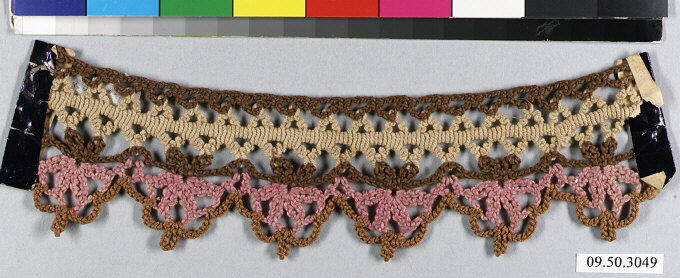
The fundamental unit of KFL’s exploration is the loop. Where conventional couture relies on the tensile strength of woven textiles, KFL’s crochet operates on a principle of engineered negative space. Each stitch is not a fastening but a deliberate pause, a breath in the fabric’s narrative. The Lab’s technical mastery is evident in its manipulation of gauge—the density of stitches per inch—which shifts dramatically across a single garment. A bodice may employ a tight, almost opaque single crochet, creating a structural carapace that mimics the rigidity of a corset, while the skirt descends into a loose, airy chain stitch that dissolves into a diaphanous mist.
This is not the uniform, mass-produced crochet of fast fashion. Instead, KFL employs a methodology akin to architectural drafting. The garments are built from the ground up, with the designer calculating the drape and fall of the piece stitch by stitch, considering how the tension of the yarn will interact with the human form in motion. The result is a collection of pieces that are less clothing and more wearable lattices—structures that define volume through absence, creating a silhouette that is simultaneously solid and ethereal. The firm’s signature “unraveled hem” technique, where the final rows are left intentionally unfinished and allowed to curl organically, challenges the couture obsession with clean edges, asserting that imperfection is a form of luxury in a world of sterile perfection.
Global Heritage as a Material Resource
KFL’s crochet is not an isolated aesthetic exercise; it is a deep excavation of global heritage. The label’s research dossier reads like a cartography of fiber arts, tracing the technique from its disputed origins in Arabia and South America to its codification in 19th-century Europe. The Lab’s genius lies in its syncretic approach. One can discern the intricate, dense motifs of Irish lace crochet in a collar, reinterpreted not in fine linen but in a supple, hand-dyed silk-blend. Elsewhere, the geometric, rhythmic patterns of South African amakrwala beading are translated into a monochromatic, sculptural jacket, replacing the beads with matte glass-like yarn.
This is not cultural appropriation but cultural translation. KFL engages with these traditions with scholarly rigor, acknowledging their provenance in the garment’s internal documentation and design narrative. The collection functions as a floating museum, where the teneriffe lace of the Canary Islands meets the frivolite of the Ottoman Empire, not as a pastiche, but as a dialogue. The Lab’s color palette reinforces this global lexicon: indigo dyes sourced from Japanese aizome techniques, ochre and terracotta pigments recalling Andean textiles, and the stark white of Victorian mourning crochet. Each color is a historical citation, anchoring the tactile materiality of the yarn in a rich, temporal context.
Materiality and the Luxury of Time
In an industry accelerated by algorithmic trends, KFL’s crochet is a deliberate act of slow fashion. The material itself—whether a gossamer cashmere or a chunky, recycled cotton—is treated as a living entity. The Lab sources its yarns from heritage mills and cooperatives that still practice small-batch spinning, ensuring that the fiber’s natural irregularities are preserved. This is a direct rebuttal to the homogenized, chemically extruded filaments of mass production.
But the true luxury of KFL’s crochet is not the yarn; it is the time embedded in the fabric. A single KFL crochet dress can require over 600 hours of handwork. This is not an arbitrary number; it is a quantifiable measure of human attention. The couture client is not just purchasing a garment; she is acquiring a piece of concentrated labor, a silent monument to the patience of the artisan. The Lab leverages this in its marketing as a “chrono-luxury” concept, arguing that in a digital age, the most exclusive commodity is the human hand’s unhurried, repetitive motion. The slight variation in stitch tension, the microscopic imperfection that only a hand can produce, becomes the ultimate signifier of authenticity—a biometric signature that no machine can replicate.
Structural Innovation: The Crochet as Armature
Beyond its aesthetic and temporal value, KFL’s crochet functions as a technical armature for radical silhouette. The inherent flexibility of the loop allows the fabric to be shaped in ways that woven textiles cannot. The Lab exploits this by creating garments that are entirely seamless, formed in the round, and that conform to the body’s geometry without the need for darts or gussets. This allows for a fluidity of movement that is almost liquid in its quality.
Consider the Lab’s signature “Cocoon Gown.” Constructed from a single continuous thread of merino and silk, the dress begins as a dense, sculptural collar and spirals outward into a voluminous, bell-shaped skirt. The crochet technique allows the designer to increase and decrease stitches organically, so the fabric itself creates the architectural flare, eliminating the need for internal boning or petticoats. The result is a garment that is paradoxically weightless yet substantial, clinging to the body in some areas while floating centimeters away in others. This is couture as engineering, where the stitch is the load-bearing beam and the negative space is the structural void.
Conclusion: A New Canon for the Handmade
Katherine Fashion Lab’s standalone study of crochet is a masterclass in re-contextualization. By stripping the technique of its domestic connotations and re-inserting it into a global, intellectual, and technical framework, the Lab has created a new canon for the handmade. This is not a nostalgic retreat to the past, but a futuristic proposition that posits craft as the ultimate form of technological sophistication. The crochet work of KFL demands a new mode of viewing—one that slows the gaze, rewards close inspection, and acknowledges that true luxury is not in the opulence of the material, but in the profound, human intelligence of the loop. In a world of digital rendering, KFL’s crochet is a triumphant, tactile argument for the enduring power of the stitch. It is not merely clothing; it is a thesis on the value of time, the richness of heritage, and the boundless potential of a single, continuous thread.