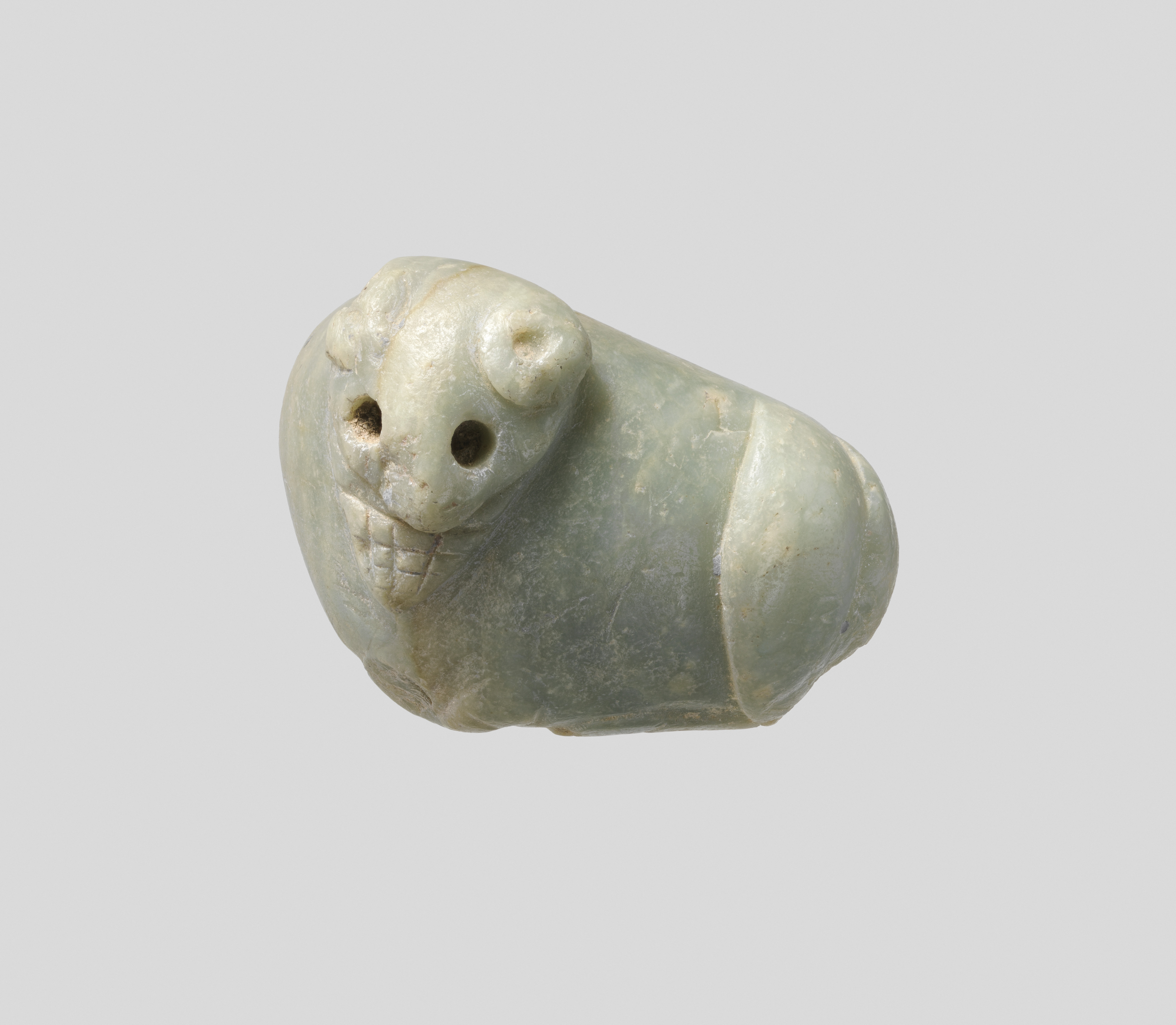
Executive Heritage Analysis: The Reclining Cow Seal Amulet
This strategic research paper, prepared for Katherine Fashion Lab, presents a comprehensive heritage analysis of a seal amulet in the form of a reclining cow, carved from alabaster and attributed to an ancient civilization. The artifact serves as a potent symbol of fertility, maternal protection, and terrestrial abundance, offering a rich lexicon for high-end luxury design in 2026. The analysis is structured to decode the artifact’s symbolic power, its role in historical adornment, its spiritual significance, and to translate these findings into a concrete, forward-looking luxury strategy that balances archaeological integrity with contemporary commercial appeal.
Symbolic Power and Iconographic Authority
The reclining cow, as rendered in this alabaster seal, is not a passive pastoral image but a deliberate icon of sovereign abundance. In the ancient Near East and Indus Valley civilizations, the cow was the primary economic engine, representing wealth, sustenance, and the cyclical regeneration of life. The deliberate choice of a reclining posture amplifies this symbolic load; it is a pose of absolute security, denoting a state of peace that only true prosperity can afford. Unlike a standing or moving animal, which suggests labor or transit, the reclining cow communicates stasis, permanence, and the unassailable foundation of a stable society.
The integration of the seal function—a device used to authenticate documents and mark ownership—further elevates the cow from a mere decorative motif to a mark of institutional authority. When pressed into wet clay, the amulet transferred not just an image but an assertion of economic and spiritual jurisdiction. For Katherine Fashion Lab, this dual function is critical: the seal is a precursor to the modern luxury monogram. It demonstrates that symbols of abundance, when rendered in precious materials and precise geometry, become tools of social distinction. The cow’s form, therefore, is not merely aesthetic; it is a strategic asset that confers legitimacy upon its bearer.
Historical Adornment and Material Culture
The selection of alabaster as the medium is a decisive factor in the artifact’s historical and aesthetic value. Alabaster, a gypsum or calcite stone, is characterized by its translucency and soft, warm luminescence. In antiquity, it was a material reserved for ritual vessels, temple offerings, and elite personal effects. Its use in a seal amulet elevates the object from a utilitarian administrative tool to a piece of personal adornment, likely worn on a cord or pin. The material’s softness allowed for the precise carving of the cow’s contours, creating a tactile object that invites touch—a critical element in the haptic experience of luxury.
Historically, such amulets were not isolated objects but part of a broader system of dress. They were suspended from the neck, waist, or wrist, functioning as both jewelry and protective talismans. The weight and coolness of the stone against the skin provided a constant, physical reminder of the wearer’s connection to divine favor. In the context of ancient wardrobes, the alabaster seal was a silent communicator of status, visible only to those close enough to observe its material and craftsmanship. This intimacy of display is a powerful contrast to modern, logo-centric branding. Katherine Fashion Lab can leverage this historical precedent to develop a line of adornment that rewards close inspection and private appreciation, rather than overt, public declaration.
Spiritual Meaning and Ritual Function
Spiritually, the reclining cow is deeply embedded in the cosmology of agrarian societies. It is directly associated with the goddess figure—whether Inanna, Hathor, or a local mother goddess—who embodies the nurturing, life-giving aspects of the divine. The cow’s horns were often equated with the crescent moon, linking the animal to lunar cycles, fertility, and the measurement of time. The amulet, therefore, was a microcosmic shrine, a portable point of contact between the wearer and the generative forces of the universe.
The act of wearing the seal was itself a ritual. It was believed to offer protection against miscarriage, ensure lactation, and secure the prosperity of the household. The reclining position is also significant in a funerary context, where it represents the soul at rest, awaiting rebirth. This duality—of life-giving fertility and peaceful transition—gives the artifact a profound emotional resonance. For a modern luxury house, this spiritual dimension offers a pathway beyond mere aesthetics. It allows Katherine Fashion Lab to position its products as objects of intention, carrying a narrative of protection, continuity, and inner peace. In a market increasingly saturated with fast-moving trends, the amulet’s spiritual gravity provides a counter-narrative of permanence and meaning.
2026 High-End Luxury Strategy: Translating Heritage into Commercial Value
The translation of this heritage analysis into a 2026 luxury strategy requires a sophisticated, multi-layered approach. The goal is not to reproduce the artifact but to distill its core semiotic codes—abundance, security, maternal power, and material luminosity—into a contemporary collection. The following strategic pillars are proposed:
Pillar One: The "Alabaster Luminescence" Material Initiative
Katherine Fashion Lab will commission a limited series of sculptural jewelry pieces using genuine, ethically sourced alabaster. The design will reinterpret the reclining cow’s silhouette in a minimalist, abstract form, allowing the stone’s natural translucency to be the primary feature. This initiative will be presented as a "material study," emphasizing the tactile and optical properties of the stone. The commercial strategy will target collectors and connoisseurs who value material provenance over ostentatious branding. Each piece will be accompanied by a digital certificate of authenticity, linking it to the archaeological heritage of the original seal.
Pillar Two: The "Seal of Abundance" Capsule Collection
This capsule will include leather goods, silk scarves, and metal hardware that incorporate a modernized version of the reclining cow glyph. The glyph will be rendered as a subtle, embossed pattern or an engraved motif on closures and clasps. The strategic intent is to create a "quiet luxury" signature—a mark that is recognizable to the initiated but not overtly branded. This approach aligns with the 2026 luxury trend of stealth wealth, where value is communicated through material quality and historical depth rather than logos. The capsule will be marketed under the narrative of "portable heritage," positioning the wearer as a custodian of ancient wisdom.
Pillar Three: The "Ritual of Adornment" Experiential Retail
To monetize the spiritual dimension, Katherine Fashion Lab will develop an immersive retail experience. Select flagship stores will feature a dedicated "Sanctum" space, designed to evoke the quiet, contemplative atmosphere of a temple treasury. Here, clients can view the alabaster pieces under controlled, warm lighting to observe their translucency. The sales process will be reframed as a curatorial consultation, where clients learn the history of the seal and select pieces based on their personal resonance with the themes of protection and abundance. This strategy elevates the purchase from a transaction to a meaningful acquisition, justifying a premium price point and fostering deep brand loyalty.
Pillar Four: Strategic Narrative and Digital Storytelling
The 2026 digital strategy will leverage short-form documentary content. A series of films will follow the sourcing of alabaster, the carving process, and the historical context of the seal. These films will not be overtly promotional but will serve as educational content that reinforces brand authority. Collaborations with art historians and archaeologists will be featured to lend academic credibility. The narrative will consistently emphasize the amulet’s role as a "seal of trust," drawing a parallel to Katherine Fashion Lab’s own commitment to authenticity and craftsmanship. This content will be distributed across high-end digital platforms and in print publications that cater to the ultra-high-net-worth demographic.
Conclusion and Commercial Outlook
The reclining cow seal amulet is a masterclass in the integration of form, material, and meaning. Its symbolic power lies in its representation of unshakable prosperity; its historical adornment value is grounded in the luminous tactility of alabaster; and its spiritual meaning offers a profound connection to nurturing divinity. For Katherine Fashion Lab, this artifact provides a robust strategic foundation for a 2026 luxury line that prioritizes material honesty, historical depth, and intimate symbolism over transient trends. By executing the four proposed pillars, the brand can successfully convert ancient heritage into a contemporary commercial asset, appealing to a discerning clientele seeking authenticity and enduring value in an increasingly ephemeral market. The amulet is not merely an object of the past; it is a blueprint for the future of meaningful luxury.