Heritage Analysis: Jeremiah Lee and the Architecture of American Authority
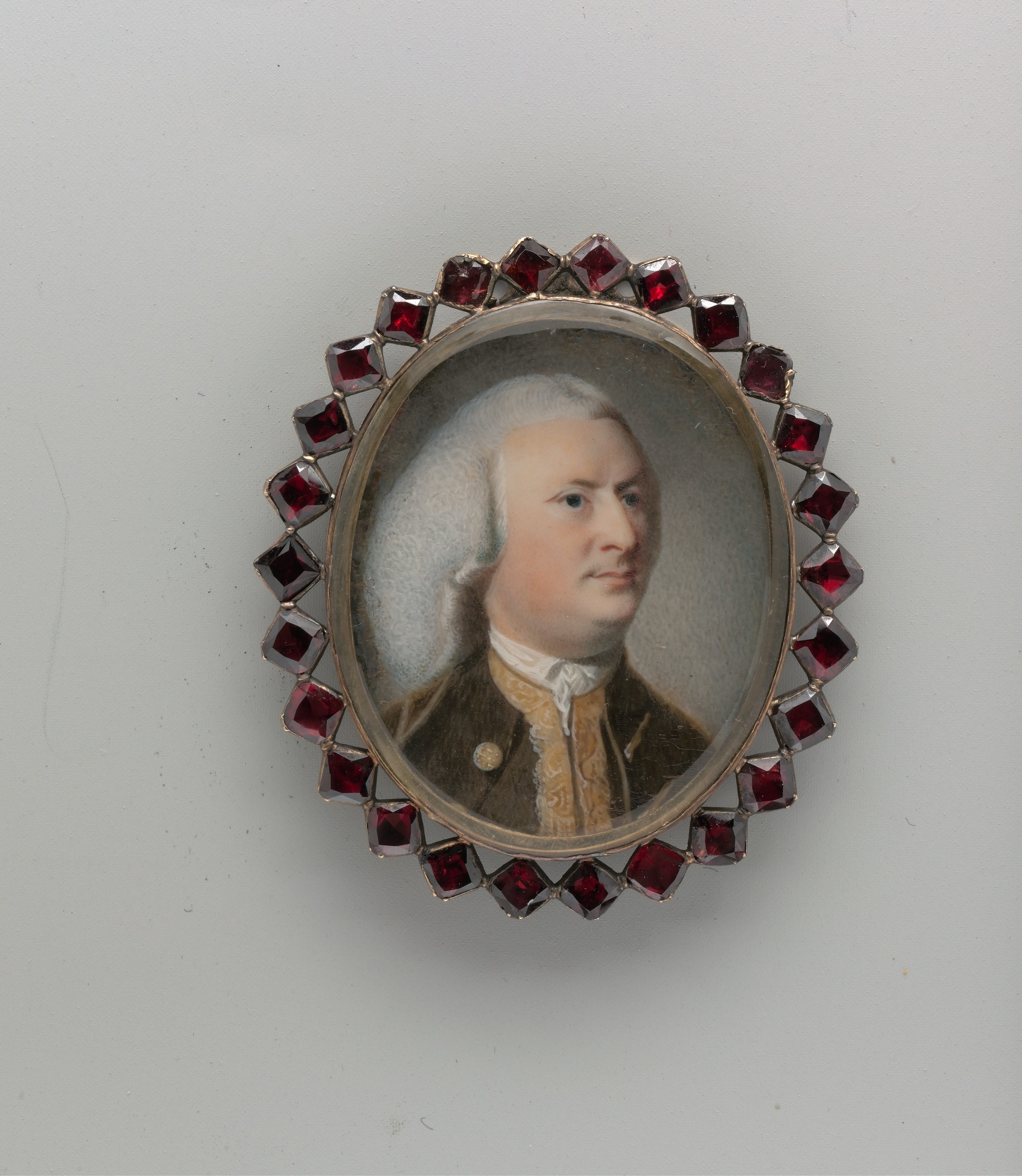
For Katherine Fashion Lab, the study of historical adornment is not an exercise in nostalgia but a strategic excavation of power. In the watercolor-on-ivory portrait of Jeremiah Lee, attributed to John Singleton Copley circa 1768, we encounter a masterclass in the visual codification of colonial American ambition. Lee, a merchant and shipowner from Marblehead, Massachusetts, was not a titled aristocrat. Yet his portrait radiates a restrained, formidable authority that rivals any European court painting. This analysis deconstructs the symbolic power, historical adornment, and spiritual undertones of this image, translating its core principles into a actionable 2026 high-end luxury strategy for the modern discerning client.
Symbolic Power: The Merchant as Sovereign
The portrait of Jeremiah Lee is a deliberate act of self-canonization. In an era when America was still a colonial outpost, Lee’s wealth—derived from the cod fisheries and transatlantic trade—allowed him to purchase a visual language of nobility. The watercolor-on-ivory medium itself is a signifier of intimacy and value; ivory was a rare, imported luxury, and the miniature format was reserved for the upper echelons of society. The artist’s choice to render Lee in a brown velvet banyan—a loose-fitting garment worn at home—is a paradox of power. It signals intellectual leisure, a man whose business is conducted in the mind, not the field. This is not a passive image; it is a statement of economic sovereignty. Lee’s gaze is direct, unflinching, and self-possessed, a visual assertion that his fortune, not his lineage, legitimizes his rank.
For Katherine Fashion Lab, this translates into a 2026 strategy centered on quiet dominance. The modern luxury consumer is fatigued by overt branding. The Jeremiah Lee archetype offers an alternative: the power of the insider’s signal. The banyan is not a uniform; it is a private armor. The 2026 collection should introduce a series of “Sovereign Silhouettes”—outerwear and structured loungewear that use severe tailoring and heavy, matte fabrics (vicuña, boiled wool, uncut velvet) to convey authority without a single logo. The cut must be architectural, referencing the drape of the banyan but re-engineered for the contemporary boardroom. The power lies not in the flash, but in the weight and fall of the fabric, a tactile opulence that only the wearer and a trained eye can fully appreciate.
Historical Adornment: The Grammar of Restraint
Examine the specifics of Lee’s adornment. The white stock at his neck is pristine, a geometric counterpoint to the organic flow of the banyan. The linen is starched, immaculate, suggesting a fastidious personal discipline. The absence of jewelry is conspicuous; there are no rings, no gold chains. In a period where European aristocrats dripped with gemstones, Lee’s restraint is a radical statement. It declares that his worth is intrinsic, not decorative. This is the Puritan ethic translated into a visual code—wealth that is earned, managed, and never flaunted. The palette is monochromatic: brown, white, and the subtle flush of his skin tone. This limited spectrum forces the viewer to focus on texture and form, not color.
The 2026 luxury translation is a rejection of the “logomania” of the previous decade. Katherine Fashion Lab will pioneer a “Grammar of Restraint” capsule. This involves a rigorous editing process: every garment must serve a structural purpose. Buttons will be made of horn or fossilized ivory (ethically sourced), not gilt metal. The white shirt becomes the hero piece—not a simple oxford, but a sculptural study in high-thread-count Egyptian cotton with a hand-rolled collar that stands with military precision. The strategy is to sell fewer, better things. Accessories will be limited to a single, heavy signet ring or a leather belt with a hand-forged buckle, echoing Lee’s minimalist approach. The message to the client: Your absence of ornament is your ornament.
Spiritual Meaning: The Inner Light of Commerce
Beyond the material, the portrait carries a profound spiritual dimension. Lee was a prominent figure in the First Congregational Church, and his worldview was steeped in the Calvinist doctrine of the “Elect.” His success was not merely a personal achievement; it was a sign of divine favor. The luminosity of his face, rendered with delicate stippling on ivory, suggests an inner light—a soul that is illuminated by grace, not by candlelight. This spiritual confidence is the true source of his power. He is not anxious about his status; he is assured of his predestination. This internal certainty is the most potent form of luxury, as it cannot be purchased at retail.
For the 2026 high-end strategy, Katherine Fashion Lab will introduce a concept called “Inherited Light.” This is not a product but a brand philosophy. The spiritual meaning of Lee’s portrait is the conviction that true luxury is a state of being. Our 2026 campaign will eschew fast-paced, aggressive marketing in favor of slow, contemplative storytelling. We will commission short films that focus on the hands of artisans, the grain of the leather, the silence of the atelier. The client is not buying a garment; they are buying assurance. The marketing copy will shift from “new season” to “permanent collection,” framing purchases as heirlooms. The spiritual narrative is that our garments are vessels for the wearer’s own confidence—they do not create the light, they simply frame it.
2026 High-End Luxury Strategy: The Lee Protocol
Synthesizing these elements, Katherine Fashion Lab will launch the “Lee Protocol”—a strategic initiative for the 2026 fiscal year. This is a three-pillar approach that directly monetizes the heritage analysis.
Pillar One: The Private Commission
Mirroring the intimacy of the miniature portrait, we will offer a “Portrait Service.” Clients will undergo a two-day consultation with a master tailor, resulting in a bespoke banyan-inspired robe or overcoat. The process is documented in a leather-bound folio, echoing the preciousness of the ivory medium. This is not a retail transaction; it is a ritual of self-definition, priced at a premium that reflects its exclusivity.
Pillar Two: The Monochrome Edit
We will curate a permanent collection of pieces in a restricted palette—ivory, oxblood, charcoal, and deep brown. This is a direct response to Lee’s color discipline. The 2026 retail floor will be designed as a gallery, with garments displayed like artifacts under soft, directional lighting. This aesthetic scarcity will drive demand among clients who view fashion as art, not commodity.
Pillar Three: The Legacy Concierge
We will establish a Legacy Concierge service, offering lifetime maintenance, repair, and archival storage for any Katherine Fashion Lab garment. This speaks to the spiritual permanence of Lee’s image. The service will include an annual “illumination” event where clients bring their pieces for restoration, reinforcing the bond between the brand, the object, and the wearer’s personal history. This strategy converts a one-time sale into a generational relationship.
In conclusion, Jeremiah Lee’s portrait is not a relic; it is a strategic blueprint. By decoding its symbolic power, historical restraint, and spiritual depth, Katherine Fashion Lab positions itself not as a trend follower, but as a purveyor of permanent authority for the 2026 elite.