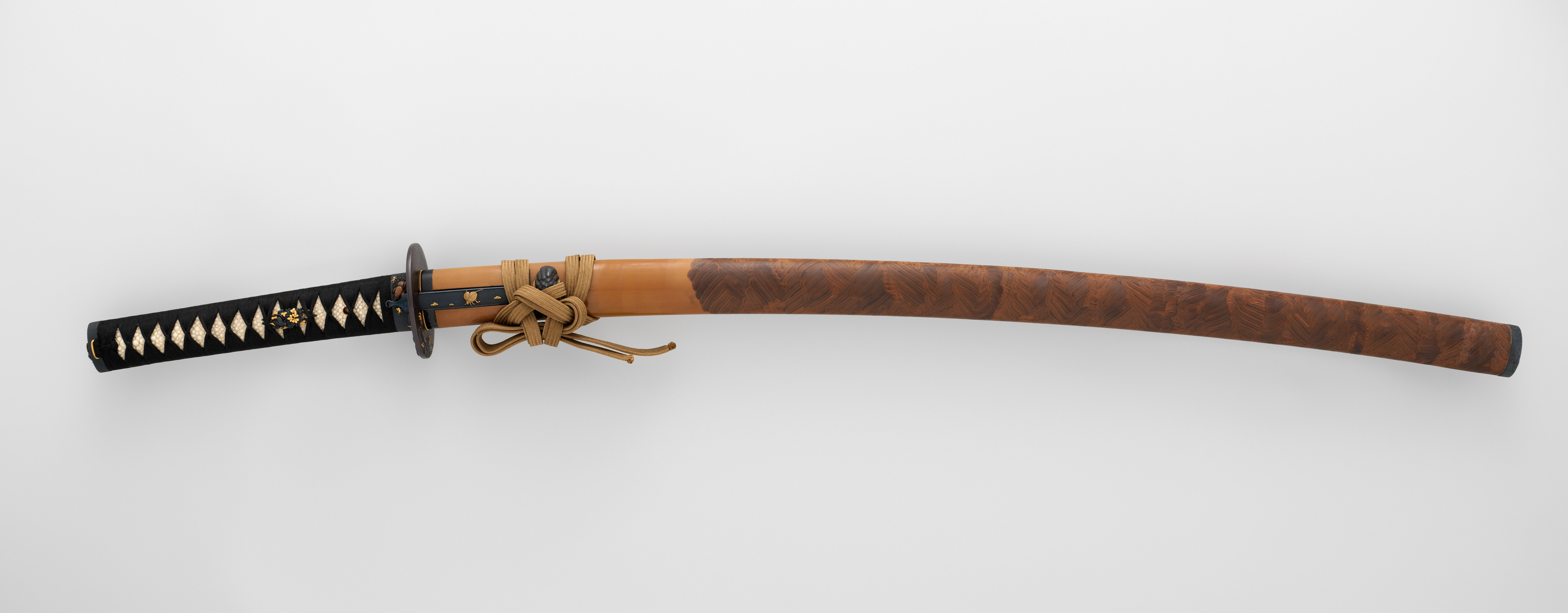
Executive Summary: The Daishō as a Paradigm of Symbolic Capital
This heritage analysis examines a pair of Japanese swords (daishō) not as mere armaments, but as a consolidated system of symbolic power, historical narrative, and spiritual technology. For Katherine Fashion Lab, the daishō represents a masterclass in coded luxury—an object where every material, from steel to silk, serves a dual purpose of function and profound signification. This research deconstructs the artifact to extract core principles applicable to a 2026 high-end luxury strategy, moving beyond superficial appropriation to a deeper integration of narrative integrity, material alchemy, and the embodiment of dualities (public/private, power/restraint, mortal/eternal). The daishō offers a blueprint for creating collections that are not simply worn, but inhabited as personal armature for the modern elite.
Deconstruction of Symbolic Power & Historical Adornment
The daishō, comprising the longer katana and the shorter wakizashi, was the exclusive prerogative of the samurai class during the Edo period (1603-1868). Its power was inherently dual: a functional instrument of war and an immutable social cipher. The pairing itself is a primary symbol of the samurai's identity and societal role—the katana for the battlefield and public duty, the wakizashi for close-quarters combat and the private act of seppuku, representing ultimate accountability. This duality is a critical luxury insight: true status is expressed not through a single statement piece, but through a curated system of objects that address complementary facets of the wearer’s life.
The Mountings (Koshirae): A Portable Biography
The described materials—steel, wood, lacquer, shakudō, gold, shibuichi, ray skin (same), and silk—compose the koshirae, the sword's mounting. This is where historical adornment transitions into legible personal heraldry. The tsuba (guard), often crafted from shakudō (a copper-gold alloy patinated to a profound blue-black) and shibuichi (a copper-silver alloy yielding soft grey tones), provided a canvas for symbolic imagery. Nature motifs (bamboo for resilience, cherry blossoms for transience) or mythical creatures were not decorative whims but declarations of philosophy, clan affiliation, or personal aspiration. The same (ray skin) wrapping under the silk ito (cord) on the hilt (tsuka) provided a non-slip grip, its rough texture concealed by the soft, intricate weaving—a metaphor for fierce utility cloaked in refined beauty. For KFL, this translates to the principle of “hidden construction”: luxury that reveals its depth and intelligence upon intimate interaction, where the interior lining, the underside of a clasp, or the structure of a garment carries as much intentionality as the visible surface.
Spiritual Meaning and the Soul of the Object
In Shinto and Buddhist belief, the Japanese sword is a mitama—a vessel for a sacred spirit. The smithing process was a ritualized, purifying act, with the smith often fasting and donning priestly robes. The differential hardening of the blade, creating the distinct hamon (temper line), was seen as the physical manifestation of the sword’s unique spirit, its “frozen breath.” This spiritual dimension elevates the object from commodity to consecrated artifact. The daishō pair thus held the soul of the warrior; they were his moral compass and the literal embodiment of his honor. In a contemporary luxury context, this speaks directly to the escalating consumer demand for spiritual substantiation and authentic provenance. Products must possess a “soul” derived from genuine craft narratives, artisan relationships, and a palpable sense of intentionality that transcends mass production. The object becomes a talisman for the wearer’s own values.
The Blade: The Unseen Core
Significantly, the blade itself, the soul of the object, was often hidden within the plain wood storage mounts (shirasaya), only revealed in private contemplation or for maintenance. This underscores a pivotal luxury tenet: the most profound value is often reserved for private knowing. The connoisseur’s appreciation of the blade's grain pattern (hada) and temper line (hamon) was a privileged dialogue between the object and its owner. KFL can leverage this through “privileged access” narratives—offering clients insights into origin stories, material sourcing, or artisan techniques that are not publicly marketed but shared as part of an exclusive ownership experience.
Strategic Application: 2026 High-End Luxury Strategy for KFL
By 2026, luxury will be defined by cultural intelligence, narrative depth, and personalized ecosystems. The daishō analysis provides a strategic framework for KFL’s forward trajectory.
1. The Principle of Paired Narratives (The Modern Daishō)
Move beyond single “hero” items. Develop curated pairings or capsules that tell a complete story. For example, a public-facing, structured evening outerwear piece (the katana) paired with a more intimate, intricate, and personally significant item of jewelry or lingerie (the wakizashi). Each strengthens the narrative of the other, creating a system of dressing that caters to the multifaceted identity of the client.
2. Material Alchemy with Symbolic Intent
Invest in and story-tell material innovation as modern alchemy. Use shakudō and shibuichi not for their exoticism, but for their narrative of patination and unique character development over time. Partner with technical fabric developers to create new materials that possess a “grain” or a hidden property, much like the steel blade. Promote same (ray skin) alternatives not as mere sustainability plays, but as innovations in texture and ethical durability, continuing the original functional intent with contemporary values.
3. Adornment as Encrypted Identity
Revive the concept of the tsuba as a personal canvas. Offer high-touch customization where hardware (buttons, clasps, buckles) can be commissioned with symbolic motifs meaningful to the client—a family crest, an astrological sign, a minimalist natural form. This transforms functional elements into heraldic devices, making the garment a literal coat of arms.
4. The Consecrated Craft Narrative
Position KFL ateliers as modern forges. Document and elevate the craft process with the reverence afforded to the swordsmith. Develop client programs that include visits to material sources or workshops with master artisans. The product is not delivered; it is presented with its biography—a dossier of its making, from the origin of its silk threads to the hand who set its final stitch. This creates spiritual and emotional equity.
Conclusion: Forging the Future Armature
The Japanese daishō is ultimately a complete system for navigating a world of strict codes and profound personal honor. For Katherine Fashion Lab, its legacy is a strategic manifesto: luxury in 2026 must be armor for the soul, built on unassailable material and craft integrity, personalized to the point of encryption, and charged with a narrative that provides the wearer with both a sense of place and a tool for self-definition. By applying the principles of symbolic duality, hidden depth, and spiritual substantiation, KFL can forge collections that, like the swords, are destined to become heirlooms—not for their ostentation, but for their undeniable, soulful essence.