Deconstructing the Monumental: The Stucco Fragment as a Couture Catalyst
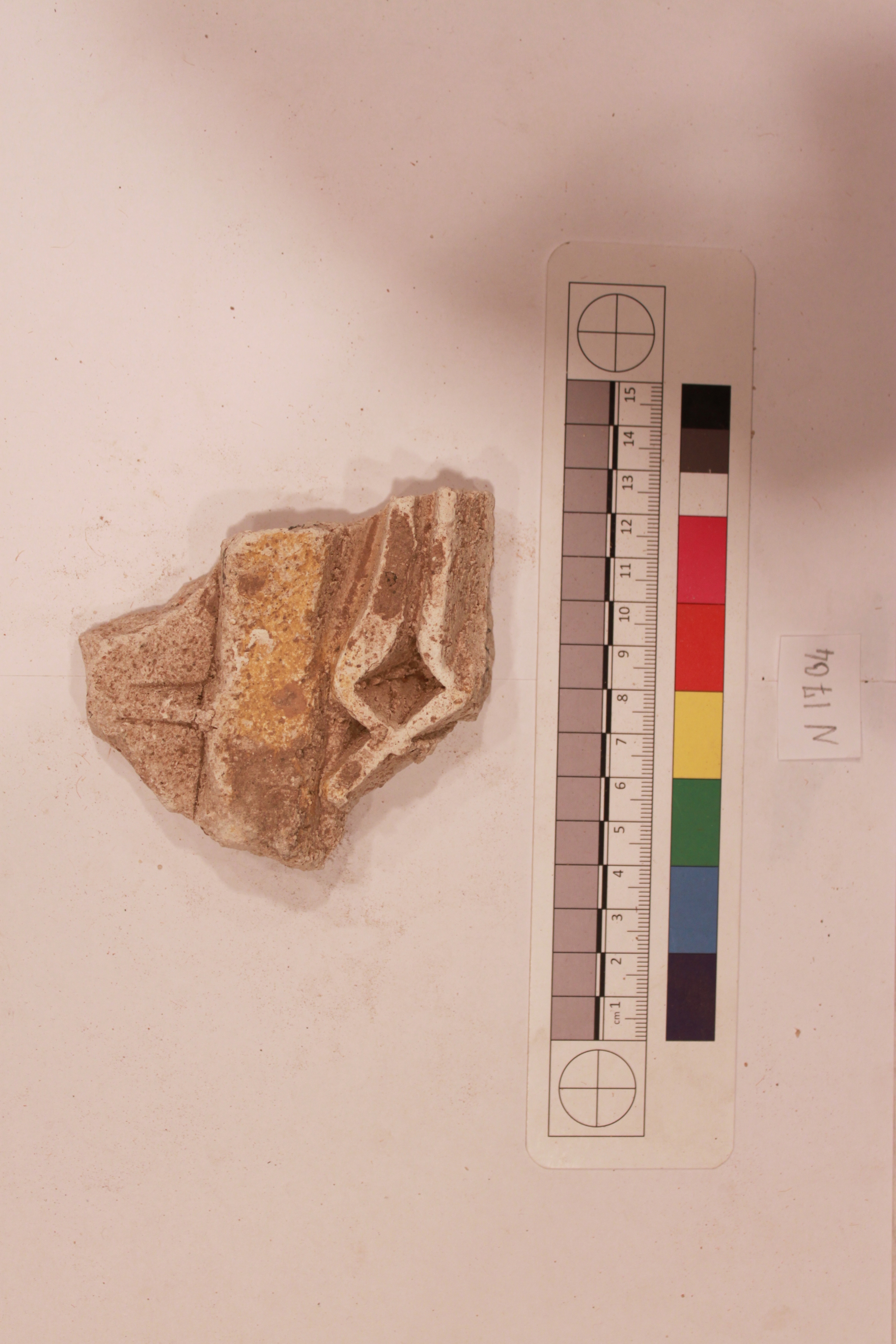
Within the hallowed archives of global heritage, a singular artifact commands our analytical focus: a Stucco Fragment. Carved and painted, it is a disembodied piece of a greater narrative, a tactile whisper from a vanished wall. For Katherine Fashion Lab, this is not merely an object of archaeological interest but a profound source code for contemporary couture. This standalone study posits the fragment not as a ruin, but as a complete aesthetic universe in itself—a lexicon of texture, narrative rupture, and layered history waiting to be translated into the language of high fashion. The journey from ancient plaster to modern atelier is one of conceptual reverse-engineering, where we extract principles of construction, decay, and storytelling to inform groundbreaking garment architecture.
Material Intelligence: The Textility of the Inanimate
The primary dialogue begins with materiality. Stucco, a composite of lime, sand, and water, is a medium of transformative plasticity. It begins as a malleable paste, is carved in its leather-hard state, and cures into a durable, stone-like surface. This lifecycle mirrors the very process of couture itself: the manipulation of malleable fabrics (silks, wools) into structured, permanent form. The Lab’s material research division is tasked with emulating this textural paradox—the visual weight of stone juxtaposed with the necessity of wearability. This could manifest through innovative techniques: heavy jacquards woven with limestone-infused yarns to mimic granularity; laser-cutting on layered silk organza to replicate the precise, shallow depth of carved relief; or the development of custom thermo-polymers that can be molded and "fossilized" into garment corsetry. The painted patina, weathered and partial, inspires a multi-layered approach to color and finish. We envision dye processes where pigments are applied and then selectively abraded, or digital prints that overlay vibrant fresco motifs with transparent layers simulating erosion, creating a garment that tells a color story across millennia.
Architectural Syntax: From Fragment to Full Form
The fragment’s most potent gift is its incomplete state. It forces a shift in perspective from appreciating a whole to deconstructing the logic of the part. This is a masterclass in non-linear construction. The carved patterns—perhaps a curling vine, a geometric border, a fragment of a deity’s drapery—do not conclude at the fragment’s edge. They are violently, poetically interrupted. This directly challenges fashion’s obsession with symmetrical closure and finished hems. Katherine Fashion Lab interprets this as an invitation to explore garments that are intentionally, beautifully unresolved. A gown may feature a fully sculpted bodice that dissolves into raw, frayed chiffon at one hip, as if torn from a larger whole. A sleeve might showcase intricate, architectural smocking that simply ceases, revealing the structural seams beneath—celebrating the artifact of construction. The silhouette itself borrows from the fragment’s likely origin: architectural load-bearing. We envision shoulders extended into parabolic curves, skirts with foundations as solid as plinths, and draping that falls like collapsed frescoes, creating a powerful, monumental silhouette that carries the authority of history.
The Narrative of Patina: Embracing the Poetry of Decay
Couture has traditionally been synonymous with the pristine and the perpetual new. The Stucco Fragment argues eloquently for the beauty of the ephemeral and the eroded. Its value is amplified by its scars—the cracks, the faded pigments, the sections lost to time. This "aesthetic of patina" provides a radical framework for luxury. It champions the unique narrative of wear and individual history over impersonal perfection. Technically, this translates into advanced surface design: devoré velvets where patterns are eaten away by acid to reveal underlying sheers; delicate embroidery where threads are intentionally snapped and left dangling; beading that is densely clustered in one area and sparse in another, mimicking the random accretion of centuries. Furthermore, the concept of patina challenges the very lifecycle of a garment. Could a Katherine Fashion Lab piece be designed to evolve gracefully? Fabrics that change hue with careful exposure to light, or coatings that develop a subtle crackle over years of wear, would embed the client’s own timeline into the object, transforming the garment into a living, personal fragment.
Contextual Rebirth: From Archaeological Site to Global Stage
Finally, the "Global Heritage" origin is crucial. This fragment is unmoored from its specific geographical context, allowing it to become a universal symbol of cultural memory. In a similar vein, the resulting collection would not be a literal, ethnographic reproduction. Instead, it synthesizes the fragment’s core principles into a new, global couture language. A gown might combine the stucco texture with a silhouette inspired by Roman statuary, finished with a color palette drawn from Mayan frescoes. This is heritage not as pastiche, but as a sophisticated, hybridized future. It speaks to a contemporary clientele that is culturally literate, values depth of narrative, and seeks identity in pieces that are both awe-inspiring and intellectually resonant. The standalone fragment, studied under the atelier’s light, becomes the blueprint for a standalone artistic statement in fashion.
In conclusion, the Stucco Fragment offers Katherine Fashion Lab a multidimensional creative brief. It is a study in contradiction and resilience: hard yet born soft, whole in its brokenness, ancient yet vibrantly present through color. By transposing its material intelligence, architectural syntax, narrative patina, and decontextualized heritage into the couture paradigm, the Lab can pioneer a collection that is less about clothing the body and more about building a second skin of history, art, and profound beauty. The fragment ceases to be a relic and becomes a prophet, forecasting a future where fashion is not merely worn, but excavated.