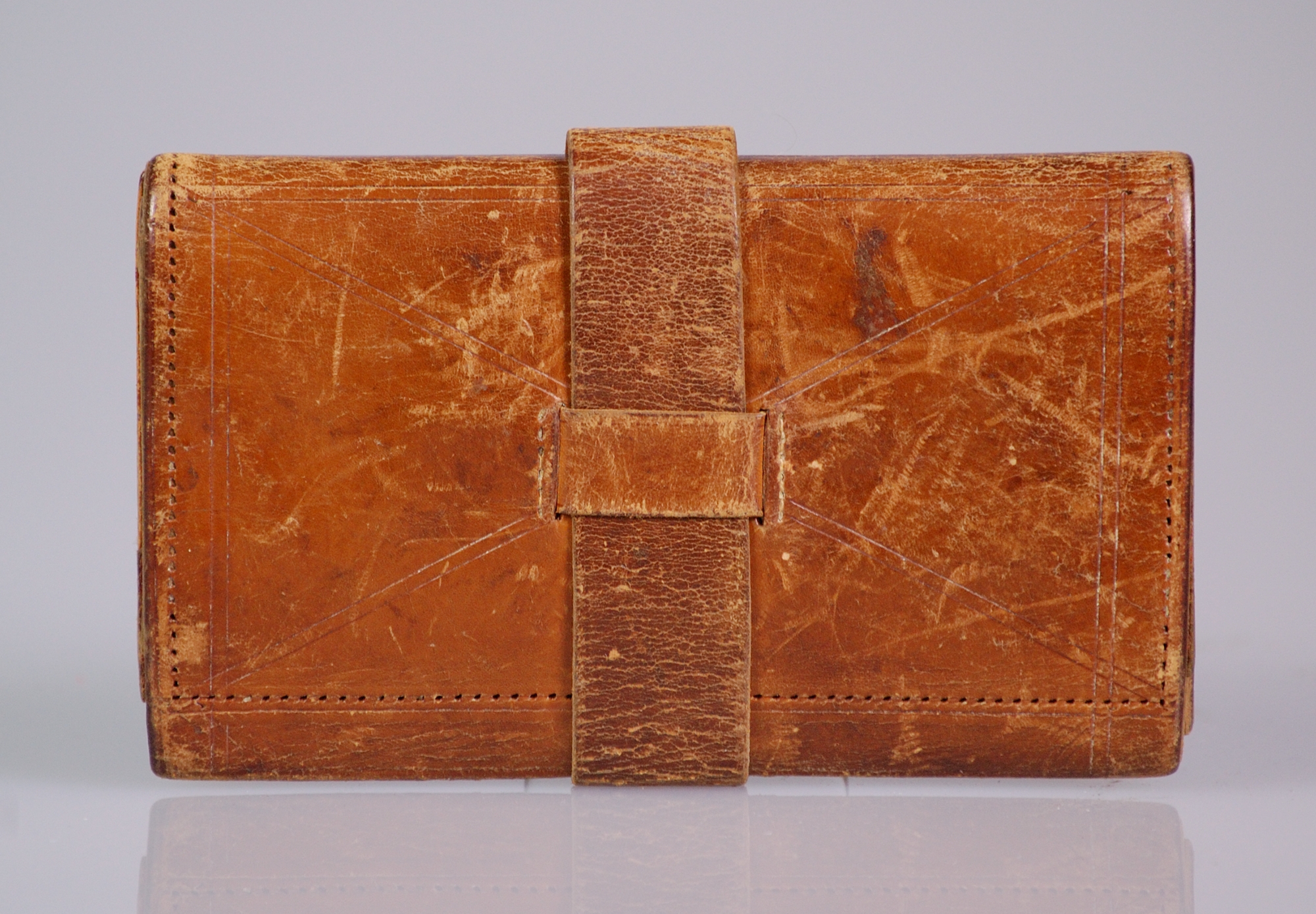
The American Wallet: A Study in Pragmatic Luxury at Katherine Fashion Lab
In the canon of fashion accessories, the wallet occupies a paradoxical position. It is simultaneously the most intimate and the most public of objects—a repository for our daily transactions, our identities, and our most private tokens. Yet, unlike the handbag or the shoe, the wallet is rarely celebrated as an object of design in its own right. At Katherine Fashion Lab, the standalone study of the American leather wallet challenges this oversight, repositioning a humble everyday carrier as a masterclass in material integrity, structural logic, and cultural narrative.
This analysis deconstructs the wallet through the lens of American craftsmanship, examining how its form, function, and materiality converge to create what can only be described as pragmatic luxury—a distinctly American contribution to global couture that prioritizes utility without sacrificing aesthetic depth.
The Material Imperative: American Leather as a Philosophical Statement
The choice of leather is never arbitrary; it is an ethical and aesthetic declaration. In the context of American design, leather signifies more than mere animal hide—it represents a lineage of tanneries, from the storied Horween of Chicago to the vegetable-tanned hides of the Northeast, each imparting a unique patina that records the owner's life. The Katherine Fashion Lab wallet begins with a full-grain, vegetable-tanned leather, selected for its ability to age gracefully, developing a rich, dark luster that synthetic materials can only mimic superficially.
This is not the supple, glove-soft leather of European luxury houses. Instead, the American approach favors a firm, structured hide that holds its shape under pressure. When you hold this wallet, you feel the resistance—a tactile reminder of its durability. The leather is cut by hand, with each piece aligned to the natural grain, ensuring that no two wallets share an identical texture. This imperfection is the hallmark of authenticity. In a world of mass-produced uniformity, the subtle scars and tonal variations of the leather become a signature, a quiet rebellion against the sterile perfection of machine-made goods.
Structural Anatomy: Engineering the Everyday
Where European couture often prioritizes ornamentation, the American wallet excels in structural efficiency. The design at Katherine Fashion Lab is a study in compartmentalization—a series of precisely stitched pockets, card slots, and a central billfold that operate as a cohesive system. The layout is not arbitrary; it follows the ergonomics of the American pocket, sized to fit seamlessly into a jeans' fifth pocket or a tailored jacket's interior breast pocket.
The Saddle Stitch: A Testament to Time
The most critical element of the wallet's construction is the stitching. Unlike the lockstitch used in mass production, which unravels with a single pull, Katherine Fashion Lab employs the saddle stitch—a technique where two needles and a single thread interlock at every pass. This method, borrowed from equestrian saddlery, creates a seam that is not only stronger than the leather itself but also visually distinctive. The stitches are evenly spaced, slightly recessed, and create a subtle ridge that invites the touch. This is not merely a fastening; it is a structural ornament, a rhythmic pattern that speaks to the hours of handwork invested in each piece.
The edges are then burnished with beeswax and polished to a glass-like finish. This process, known as edge painting or edge creasing, prevents fraying and seals the layers against moisture. The result is a crisp, geometric profile that contrasts beautifully with the organic softness of the leather's surface. The wallet stands upright on a table, its corners sharp, its silhouette defined—a small architectural object.
Cultural Context: The Wallet as an American Artifact
To understand the wallet's significance, one must consider its cultural genealogy. The American wallet is a descendant of the frontier "pocket book," a utilitarian pouch for currency and documents carried by pioneers. This heritage instills a spirit of self-reliance in the design. Unlike the clutch or the minaudière, which are often decorative and require a separate carrying case, the American wallet is designed to be carried directly on the person. It is an extension of the body, a portable safe deposit box that enables mobility and independence.
This functional ethos has evolved into a form of quiet status. In the boardrooms of New York and the studios of Los Angeles, a well-worn, handcrafted leather wallet signals a different kind of wealth—not the flashy logos of European fashion houses, but the confidence of a person who values longevity over trend. The wallet becomes a generational heirloom, passed from father to son or mother to daughter, carrying with it the stories of every transaction, every photograph, every business card collected over decades.
Comparative Analysis: American Pragmatism vs. European Ornamentation
Placing the Katherine Fashion Lab wallet alongside its European counterparts reveals a fascinating dichotomy. A French luxury wallet, for instance, often features embossed monograms, gold-tone hardware, and a soft, pliable lambskin that feels like a second skin. It is designed to be seen, to be admired, to be displayed as a status symbol. The American wallet, in contrast, is designed to be felt rather than seen. Its beauty is hidden within the pocket, revealed only to the owner through daily use.
This is not a deficiency but a deliberate choice. The American wallet's aesthetic is one of internalized elegance. The absence of exterior branding is a form of reverse snobbery, a rejection of ostentatious display. The only external marker is the quality of the leather and the precision of the stitching—details that only a discerning eye will recognize. This understatement is, paradoxically, a more powerful statement of taste than any logo.
The Role of Patina in Value Creation
In the European tradition, a new wallet is often considered at its peak value. In the American tradition, the opposite is true. The wallet's true value is realized only after years of use, when the leather has darkened, the edges have softened, and the shape has molded to the contours of the owner's pocket. This patina of use transforms the object from a commodity into a personal artifact. It is a record of time, a physical manifestation of memory.
Katherine Fashion Lab encourages this process by avoiding protective coatings that would inhibit the leather's natural aging. The wallet is meant to be touched, handled, and carried daily. It is a participant in the owner's life, not a passive accessory. This philosophy aligns with the broader American ethos of "wear and tear" as a badge of honor, a testament to a life lived fully.
Conclusion: The Quiet Mastery of the Everyday
The standalone study of the American leather wallet at Katherine Fashion Lab concludes with a simple but profound observation: that true luxury is not in the spectacle but in the substance. This wallet is not a piece of jewelry; it is a tool. But it is a tool crafted with the same precision and reverence as a fine watch or a bespoke suit. Its value lies not in its initial appearance but in its capacity to become an extension of the self.
In an era of fast fashion and disposable goods, the American wallet stands as a counterpoint—a slow object, made by hand, designed to last a lifetime. It is a small, quiet monument to the virtues of honesty, durability, and understated elegance. When you slip it into your pocket, you are not just carrying a wallet; you are carrying a piece of American design philosophy, a legacy of craftsmanship that refuses to compromise form for function or function for form. This is the essence of pragmatic luxury, and it is, without question, a masterpiece of the everyday.