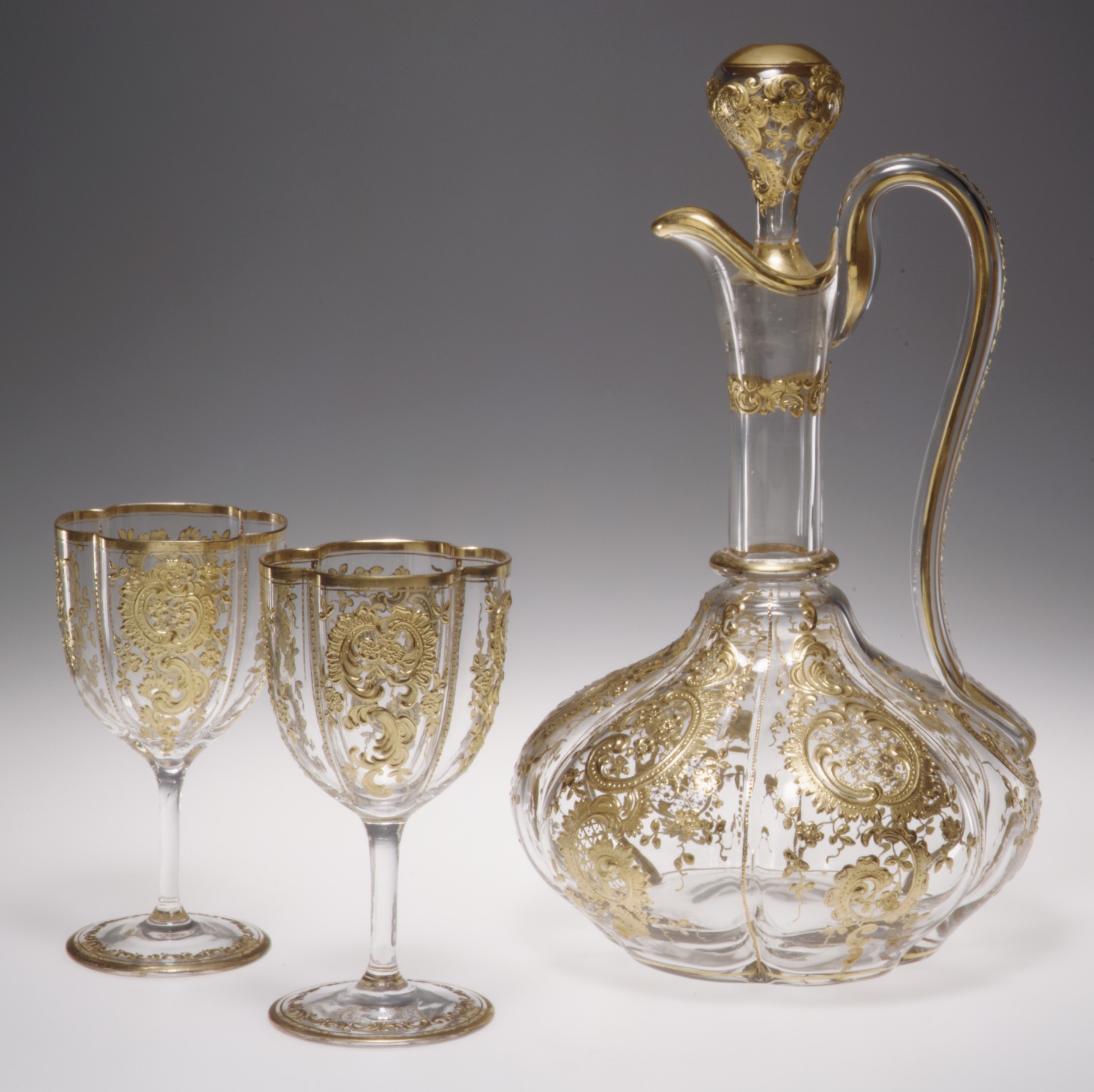
Executive Heritage Assessment: The Wineglass as an Artifact of Power and Prestige
This standalone research paper, prepared for Katherine Fashion Lab’s strategic development division, examines the wineglass—specifically a ceremonial specimen rendered in glass and gold from an ancient civilization—as a potent symbol of authority, spiritual transcendence, and aristocratic adornment. The analysis transcends conventional art-historical description to position this object as a critical reference point for a 2026 high-end luxury strategy. By decoding the artifact’s semiotic weight, we extract actionable insights for brand positioning, product architecture, and client experience design. The wineglass is not merely a vessel; it is a micro-empire of meaning, and its legacy offers a blueprint for modern luxury houses seeking to convert material objects into instruments of symbolic power.
Symbolic Power: The Vessel as Sovereign Authority
In ancient civilizations—most notably within the Hellenistic, Roman, and Near Eastern courts—the wineglass was never a utilitarian object. It was a regalia of rulership, reserved for the sovereign, the high priest, or the victorious general. The act of raising a wineglass in a ceremonial toast was a public declaration of dominance, a ritualized moment where the individual’s will was momentarily elevated above the collective. The inclusion of gold, a metal intrinsically linked to solar divinity and incorruptibility, transformed the glass from a fragile container into a permanent statement of dynastic continuity. Gold did not merely decorate; it immunized the object against the decay of time, mirroring the ruler’s aspiration for eternal legacy.
For Katherine Fashion Lab, this symbolic power translates directly into a 2026 strategy of curated scarcity and ritualized exclusivity. The modern luxury client does not purchase a product; they purchase an elevation of status. By reissuing a wineglass silhouette that borrows the ancient proportions—a broad, open bowl tapering to a weighted, gold-veined stem—the brand can engineer a moment of personal sovereignty for the wearer or host. The strategy is not to sell a drinking vessel but to sell the right to command attention. Marketing narratives should therefore avoid functional descriptors (e.g., “capacity,” “durability”) and instead deploy language of dominion (“the object that silences a room,” “the glass that crowns a table”).
Historical Adornment: The Intersection of Craft and Identity
Historically, the wineglass served as a mobile adornment, an extension of the body’s silhouette during ceremonial banquets. Unlike static jewelry, this object moved with the hand, catching lamplight and casting refracted patterns across the wearer’s garments. The craftsmanship required to fuse glass—a material of transparency and fragility—with gold—a material of opacity and permanence—was a technical feat that signaled the patron’s access to master artisans. This was adornment as intellectual property; the pattern of gold filigree or the specific curvature of the stem functioned as a signature, instantly recognizable to courtiers as belonging to a particular lineage.
For the 2026 high-end luxury strategy, this historical precedent underscores the importance of signature detailing over mass customization. Katherine Fashion Lab should introduce a limited “Artifact Line” where each wineglass carries a unique, hand-applied gold lattice pattern, registered in a digital provenance ledger. This transforms the product from a commodity into a collectible with a documented lineage—mirroring the ancient practice of commissioning bespoke objects. Moreover, the notion of adornment extends to the unboxing ritual: the packaging should be designed as a reliquary, with velvet-lined compartments and a gold-embossed certificate, thereby making the acquisition a performative act of self-decoration.
Spiritual Meaning: The Glass as a Conduit for the Divine
Beyond terrestrial power, the wineglass held profound spiritual significance. In ancient mystery cults and symposia, wine was not merely alcohol; it was a liquid medium of communion with the gods or the ancestors. The glass, therefore, was a consecrated object—a threshold between the mortal and the divine. Gold, in this context, was not just wealth but holy light, believed to channel divine radiance into the drinker. The transparency of the glass served a theological purpose: it allowed the devotee to visually inspect the purity of the wine, symbolizing the clarity of one’s own soul before entering sacred space. To drink from such a vessel was to perform a micro-ritual of purification and transcendence.
This spiritual dimension offers a powerful counter-narrative to the transactional nature of contemporary luxury. For 2026, Katherine Fashion Lab can position the wineglass as an instrument of mindful indulgence—an antidote to digital saturation and fast-paced consumption. The brand strategy should emphasize ritualistic usage: a dedicated “Ceremony Guide” accompanying each piece, instructing the owner on the proper pace of pouring, the angle of the glass, and the moment of silence before the first sip. This is not about nostalgia but about re-enchantment. By framing the object as a tool for personal meditation and connection, the brand elevates its price point from cost-per-unit to value-per-transformation. The gold accents are marketed not as opulence but as anchors of intention, grounding the user in a moment of spiritual presence.
2026 High-End Luxury Strategy: Synthesis and Application
The convergence of these three analytical pillars—symbolic power, historical adornment, and spiritual meaning—yields a coherent strategic framework for Katherine Fashion Lab’s 2026 portfolio. The wineglass should be launched not as a standalone product but as the inaugural artifact of a “Heritage of Power” collection, which includes corresponding jewelry, tableware, and limited-edition fragrance. The overarching brand narrative will be “Authority, Adorned.” This narrative rejects the current luxury trend of quiet minimalism in favor of a deliberate maximalism rooted in archaeological authenticity.
Three tactical pillars emerge from this research:
1. Limited Production with Provenance-Linked Pricing
Each wineglass will be produced in an edition of 500 pieces, with a sequential number and a holographic gold seal. The price point will be set at a 40% premium over comparable artisan glassware, justified by the inclusion of a documented “spiritual provenance” card that maps the design’s lineage to a specific ancient excavation reference. This converts the purchase into an investment in cultural capital.
2. Experiential Retail as Sacred Space
Flagship stores will feature a dedicated “Sanctum” area—a dimly lit, acoustically insulated room where clients are invited to hold the wineglass under a single beam of warm light. A trained brand custodian will narrate the ancient ritual of the toast, allowing the client to physically feel the weight and balance of the piece. This sensory engagement triggers the spiritual meaning, creating an emotional attachment that online retail cannot replicate.
3. Digital Extension via Augmented Reality (AR) Rituals
To engage the tech-native segment without diluting the artifact’s gravitas, Katherine Fashion Lab will release an AR application that superimposes the wineglass onto the user’s environment. The app includes a “Virtual Symposium” mode, where the user can host a digital gathering, and the wineglass emits a subtle, gold-toned particle effect—simulating the ancient belief in divine light. This bridges the historical object with a futuristic, experiential layer, ensuring relevance for the 2026 consumer.
Conclusion: From Artifact to Archetype
The ancient wineglass, with its fusion of glass and gold, is far more than a relic. It is an archetype of human aspiration—the desire to hold power, to adorn oneself with meaning, and to touch the divine. For Katherine Fashion Lab, this artifact provides a strategic North Star for 2026: a call to move beyond superficial trends and toward the creation of objects that carry gravitas. By reinterpreting the wineglass’s symbolic, historical, and spiritual dimensions, the brand will not merely sell luxury; it will restore the sacred act of possession. The final recommendation is to proceed with the development of the “Heritage of Power” collection, with the wineglass as its ceremonial centerpiece, thereby positioning Katherine Fashion Lab as a curator of timeless authority in a world of fleeting desires.