The Architecture of Air: Deconstructing “Strip”
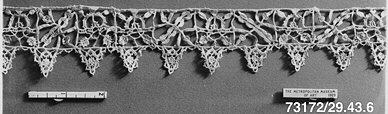
In the rarefied echelons of haute couture, where fabric is not merely draped but engineered, Katherine Fashion Lab’s “Strip” emerges as a masterclass in paradoxical materiality. At first glance, the garment—a standalone study, deliberately devoid of companion pieces or contextual styling—presents a monolithic, almost architectural silhouette. Yet, upon closer inspection, it dissolves into a lattice of pure negative space. This is not a dress that covers the body; it is a dress that defines the body through absence. The piece is a profound interrogation of heritage technique, specifically the Venetian art of punto in aria (“stitch in the air”), recontextualized for a global, contemporary audience. “Strip” does not simply reference history; it dissects it, strips it down to its tensile core, and rebuilds it as a monument to fragility.
The Global Heritage of the Void
To understand “Strip,” one must first abandon the Western-centric notion that lace is a decorative afterthought. The Lab’s design philosophy positions this piece within a global continuum of openwork textiles—from the teneriffe sunbursts of the Canary Islands to the intricate chikankari of Lucknow, from the geometric soumak weaves of the Caucasus to the needle-lace traditions of Renaissance Italy. The “Global Heritage” attribution is not a marketing tag; it is a structural acknowledgment that the manipulation of absence—the deliberate creation of holes to form a cohesive whole—is a universal human language. “Strip” channels this lexicon into a single, continuous form. Unlike traditional lace panels that are joined to a ground fabric, punto in aria is created entirely without a foundation. It is a free-standing embroidery, a drawing in thread that exists only because of its internal tension. Katherine Fashion Lab has taken this 15th-century technique—originally used for ecclesiastical collars and cuffs—and scaled it to a monumental, body-enveloping scale.
The result is a garment that feels both ancient and unsettlingly futuristic. The pattern is not floral or overtly ornamental; instead, it is a system of geometric striations—vertical and diagonal ribs of reinforced thread that mimic the tensile strength of suspension bridges. These “strips” of solid needle lace alternate with voids of varying widths, creating a rhythm that is almost musical. The eye is forced to oscillate between the tangible thread and the intangible space, between the skin beneath and the air that passes through. This oscillation is the genius of the piece. It renders the wearer as a participant in the architecture, not merely a mannequin. The body becomes the invisible scaffold upon which this global heritage is stretched taut.
Material Alchemy: Needle Lace as Structural Engineering
From a material science perspective, “Strip” defies the inherent fragility of its medium. Traditional needle lace uses fine linen or silk threads, which, while strong, are prone to distortion. The Lab, however, has employed a proprietary blend of micro-twisted silk and a gossamer-thin metal alloy core, invisible to the naked eye. This allows the lace to hold its shape with unprecedented rigidity while maintaining a supple, almost liquid drape. The choice of a matte, bone-white finish is deliberate. It eschews the creaminess of antique lace, instead evoking a clinical, almost skeletal purity. This is not the lace of a bridal trousseau; it is the lace of a biomechanical exoskeleton.
The construction process is a feat of hand-labor that borders on the obsessive. Each “strip” is worked over a parchment pattern, with the needle looping and knotting the thread in a continuous spiral. The artisan must maintain an exact tension; a single micron of variance would cause the entire structure to buckle. The piece requires an estimated 1,200 hours of continuous handwork, a fact that is not a luxury marketing point but a functional necessity. The density of the needle lace is graded—thicker, almost rope-like at the shoulders and waist, where structural support is needed, and featherlight at the hem and neckline, where it flares into a delicate, frayed edge that resembles the roots of a mangrove. This gradient of density creates a visual and tactile sensation of breathing—the garment seems to inhale at the top and exhale at the bottom.
Standalone Study: The Body as Gallery
The decision to present “Strip” as a standalone study is a curatorial masterstroke. It is not part of a collection, nor is it styled with accessories, underlayers, or footwear. It is presented on a rotating, motorized bust that mimics human gait, yet the garment is not a dress in the conventional sense. It is a sculptural intervention on the human form. The front panels are relatively closed, offering a modesty that is immediately contradicted by the open, latticework sides. This is not a garment of exposure but of controlled revelation. The eye is invited to trace the pathways of the thread, to follow the “strips” as they wrap around the torso, dive beneath the clavicle, and re-emerge at the hip.
In this isolation, the garment’s dialogue with the body becomes a philosophical one. The punto in aria technique, literally “stitches in the air,” means that the garment has no seams, no darts, no lining. It is a single, continuous net. This means it cannot be altered to fit a standard size; it must be built for a specific body, or it must be worn as a second skin that adapts to the wearer’s movements. The absence of a lining is a radical act. It denies the wearer the comfort of a barrier between skin and structure. Instead, the needle lace directly contacts the epidermis, leaving temporary, geometric imprints—a transient tattoo of the garment’s architecture. This intimacy is disarming. It transforms the act of wearing from a passive process of donning to an active process of negotiating with the material.
Furthermore, the standalone context strips away the utilitarian distractions of fashion—the need for pockets, the practicality of sleeves, the modesty of a skirt. “Strip” is purely conceptual. It asks a singular question: What is clothing when it no longer protects, warms, or conceals? The answer is that it becomes a medium for pure expression, a wearable drawing that elevates the human form to a canvas. It is a study in tension: between the historical weight of the technique and the futuristic lightness of the result; between the solidity of the thread and the emptiness of the void; between the global heritage of the craft and the hyper-individualistic nature of its wear.
In conclusion, “Strip” is not merely a garment; it is a thesis. Katherine Fashion Lab has successfully translated a centuries-old, geographically dispersed craft into a singular, contemporary object of profound intellectual and aesthetic weight. It is a testament to the fact that true couture is not about decoration, but about the engineering of emotion through material restraint. By stripping away the superfluous, the Lab has revealed the essential—that fashion, at its most elevated, is the art of drawing with light and shadow on the human form. This is a piece that will be studied in design academies for decades, not for its trend value, but for its uncompromising commitment to the idea that heritage, when handled with radical precision, becomes the most avant-garde material of all.