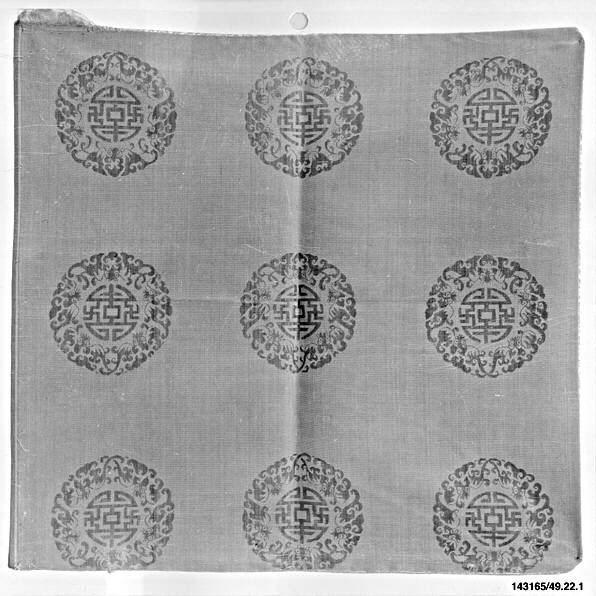
Deconstructing the Silken Canvas: A Couture Analysis of Katherine Fashion Lab’s “Piece”
In the rarefied echelons of contemporary couture, where innovation often masquerades as chaos, Katherine Fashion Lab’s untitled work—referred to simply as “Piece”—emerges as a masterclass in disciplined restraint. Hailing from the ateliers of China, this standalone study is not merely a garment; it is a philosophical treatise rendered in silk. To analyze “Piece” is to engage with a dialectic between ancient Chinese material heritage and the modernist impulse toward architectural purity. The lab’s decision to isolate this work from a larger collection signals a deliberate curatorial act, forcing the observer to confront the object on its own terms, stripped of narrative context and seasonal distraction.
Materiality as Metaphor: The Silk Substrate
The foundational genius of “Piece” lies in its uncompromising commitment to silk. Yet this is not the saccharine, glossy satin of mass-market evening wear. Katherine Fashion Lab employs a raw, unweighted mulberry silk, characterized by a subtle slub and an irregular, almost organic drape. The fabric’s surface is a study in light absorption and reflection; it does not shimmer so much as it breathes. This choice is a pointed rejection of synthetic luster, instead privileging a matte, skin-like finish that invites tactile engagement even from a distance. Under the atelier’s manipulation, the silk is not merely a substrate but an active participant in the garment’s structural logic. The material’s inherent tensile strength is exploited to create cantilevered folds that defy gravity, while its fluidity is reserved for the lower registers, where it pools into a liquid, puddle-like hem.
This duality—strength and surrender—is the core of the piece’s material narrative. The silk has undergone a proprietary “water-forged” treatment, a technique that the lab claims reintroduces the fiber’s natural crimp after weaving. The result is a fabric that possesses the memory of water: it holds a crease when pressed, yet yields effortlessly to the body’s motion. In a couture landscape dominated by metallic brocades and rigid organzas, this tactile intelligence positions “Piece” as a quiet subversive, arguing that luxury is not found in opulence but in the responsiveness of the material to the human form.
Architectural Silhouette: The Geometry of Absence
Moving from fiber to form, the silhouette of “Piece” is a study in negative space. The garment is constructed as a single, continuous spiral that wraps the torso in a double helix, leaving a deliberate void at the left clavicle. This is not a flaw but a calculated aperture, a window that reveals the wearer’s skin as a counterpoint to the silk’s opacity. The shoulders are sharply defined, almost architectural, resembling the eave of a traditional Chinese pavilion—a subtle nod to the country’s vernacular building traditions. Yet the line does not remain rigid; it descends into a fluid, bias-cut skirt that flares asymmetrically, creating a kinetic silhouette that shifts with each step.
What distinguishes “Piece” from conventional draping is its strategic use of internal boning, invisible to the eye. The lab has embedded a series of flexible, hand-stitched whalebone channels along the spiral seam, allowing the silk to stand away from the body at the hip while simultaneously hugging the waist. The result is a paradox: a garment that appears weightless and floating, yet possesses a definitive, almost sculptural architecture. This is couture as engineering, where every pleat is a load-bearing element and every fold is a deliberate calculation. The absence of any visible fastening—no zippers, no buttons—further reinforces the illusion of a garment that has been grown rather than assembled.
Chromatics of Silence: The Palette of “Piece”
Color in “Piece” is not applied; it is inherent. The lab has chosen a single, undyed shade of “raw ivory”, achieved through a labor-intensive process of soaking the silk in green tea and rice bran, a traditional Chinese technique for stabilizing natural fibers. The resulting tone is not a sterile white but a warm, bone-like hue that shifts between champagne, pearl, and pale ash depending on the ambient light. This chromatic restraint is a bold move in an era of digital neon and gradient prints. It forces the viewer to focus on the play of shadow and light across the fabric’s undulating surface, turning the garment into a living chiaroscuro study.
The absence of pigment also serves a conceptual purpose. By stripping away color, Katherine Fashion Lab removes the garment from any specific cultural or seasonal coding. “Piece” is neither spring nor autumn, neither Eastern nor Western. It exists in a liminal space of pure form, allowing the observer to project their own narrative onto the blank canvas. This is a deliberate strategy to elevate the work from fashion to wearable art, where the value lies not in novelty but in timelessness.
Stitchcraft and the Invisible Hand
Upon closer inspection, the construction of “Piece” reveals a level of hand-finishing that borders on the obsessive. Every seam is a flat-felled, hand-rolled seam, executed with a needle so fine that the thread is nearly invisible to the naked eye. The interior of the garment is as immaculate as the exterior—a hallmark of true couture. The hem is not cut but torn along the grain, then hand-whipped with a silk filament, creating a delicate, frayed edge that mimics the irregularity of natural fiber. This attention to the unseen is a quiet rebuke to the fast-fashion industry’s ethos of disposable construction.
Furthermore, the lab employs a technique known as “shadow embroidery”, where a secondary layer of silk organza is placed beneath the outer shell, and the two are stitched together with a monofilament thread. This creates a subtle dimensional relief, visible only when the garment moves. The embroidery pattern—a series of abstract, geometric waves—references the topography of the Yangtze River, but in a manner so abstract that it becomes a private language between the maker and the wearer. This is couture as cryptography, where meaning is embedded in the very fibers rather than printed on the surface.
Standalone Semiotics: The Context of Isolation
The decision to present “Piece” as a standalone study is intellectually significant. Without the crutch of a collection narrative, the garment must justify its existence purely through its own merits. This isolation acts as a pressure test, and “Piece” passes with remarkable grace. It does not rely on spectacle or shock; its drama is internal, revealed only through prolonged observation and interaction. In this context, the garment becomes a meditation on the ontology of clothing—what does it mean for a piece of fabric to be elevated to the status of art?
Moreover, the Chinese origin of the piece adds a layer of geopolitical nuance. In a global market often dominated by Parisian and Milanese houses, Katherine Fashion Lab’s work asserts a distinctly Chinese modernity—one that does not reject tradition but reinterprets it through a contemporary, almost futuristic lens. The silk, a material historically associated with Chinese imperial power, is here democratized into a vehicle for individual expression. This is not cultural appropriation but cultural articulation, a confident statement that China’s couture future is as sophisticated as its past.
Conclusion: The Quiet Radicalism of “Piece”
Katherine Fashion Lab’s “Piece” is a triumph of reduction. In a world of noise, it offers silence. In an era of excess, it proposes economy. The garment’s true innovation lies not in any single technique but in the synthesis of material, form, and context into a cohesive, poetic whole. It is a work that rewards patience, revealing its complexities only to those willing to look beyond the surface. As a standalone study, it succeeds in its ultimate ambition: to make the viewer forget that they are looking at clothing, and instead, to see a piece of the human condition—fragile, structured, and endlessly fluid. This is not merely fashion; it is a manifesto written in silk, and it demands to be read.