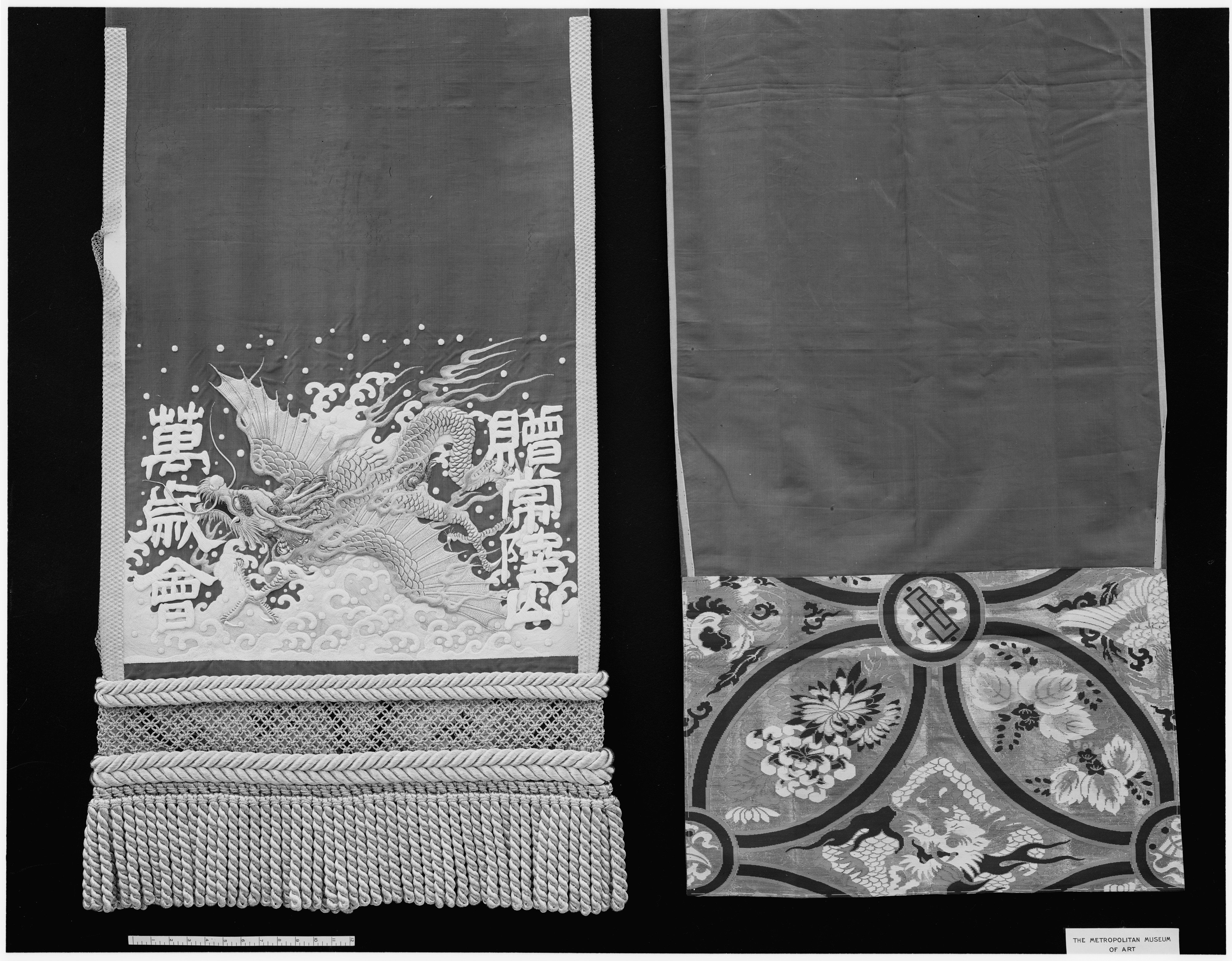
The Sartorial Sublime: Deconstructing the Kesho Mawashi as Couture
In the Western canon, couture is often synonymous with the ephemeral—garments designed for a single evening, a fleeting moment of social performance. Yet, the Japanese Kesho Mawashi, the ceremonial apron of the sumo wrestler, presents a profound counter-narrative. It is not merely a garment; it is a portable monument, a heraldic tapestry woven from silk and ego, designed to be witnessed in a ritualized crescendo of power. At Katherine Fashion Lab, we approach this artifact not as an ethnographic curiosity, but as a masterclass in applied maximalism and the semiotics of authority. This standalone study dissects the Kesho Mawashi through the lens of haute couture construction, material logic, and performative identity, revealing its enduring relevance to contemporary design discourse.
The Anatomy of Power: Silhouette and Structure
The Kesho Mawashi is a paradox of form. Unlike the tailored, body-conscious silhouettes of Western evening wear, this apron is defined by its aggressive volume and gravitational weight. Constructed from a dense, plush velvet base—often in deep indigo, obsidian black, or oxblood—the apron measures approximately 70 centimeters in length and 60 centimeters in width, but its visual mass is exponentially greater. The velvet, a fabric historically associated with European royalty, is here recontextualized to absorb light rather than reflect it, creating a matte, tactile depth that demands physical proximity to appreciate.
From a structural perspective, the garment is a study in tension and release. The rigid, heavily embroidered front panel is suspended from a series of silk cords (sagari) that cascade over the wrestler’s massive torso. These cords are not merely functional; they are kinetic elements that sway and snap with each step, drawing the eye to the athlete’s coiled musculature. The couture parallel is immediate: the way a Madame Grès gown uses bias draping to exaggerate the hip, or how a Thierry Mugler jacket amplifies the shoulder. Here, the apron exaggerates the hara—the center of gravity in Japanese martial philosophy—creating a visual anchor that suggests immovability. The weight of the velvet, often exceeding 10 kilograms, is not a hindrance but a deliberate statement of endurance; to wear it is to perform a feat of strength even before the match begins.
Threads of Gold, Narratives of Stone: The Embroidery as Lexicon
If the silhouette is the grammar of power, the embroidery is its poetry. The Kesho Mawashi is a canvas for narrative iconography, executed in a technique that rivals any atelier in Paris. The primary materials—silk threads, flat gold and silver gilt threads, and occasionally couched metallic braid—are applied using a method akin to nué or or nué, where the metal threads are laid flat and shaded with silk stitches. The result is a shimmering, almost three-dimensional relief that shifts with the ambient light of the sumo arena.
Common motifs include the crane (tsuru), symbolizing longevity; the pine tree (matsu), representing resilience; and the fierce dragon (ryu), a guardian of celestial power. Yet, the most compelling examples move beyond generic symbolism to depict specific historical battles, mythological scenes, or even the wrestler’s own shikona (ring name) rendered in bold, calligraphic kanji. In couture terms, this is the equivalent of a Charles Frederick Worth gown embroidered with the client’s family crest—a fusion of personal narrative and public spectacle. The labor is staggering: a single high-quality apron can require six months to a year of continuous handwork, involving multiple artisans specializing in different stitches. This is not mass production; it is bespoke creation at its most extreme, where the cost of materials alone can exceed $50,000.
Material Alchemy: Velvet, Silk, and the Physics of Splendor
Our material analysis at Katherine Fashion Lab focuses on the haptic and optical interplay between the velvet ground and the metallic embellishment. The velvet is typically a silk pile on a cotton or silk base, chosen for its ability to hold the heavy embroidery without distortion. The pile acts as a dark, absorbent field against which the metallic threads appear to float. This is a deliberate contrast: the matte, soft texture of the velvet against the hard, reflective surface of the gold. The effect is not dissimilar to the brocart of the French court, but with a distinctly Japanese sensibility for wabi-sabi—an acceptance of imperfection and the passage of time. Indeed, the finest Kesho Mawashi are often passed down through generations, their metallic threads developing a subtle patina that is prized as a record of use.
Furthermore, the construction technique is remarkably robust. The embroidery is not applied to the surface but stitched through the velvet into a stiff interfacing, often made of layers of washi paper or cotton wadding. This creates a semi-rigid panel that maintains its shape even when the wrestler bows deeply. In couture, this is analogous to the use of horsehair canvas in a tailored jacket—an invisible infrastructure that dictates the garment’s final form. The sagari cords, made of twisted silk, are attached via a complex knot system that allows for quick donning and removal, a functional consideration that belies the garment’s ceremonial grandeur.
From Dohyo to Runway: The Contemporary Resonance
Why should the modern fashion scholar study a garment from the world of sumo? Because the Kesho Mawashi anticipates several contemporary trends with uncanny precision. First, it is a precursor to “loud luxury” and logomania—the use of overt, unapologetic branding. The wrestler’s name and patron’s crest are displayed with the same bravado as a Gucci belt or a Louis Vuitton monogram. The apron declares, “I am sponsored, I am successful, I am untouchable.”
Second, it challenges the Western binary of “fashion as art” versus “fashion as function.” The Kesho Mawashi is neither. It is a ritual object, designed to be worn for less than ten minutes during the dohyo-iri (ring-entering ceremony), yet its creation consumes months of labor. This is pure, unadulterated spectacle, a distant cousin to the elaborate costumes of a Met Gala or the theatrical creations of Alexander McQueen. It reminds us that the most powerful garments are those that exist outside the economy of daily wear, serving instead as vessels for collective memory and individual transcendence.
Finally, the garment offers a lesson in proportional exaggeration. The Kesho Mawashi does not fit the body; it confronts it. The scale of the embroidery, the thickness of the cords, the sheer square footage of velvet—all are amplified to match the wrestler’s formidable physique. This is a masterclass in scale management, a principle that every couturier must master. To design for a size 52 chest is one thing; to design for a 190-centimeter, 180-kilogram athlete requires a complete rethinking of proportion, balance, and drape.
Conclusion: A Monument in Motion
The Kesho Mawashi is not a costume; it is a portable architecture of identity. It synthesizes the artisan’s patience, the patron’s wealth, and the athlete’s physicality into a single, breathtaking object. For Katherine Fashion Lab, it stands as a testament to the idea that couture is not defined by geography or era, but by the intensity of its intent. The apron’s velvet depths and golden threads speak a universal language of power, one that transcends the sumo ring and resonates directly with the contemporary atelier. In a world of fast fashion and disposable trends, the Kesho Mawashi is a defiant monument to slow, deliberate, and awe-inspiring creation—a reminder that true luxury is not worn, but borne.