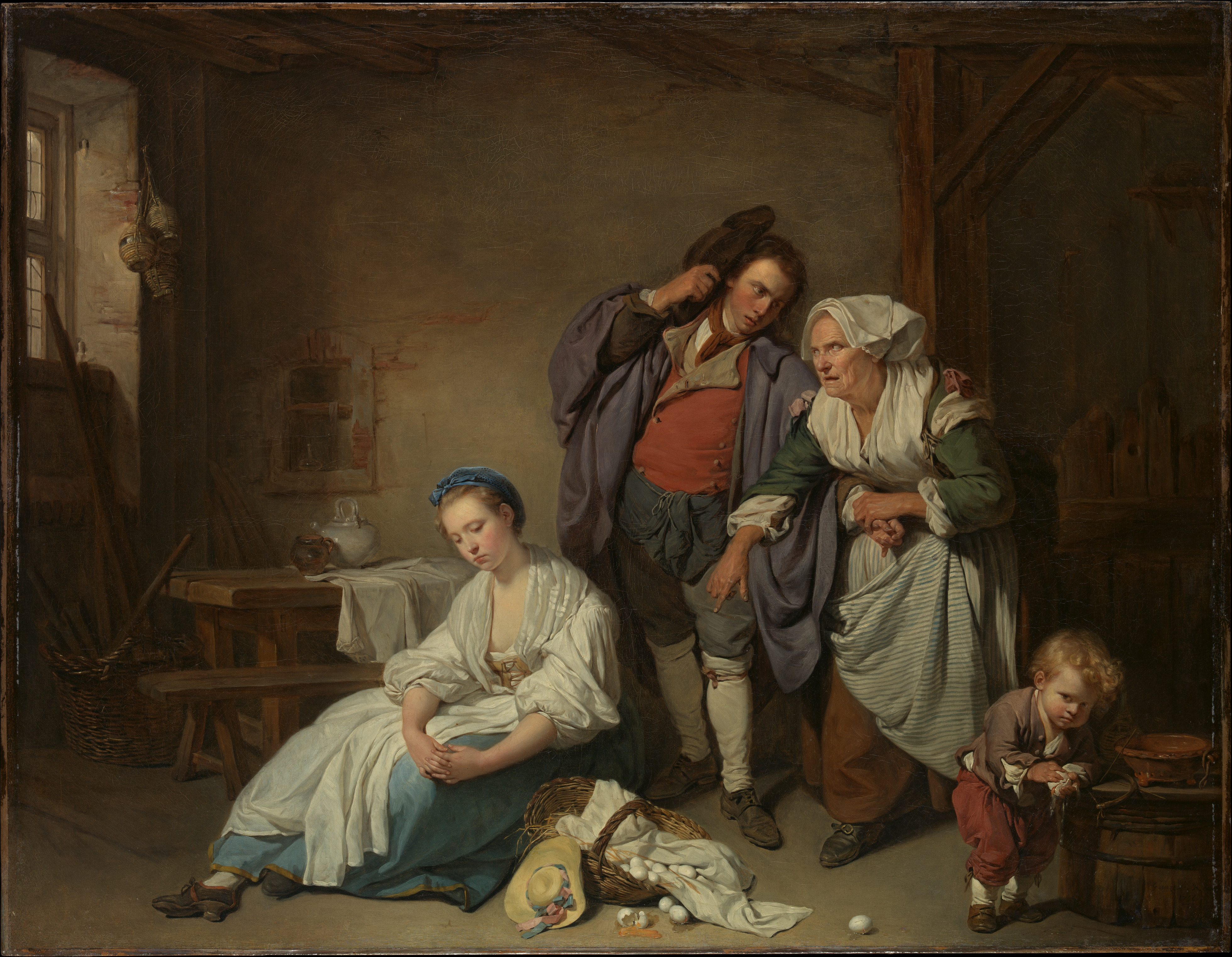
Executive Heritage Analysis: The Broken Egg Motif
This strategic research paper, commissioned by Katherine Fashion Lab, presents a comprehensive heritage analysis of the Broken Eggs motif as rendered in oil on canvas, tracing its symbolic lineage from ancient civilizations to its potent application within a 2026 high-end luxury strategy. The analysis is structured to illuminate the motif's symbolic power, its evolution in historical adornment, its profound spiritual meaning, and its translation into a commercial language of exclusivity and narrative depth.
Symbolic Power: The Cosmogonic Rupture
In the lexicon of ancient symbology, the egg is not a passive object but a primordial vessel of potentiality. The broken egg, specifically, signifies a moment of irreversible transformation—the rupture of the cosmic egg from which the universe, the elements, and the first deities emerged. In Orphic and Phoenician cosmogonies, the broken egg represents the generative act of creation, a divine fragmentation that births order from chaos. For Katherine Fashion Lab, this symbolism translates into a powerful brand narrative: the deliberate shattering of conventional aesthetics to unveil a new, more authentic form of beauty.
The strategic power here lies in the duality of the image. The broken shell is simultaneously an emblem of vulnerability and violent genesis. It speaks to the luxury consumer’s desire for authenticity—a move away from the sterile, unblemished perfection of mass-produced goods toward a curated imperfection that signifies a unique story. The oil-on-canvas medium intensifies this power; the tactile brushstrokes render the cracks as organic, almost geological, formations, suggesting that true luxury is not manufactured but excavated from a deep, cultural stratum.
Historical Adornment: From Ritual Object to Ornamental Code
Historically, the egg’s transition from ritual object to adornment is a study in the sacralization of the personal. In ancient Egyptian and Mesopotamian cultures, carved ostrich eggs were placed in tombs as provisions for the afterlife, their surfaces etched with protective incantations. By the time of the Greco-Roman period, the egg had migrated from the funerary context to the domestic and personal sphere, appearing as pendants and amulets believed to confer fertility and rebirth upon the wearer. This historical trajectory is critical for Katherine Fashion Lab’s design lexicon.
For 2026, the heritage of adornment is reimagined not as a literal egg-shaped pendant, but as a morphological language of fragmentation. The lab can extract design cues from the way ancient artisans treated the shell’s surface: the use of gold leaf to repair cracks (kintsugi-like, though pre-dating it), the inlay of lapis lazuli into the fissures, or the etching of geometric patterns that follow the fracture lines. This is not about depicting an egg; it is about adopting the aesthetic of the fissure—a design motif where seams, gold veining, and irregular textures become the signature of a garment or accessory. The oil-on-canvas reference provides the color palette: the warm, albuminous whites, the ochre of the shell, and the deep umber shadows within the cracks, translating into a sophisticated neutral palette with dramatic chiaroscuro effects in fabric draping.
Spiritual Meaning: The Alchemy of Sacrifice and Renewal
The spiritual resonance of the broken egg is deeply rooted in the concept of sacrificial fertility. In many agrarian ancient civilizations, the breaking of an egg was a deliberate offering to chthonic deities, a symbolic death enacted to ensure the cyclical return of spring and the germination of crops. The egg must be broken to release its life-giving contents; the shell is the prison that must be shattered for the spirit (or the chick) to emerge. This is a narrative of necessary destruction for transcendent renewal.
In a contemporary luxury context, this spiritual dimension offers a profound counter-narrative to the industry’s focus on accumulation. Katherine Fashion Lab can position the Broken Eggs collection as an exercise in curated destruction—a philosophical statement on the shedding of past identities. The consumer is not buying a product; they are participating in a ritual of personal alchemy. The oil-on-canvas texture, with its visible craquelure and aged varnish, reinforces this spiritual temporality. It suggests that the piece has a soul, that it has survived a cataclysm, and that its beauty is a direct result of its resilience. This moves the product from the realm of commodity to that of a talisman, an object imbued with the spiritual power of transformation.
2026 High-End Luxury Strategy: The Fragmented Icon
For the 2026 fiscal cycle, Katherine Fashion Lab will deploy the Broken Eggs motif as a strategic counter-positioning against minimalist saturation in the luxury market. The strategy rests on three pillars: Narrative Scarcity, Tactile Authenticity, and Collectible Impermanence.
Narrative Scarcity
The heritage research confirms that the broken egg is a rare motif in high fashion, largely untapped due to its historical association with fragility. By claiming this symbol, the Lab creates an immediate point of differentiation. The narrative is not merely "eggshell," but the moment of the break. This allows for a storytelling framework where each garment is presented as a "fragment" of a larger, unseen whole—a strategy that justifies a price premium based on intellectual property and cultural arbitration, rather than material cost alone.
Tactile Authenticity
Translating the oil-on-canvas texture into haute couture requires material innovation. The 2026 strategy will invest in developing proprietary textiles that mimic the physicality of cracked shell and dried albumen. This includes high-relief embroidery using glass beads to simulate the crystalline structure of shell fragments, and laser-cut leathers with engineered fissures that reveal a contrasting, gold-leafed underlayer. The goal is to offer a haptic experience of the ancient artifact, allowing the client to feel the history through their fingertips, a sensory luxury that digital commerce cannot replicate.
Collectible Impermanence
Finally, the spiritual meaning of renewal is leveraged through a limited "Sacrificial Series." This involves a capsule collection where a select number of bespoke pieces are physically distressed—not in a pre-worn aesthetic, but in a ritualistic, controlled "breaking" performed by the atelier. Each piece is certified with a unique provenance document describing the exact nature of its "rupture" and its symbolic alignment with an ancient creation myth. This creates a collectible market dynamic, where the imperfection is the ultimate marker of exclusivity, and the product’s value is tied to its narrative of symbolic sacrifice and rebirth.
In conclusion, the Broken Eggs motif, rooted in ancient civilization’s most profound cosmogonic myths, offers Katherine Fashion Lab a robust platform for 2026. It is a symbol that carries the weight of creation, the beauty of historical adornment, and the spiritual depth of transformative sacrifice. Strategically, it allows the brand to lead with cultural authority, offering a product that is not merely worn, but understood—a fragment of eternity, curated for the discerning few.