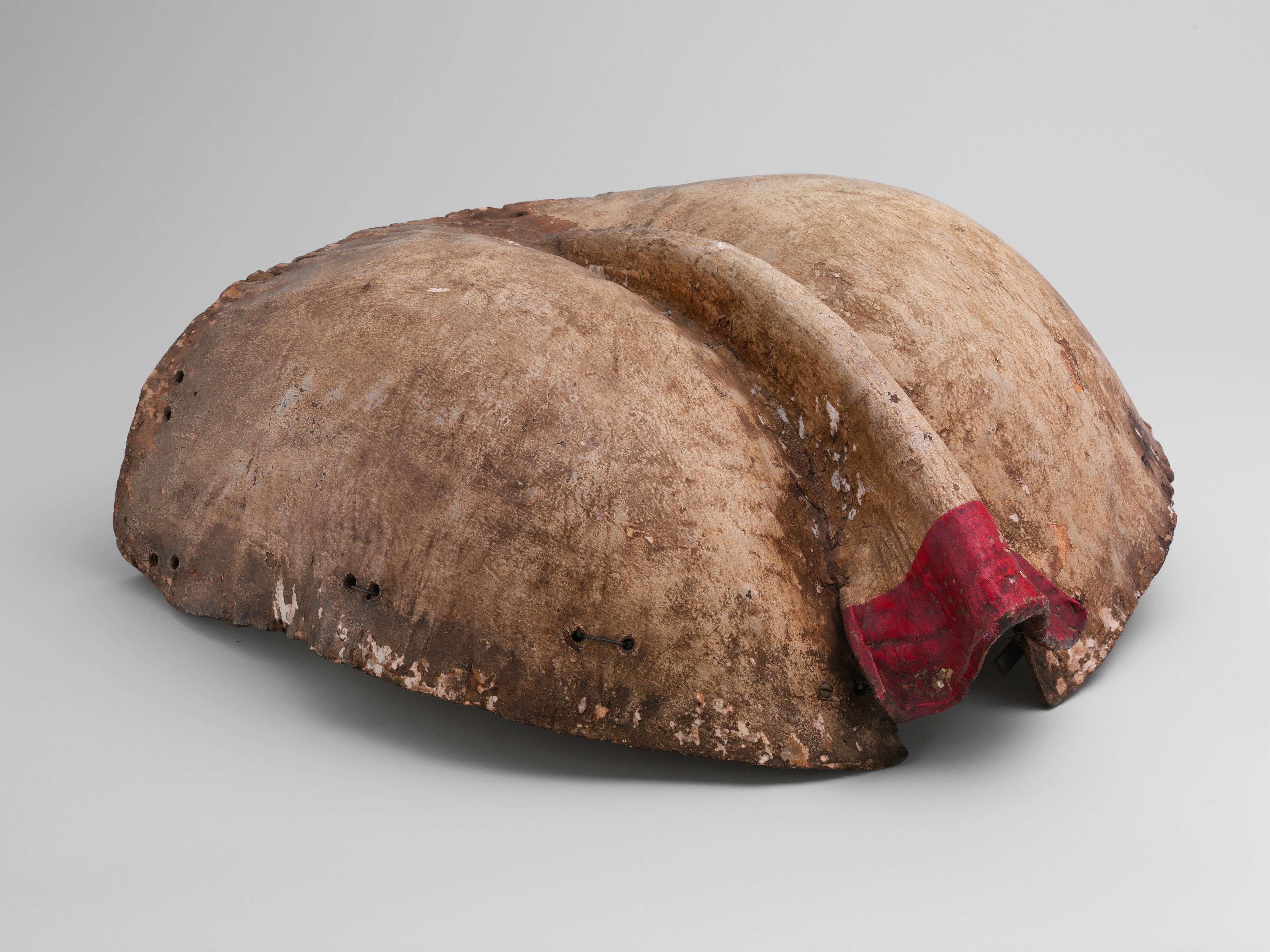
Peytral and Crupper Plates: A Strategic Analysis of Equestrian Armor as Couture Prototype
Within the archive of historical dress, certain artifacts transcend their utilitarian origins to reveal profound narratives about power, protection, and the body as a site of symbolic communication. The subject of this standalone study—a set of Peytral (chest) and Crupper (rump) plates, possibly of Flemish or German origin from the late Gothic or early Renaissance period—offers such a moment. Crafted from leather, gesso, and pigment, these pieces of equestrian armor are not merely functional objects for the battlefield or tournament. For Katherine Fashion Lab, they represent a sophisticated case study in structured couture, a pre-industrial manifesto on contouring, material innovation, and the dialogue between the organic and the augmented form.
Deconstructing the Silhouette: Architecture for a Non-Human Form
The primary couture lesson lies in the plates' fundamental purpose: to create an imposing, defensive silhouette on a living, moving form. The peytral, covering the horse's chest, is a study in convex sculpting. Its rounded, protruding form is designed to deflect blows, but in fashion terms, it aggressively extends the frontal profile, creating an illusion of immense power and forward momentum. Conversely, the crupper plate, safeguarding the hindquarters, often features a more tailored, fitted curve, securing the form while allowing for dynamic movement. This dichotomy—assertive projection versus secured contour—mirrors core principles of haute couture, where garments may exaggerate shoulders while nipping the waist, architecting an idealized silhouette through structured underpinnings.
The connection to the body is paramount. These plates were not static shells; they were engineered for a creature in motion. This implies a deep understanding of equine anatomy—the points of flexion, the swing of the gait, the need for ventilation. The resulting construction, with its strategic strapping and shaped plates, prefigures the meticulous engineering of a couture bodice or a structured jacket, where canvas, boning, and darts are deployed to enhance, protect, and accommodate the body's realities, all while maintaining an uncompromising external vision.
Material Alchemy: Leather, Gesso, and the Illusion of Grandeur
The specified materials—leather, gesso, pigment—form a trinity of transformative craftsmanship that directly parallels haute couture’s textile manipulations. Leather provides the foundational substrate: flexible, durable, and capable of being molded when treated. In couture, this is analogous to the selection of a premier silk or a resilient wool, the base upon which illusion is built.
The application of gesso, a mixture of glue and chalk, is the critical transformative act. Applied in layers over the leather, this technique creates a rigid, smooth, and receptive surface. This process is the direct antecedent to modern techniques like gauffrage (embossing and stiffening fabric), dévoré (burn-out techniques to create texture), or the application of resins and synthetic coatings to alter a textile's hand and behavior. The gessoed surface negates the inherent character of the leather, allowing it to be redefined entirely—a act of pure creative will over raw material.
Finally, the pigment completes the alchemy. The painted surface, often mimicking more expensive etched steel or featuring elaborate heraldic devices, speaks to the power of surface design and finish. It is a study in perception management. For a fraction of the cost of full steel armor, the ensemble could project equivalent status and magnificence on the field. This is the essence of luxury strategy: the creation of perceived value and narrative through meticulous artistry, a principle evident in the hand-painted motifs of a Schiaparelli gown or the intricate embroideries of Lesage, where labor and artistry eclipse the mere cost of raw materials.
Context and Symbolism: The Body as a Heraldic Canvas
As a standalone study, divorced from the full bard (horse armor) or its rider, these plates compel us to focus on their role as a heraldic and symbolic canvas. The horse, an extension of the knight's own body and identity, was armored not just for protection but for proclamation. The broad surfaces of the peytral and crupper were prime real estate for displaying coats of arms, allegorical scenes, or decorative scrollwork. This transforms the ensemble from mere equipment into a communicative garment.
In contemporary couture, this translates to the concept of the garment as a medium for personal or political statement. The structured "architecture" of the plates provides the perfect, unyielding frame for the "art"—the painted narrative. We see this in the work of designers like Alexander McQueen, whose garments often served as brutalist canvases for prints and embroideries conveying complex stories, or in the explicit symbolism of a Christian Lacroix motif. The body—equine or human—becomes a moving, living billboard of identity, allegiance, and personal mythos, framed by intentional, imposing structure.
Conclusion: Strategic Legacy for Contemporary Form
For Katherine Fashion Lab, this Flemish or German peytral and crupper set is far from a relic. It is a prototype. It demonstrates:
1. Silhouette as Strategy: The conscious manipulation of form to convey power, direction, and status through convex and concave sculpting.
2. Material Transformation: The use of layered techniques (gesso over leather) to fundamentally alter a material's properties and perception, a cornerstone of textile innovation.
3. The Engineering of Movement: A deep, anatomical consideration that allows rigid structure to coexist with dynamic life.
4. Surface as Narrative: The deployment of broad, structured planes as a canvas for symbolic communication, integrating art and armor.
This analysis posits that the true lineage of avant-garde structural couture runs not only through the ateliers of Paris but also through the workshops of armorers in Mechelen or Augsburg. In these plates, we find a rigorous, purposeful, and spectacularly effective approach to dressing a body for a performance of ultimate consequence—a principle that remains the very heart of haute couture today.