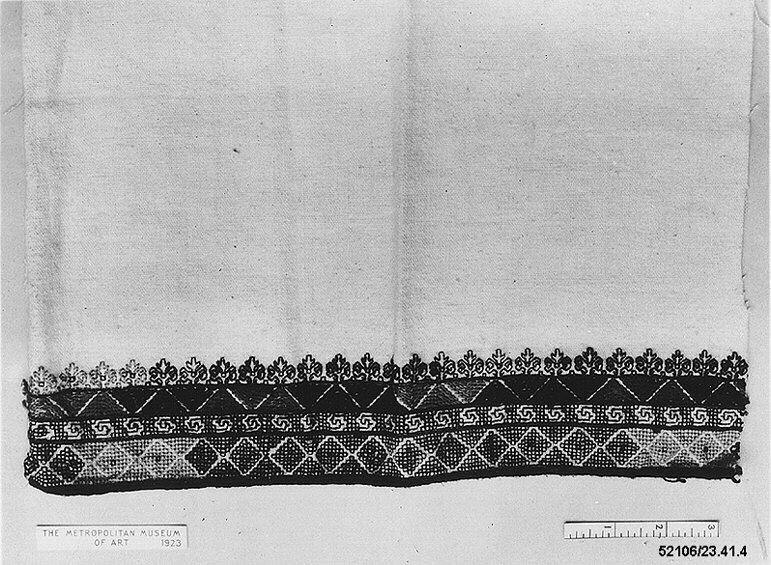
The Cuff Reimagined: A Study in Global Heritage and Material Dialogue at Katherine Fashion Lab
In the rarefied echelons of couture, where innovation is often mistaken for disruption, Katherine Fashion Lab’s latest standalone study—simply titled “The Cuff”—offers a masterclass in restraint as a form of radical expression. This is not a garment in the traditional sense, nor a mere accessory. It is an architectural intervention on the human form, a sculptural fragment that interrogates the very notion of finish, boundary, and adornment. By isolating the cuff from its sartorial context, the Lab forces a profound reconsideration of a component so ubiquitous it has become invisible. Here, the cuff is not an ending; it is a beginning—a point of departure for a global conversation stitched in silk and cotton.
Deconstructing the Fragment: The Cuff as a Standalone Proposition
The decision to present the cuff as a standalone study is a deliberate curatorial act. In Western tailoring, the cuff is a functional terminus, a reinforced edge that shields against abrasion. In Eastern garment traditions, however, the cuff—or its equivalent, the xiù kǒu in Chinese qipao or the kaf in Persian robes—has historically served as a canvas for the most intricate embroidery, signifying rank, region, and marital status. Katherine Fashion Lab collapses these geographies into a single, wearable object. The study does not apologize for its fragmentary nature; instead, it elevates the part to the status of the whole, arguing that a single, perfectly executed detail can carry the intellectual weight of a complete ensemble.
This approach demands a re-calibration of the viewer’s gaze. We are not looking at a sleeve; we are looking at a culmination of decisions—about drape, density, and the meeting point between skin and textile. The cuff becomes a microcosm of the couture ethos: the belief that no millimeter is insignificant. In a fashion landscape obsessed with volume and spectacle, this study is a quiet provocation, whispering that true luxury lies in the precision of the edge.
Material Alchemy: Silk on Cotton as a Dialectical Pairing
The material specification—silk on cotton—is not a casual choice but a dialectical thesis. Cotton, the democratic fiber of global industry, provides a matte, grounded, and breathable base. It is the earth, the body, the quotidian. Silk, the aristocratic filament of the ancient Silk Road, is laid atop it as a luminous, fluid counterpoint. It is the sky, the spirit, the ceremonial. The Lab’s execution of this pairing is technically audacious. The silk is not merely appliquéd; it is hand-rolled and tension-stitched over the cotton substrate, creating a micro-relief that catches light differently at every angle.
This is a study in tactile dissonance. The cotton offers resistance and structure; the silk offers surrender and flow. When the cuff is worn, the interaction between the two creates a subtle, kinetic shimmer—a phenomenon the Lab’s atelier refers to as “breathing layers.” The silk’s natural proteinaceous luster is muted by the cotton’s absorbent tooth, preventing any overt glitz. Instead, the effect is one of controlled opulence, a hallmark of the Lab’s design philosophy. This material dialogue also speaks to a global heritage of trade: cotton from the Americas or India, silk from China or the Levant, converging in a single Parisian atelier to produce an object that is simultaneously local and planetary.
Global Heritage: A Cartography of the Wrist
The global heritage embedded in this study is not a pastiche of motifs but a structural synthesis. The cuff’s silhouette borrows from the rigid, cylindrical form of the Japanese sodeguchi, the armored wrist guards of samurai, which prioritized protection and precision. Yet, its length and closure mechanism echo the elongated, overlapping cuffs of Mughal court attire, which were designed to cascade over the hand in a gesture of graceful nonchalance. Katherine Fashion Lab has fused these disparate lineages into a single, coherent form that feels neither historical nor costume-like.
The construction technique further honors this heritage. The Lab employs a reversible seam—a method rarely seen in Western couture—where the silk is folded over the cotton edge and stitched from the interior, leaving no visible thread on the exterior. This technique, drawn from the French couture tradition of surpiqûre, is elevated by the Lab’s signature invisible interfacing made of horsehair canvas, which allows the cuff to stand away from the wrist as a rigid architectural element while remaining feather-light. The result is a piece that can be worn at the wrist, the upper arm, or even as a choker—a testament to its versatility as a standalone artifact.
The Semiotics of the Edge: What the Cuff Conceals and Reveals
In this study, the cuff becomes a semiotic device. It is a threshold between the self and the world, between the intimate interior of the sleeve and the public space of the hand. By isolating it, the Lab compels us to consider what a cuff traditionally hides: the pulse, the veins, the delicate bones of the wrist. The silk-on-cotton construction is designed to be worn slightly loose, allowing a glimpse of the skin beneath—a flash of vulnerability against the structured exterior. This tension between concealment and revelation is the emotional core of the piece.
Moreover, the cuff’s standalone nature allows it to function as a portable monument. It can be attached to a modern blazer, a minimalist gown, or worn alone as a sculptural bracelet. This versatility is a critique of the fashion system’s insistence on totality. The Lab argues that a single, perfectly executed fragment can be more powerful than a complete, mediocre garment. The cuff, therefore, is not a sample or a prototype; it is a complete statement about the value of artisanal focus.
Technical Mastery: The Atelier’s Signature
From a technical standpoint, the execution is flawless. The silk—a 22-momme charmeuse—is cut on the bias to maximize its drape, then stabilized with a micro-thin layer of silk organza before being married to the cotton. The cotton base is a tightly woven Egyptian Giza 45, chosen for its long staple fibers, which provide exceptional strength and a smooth hand. The two layers are joined using a single-needle, double-stitch technique that allows for slight movement between the layers, preventing puckering and ensuring the cuff’s longevity.
The closure is a hidden frog closure, hand-knotted from silk cord, which echoes the pankou knots of traditional Chinese jackets. This detail is a nod to the global heritage of fastening, where the button is not merely functional but a symbol of status and craft. The frog closure is positioned asymmetrically, off-center, adding a subtle avant-garde twist to an otherwise classical form. Every millimeter of the cuff’s interior is finished with a hand-rolled hem, a process that takes a single artisan over three hours to complete. This invisible labor is the true luxury of the piece—a fact that the Lab does not hide but rather celebrates in its accompanying documentation.
Conclusion: A New Lexicon for Couture
Katherine Fashion Lab’s “The Cuff” is more than a study; it is a manifesto. It declares that couture’s future lies not in grander gestures but in deeper interrogations of the smallest details. By isolating the cuff, the Lab has created a new lexicon for fashion—one where heritage is not a costume but a construction principle, where material is not a surface but a philosophy, and where a fragment can be a complete world. For the discerning collector, this piece is not an accessory; it is an intellectual investment, a wearable thesis on the enduring power of the edge. In a world of noise, it is a whisper of silk on cotton—and it is deafening.