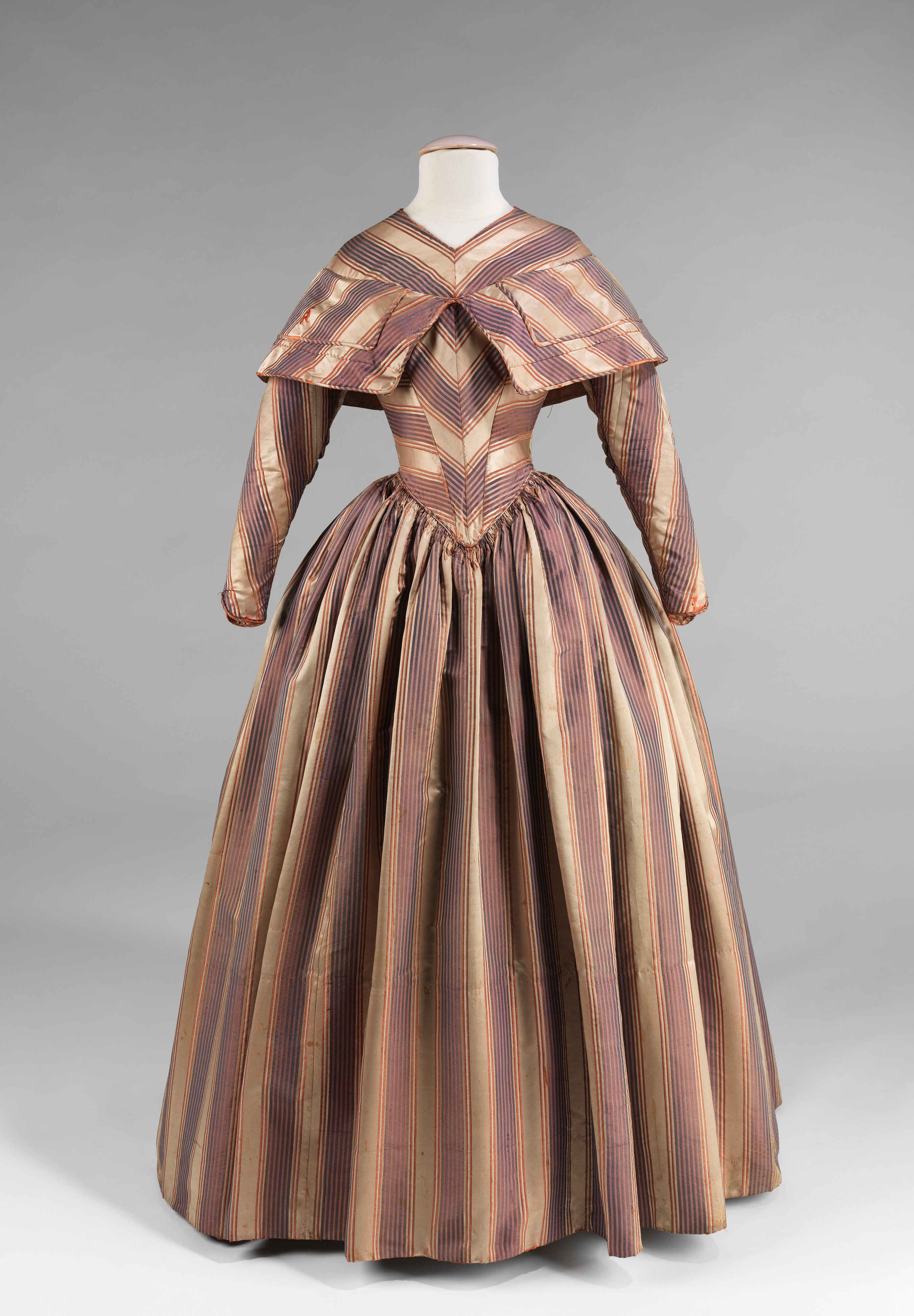
Executive Heritage Analysis: The American Visiting Dress in Silk
Katherine Fashion Lab presents this strategic standalone research paper to examine the American visiting dress as a repository of symbolic power, historical adornment, and spiritual meaning, with direct implications for a 2026 high-end luxury strategy. The visiting dress—a distinct garment category that flourished between the 1840s and 1920s—represents a uniquely American negotiation between public performance, private aspiration, and material transcendence. Rendered in silk, this garment becomes more than apparel; it is a wearable manifesto of social mobility, disciplined elegance, and quiet authority.
Symbolic Power and the Architecture of Social Presence
The visiting dress was engineered for a specific ritual: the formal afternoon call. This was not casual socializing but a codified performance of respectability, reciprocity, and rank. The American iteration of this European tradition took on particular urgency in a nation without hereditary titles, where status had to be visibly earned and continuously reaffirmed. The silk visiting dress, therefore, functioned as a portable credential—a material proof of taste, means, and moral fitness.
Its symbolic power lay in deliberate restraint. Unlike evening gowns that exposed the shoulders or ball dresses that prioritized spectacle, the visiting dress covered the arms and neck, signaling propriety. Yet the silk fabric—often taffeta, faille, or moiré—caught light with a liquid shimmer, betraying wealth without shouting. The silhouette, typically featuring a fitted bodice, full skirt, and trained back, created a moving architecture that commanded space. The wearer did not enter a room; she composed it. For Katherine Fashion Lab, this translates into a 2026 strategy of restraint as authority: garments that whisper rather than shout, using cut and fabric weight to confer presence without logos or ostentation.
Historical Adornment: The Silk Dialectic of Utility and Splendor
Silk was the visiting dress’s defining medium, and its choice was neither accidental nor purely aesthetic. In mid-19th-century America, silk was among the most expensive textiles available, often imported from Lyon or China via arduous trade routes. A silk visiting dress could cost the equivalent of a working-class family’s monthly income. Its adoption signified not merely wealth but deferred gratification—the ability to invest in a garment that required careful storage, professional cleaning, and periodic remaking.
Historical adornment in this context was deeply gendered and spatially coded. The visiting dress was worn in the front parlor—the domestic stage where women exercised soft power. Unlike men’s business suits, which emphasized uniformity, women’s visiting dresses allowed for individuation through color, trim, and textile choice. Deep jewel tones—burgundy, forest green, midnight blue—were favored for autumn calls, while lighter pastels in silk organza appeared in spring. The trimmings—passementerie, velvet ribbon, jet beads—added tactile complexity, inviting close inspection during conversation. This was adornment as conversational currency: each detail offered a talking point, a demonstration of discernment.
For the 2026 luxury market, Katherine Fashion Lab can resurrect this dialectic. The modern client seeks garments that offer both utility (wearability, durability, comfort) and splendor (visual richness, tactile pleasure). Silk remains the optimal medium—biodegradable, breathable, and infinitely drapable. A 2026 visiting dress collection could employ technical silk blends that resist wrinkles and moisture while retaining the fabric’s natural luminosity, positioning the garment as both heirloom and daily armor.
Spiritual Meaning: The Dress as Ritual Vestment
Beneath the social surface, the visiting dress carried profound spiritual resonance. The act of dressing for a call was a form of preparation—a secular ritual that mirrored religious vesting. Women often donned their visiting dresses after morning prayers, as part of a daily rhythm that included charitable visits to the sick or poor. The dress, then, was not merely a costume but a vessel of moral intention. Its restrictive silhouette—tight corset, high neck, long sleeves—served as a physical reminder of self-discipline, a form of embodied prayer.
The silk itself held quasi-sacred connotations. In many cultures, silk is associated with the soul’s journey, its smooth surface reflecting inner clarity. In the American context, silk’s association with the East—China, Japan, Persia—imbued it with exotic mysticism, while its use in ecclesiastical vestments and burial shrouds tied it to transcendence. A woman wearing a silk visiting dress was, in effect, wearing a secular habit—a garment that prepared her for social communion and, by extension, spiritual communion.
Katherine Fashion Lab’s 2026 strategy should foreground this spiritual dimension. Marketing narratives can frame the visiting dress as a tool for mindfulness: donning it as a deliberate act of self-composure in an age of digital fragmentation. The brand could incorporate interior linings with embroidered mantras or small, hidden pockets for personal talismans—details invisible to others but meaningful to the wearer. This aligns with the growing luxury trend toward intentional consumption, where garments are valued not for disposability but for their capacity to anchor identity and ritual.
2026 High-End Luxury Strategy: From Archive to Avatar
To translate the visiting dress into a 2026 luxury proposition, Katherine Fashion Lab must balance heritage authenticity with contemporary relevance. The following strategic pillars are recommended:
Pillar One: The Digital Visiting Hour
Revive the ritual of the formal call in a digital context. Offer private, by-appointment virtual fittings where clients are guided through the history of the visiting dress while selecting silk variations, trims, and silhouettes. This recreates the intimacy of the parlor while leveraging modern e-commerce. Each garment ships with a “calling card”—a scannable QR code linking to a curated playlist, historical essay, or guided meditation, extending the garment’s spiritual utility.
Pillar Two: Made-to-Observe Silk
Introduce a bespoke service where clients choose from heritage silk weaves—moiré antique, silk faille, taffeta changeant—and have their visiting dress constructed using period-accurate techniques, including hand-stitched buttonholes and horsehair-braided hems. This positions the garment as an anti-fast-fashion artifact, with a lead time of six to eight weeks. Pricing should be premium but transparent, emphasizing the garment’s lifecycle cost-per-wear versus disposable luxury.
Pillar Three: The Spiritual Lining
Embed spiritual meaning through hidden details. Offer options for hand-embroidered silk linings with user-selected symbols—a tree of life, a protective eye, a family monogram—placed inside the back bodice, near the heart. This creates a private dialogue between wearer and garment, appealing to the 2026 consumer’s desire for personalized meaning over mass branding.
Pillar Four: Capsule Heritage Collection
Launch a limited-edition capsule of five visiting dress designs, each named after a historical American city—Philadelphia, Charleston, Boston, New Orleans, San Francisco—and each referencing local silk trade histories. This geographic anchoring builds a narrative of American heritage while allowing regional marketing campaigns. The collection should be released in autumn, aligning with the traditional visiting season, and supported by a documentary-style content series featuring textile historians and contemporary wearers.
Pillar Five: Sustainability as Spiritual Practice
Position the visiting dress as a slow-fashion sacrament. Use certified peace silk (Ahimsa silk) that does not kill the silkworm, framing the choice as an act of compassion. Offer a lifetime repair and re-dyeing service, reinforcing the garment’s status as a permanent wardrobe piece. This aligns with the 2026 luxury consumer’s ethical expectations while echoing the historical practice of remaking and repurposing silk dresses across generations.
Conclusion: The Visiting Dress as a Luxury Archetype
The American visiting dress in silk is not a relic but a strategic archetype. It embodies the tensions—public versus private, discipline versus desire, utility versus splendor—that define high-end luxury. For Katherine Fashion Lab, this garment offers a blueprint for creating objects that are simultaneously wearable, symbolic, and spiritual. By reviving the visiting dress with contemporary rigor, the brand can position itself at the intersection of heritage and innovation, serving a clientele that seeks not just clothing but ritualized self-actualization. The 2026 strategy outlined herein transforms a historical artifact into a living luxury proposition, one that honors the past while dressing the future.