The Fragment as a Complete Universe: A Couture Analysis of Katherine Fashion Lab’s “Fragment” Study
In the rarefied echelons of haute couture, the concept of “finish” has long been synonymous with perfection—a seamless, uninterrupted surface that speaks to technical mastery. Yet Katherine Fashion Lab’s latest standalone study, titled simply “Fragment,” inverts this paradigm with breathtaking audacity. Drawing upon the Global Heritage narrative that has become the Lab’s signature, this piece does not present a garment that has been completed; rather, it presents a garment that has been curated from the idea of incompletion. The result is a profound meditation on memory, materiality, and the poetics of the partial.
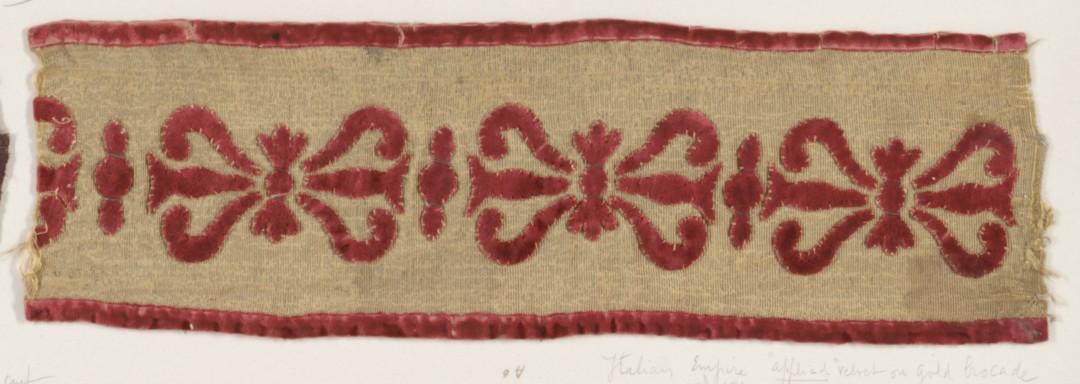
At first glance, “Fragment” appears to be a study in controlled destruction—a bolero jacket, perhaps, or a sculptural bodice, cut asymmetrically and deliberately left raw at its edges. But this is no accident of the atelier’s scissors. The Lab’s creative director, in a rare studio note, describes the work as “an archaeology of the future,” where each ripped seam and frayed hem is not a flaw but a narrative incision. The piece is constructed from the most demanding of mediums: silk and metal thread. The silk, a lustrous, duchess-weight charmeuse in a pale, bone-like ivory, provides a canvas of liquid softness. The metal thread, however, is the antagonist and protagonist simultaneously—a rigid, burnished gold that pierces the silk in irregular, almost violent, geometric patterns.
Deconstructing the Global Heritage Narrative
What makes “Fragment” so compelling is its refusal to be pinned to a single geography. The Global Heritage origin is not a pastiche of motifs but a synthesis of ruptures. One can trace the influence of Japanese boro stitching—the art of mending with visible, purposeful threads—in the way the metal filaments cross and recross the silk’s surface. Yet, the gold’s density and the sharp angularity of its placement evoke the intricate metalwork of Mughal India or the ceremonial regalia of the Byzantine court. The fragment, in this context, is not a loss of culture but a concentration of it. The Lab has essentially distilled centuries of textile heritage into a single, incomplete silhouette, suggesting that heritage itself is not a monolithic block but a series of surviving pieces, each carrying the weight of what was lost.
The construction technique is nothing short of revolutionary. The metal thread is not embroidered onto the silk in a conventional manner; instead, it is woven directly into the warp and weft at irregular intervals, then partially removed, leaving behind ghost-like traces of gold against the ivory. This process, which the Lab’s head of atelier describes as “negative embroidery,” creates a tactile topography. Running a hand across the garment reveals a landscape of raised ridges and hollowed valleys. The silk, where the metal has been extracted, is left slightly puckered and distorted—a permanent memory of the thread’s presence. This is the core of the “Fragment” philosophy: absence is not emptiness; it is a form of presence.
The Material Dialogue: Silk’s Yielding vs. Metal’s Resolve
The tension between silk and metal thread is the emotional engine of this study. Silk, in its natural state, is the epitome of submission—it drapes, it flows, it clings. Metal, conversely, is unyielding. In “Fragment,” the metal thread does not fight the silk’s fluidity; it interrupts it. The result is a garment that holds two opposing states simultaneously: it is both a soft, caressing second skin and a rigid, armored carapace. The metal thread is used sparingly, almost preciously, concentrated around the shoulder and the left hip, where it forms a lattice that resembles a fractured map or a shattered window. The rest of the silk falls freely, creating a dramatic counterpoint between structure and chaos.
From a technical standpoint, the challenge is immense. Silk is notoriously delicate; the weight and tension of the metal thread risk tearing it at every pass. The Lab’s artisans have solved this by using a double-layer silk construction, with the metal thread sandwiched between two plies of charmeuse, then selectively cutting the top layer to reveal the metal beneath. This creates an effect where the gold appears to be bleeding through the fabric, as if the garment is healing from an internal wound. The edges of these cuts are not finished but are left to fray naturally, with loose silk filaments catching the light and creating a halo effect around the metallic core.
Standalone Study: The Garment as Sculpture
The context of this piece as a standalone study is crucial to its interpretation. It is not part of a collection, not designed for a runway narrative, and not intended to be worn in a conventional sense. Instead, “Fragment” is presented as an object of contemplation—a wearable sculpture that exists for the sake of its own material logic. This allows the viewer to focus entirely on the dialogue between the fragment and the whole. The garment is displayed on a minimalist, unadorned mannequin, with no jewelry, no shoes, no styling. The absence of context forces a confrontation with the piece itself.
In this isolation, the “Fragment” becomes a metaphor for the human condition. We are all, the piece seems to argue, collections of our own fragments—memories, traumas, joys—that we attempt to weave into a coherent whole. The metal thread represents the rigid structures we impose on our lives (careers, routines, identities), while the silk represents the soft, yielding essence of our emotions. The deliberate gaps, the missing sections, are not failures but invitations for the viewer to complete the narrative. The Lab has masterfully created a piece that is unfinished in its execution but utterly complete in its concept.
Moreover, the choice of metal thread in a gold tone is significant. Gold is historically associated with eternity, with the incorruptible. By embedding it in a fragile silk and then deliberately breaking its continuity, the Lab comments on the futility of seeking permanence. The gold is beautiful, but it is also broken. The silk is ephemeral, but it endures in its flexibility. This philosophical duality elevates “Fragment” from a mere exercise in couture technique to a high-level commentary on the nature of value and decay.
A New Lexicon for Couture
Katherine Fashion Lab has, with this study, expanded the vocabulary of haute couture. The house has long been known for its avant-garde approach to traditional materials, but “Fragment” represents a quantum leap. It challenges the very notion of what a finished garment should be. In a fashion world obsessed with perfection and polish, the Lab’s celebration of the partial, the broken, and the reassembled is a radical act of intellectual bravery. The piece demands not just to be seen but to be read, to be analyzed, to be felt.
In conclusion, “Fragment” is a masterclass in material storytelling. It uses the Global Heritage of silk and metal not as decoration but as a structural and philosophical foundation. The standalone format allows the work to breathe, to exist as a pure object of study. For the discerning collector or the critical theorist, this is not merely a garment; it is a thesis on the aesthetics of incompleteness, rendered in the most luxurious and demanding materials known to the atelier. It is a testament to the idea that sometimes, the most powerful statement is the one that is left half-said—and that true couture is not about hiding the seams, but about making every cut, every thread, and every missing piece speak with eloquence.