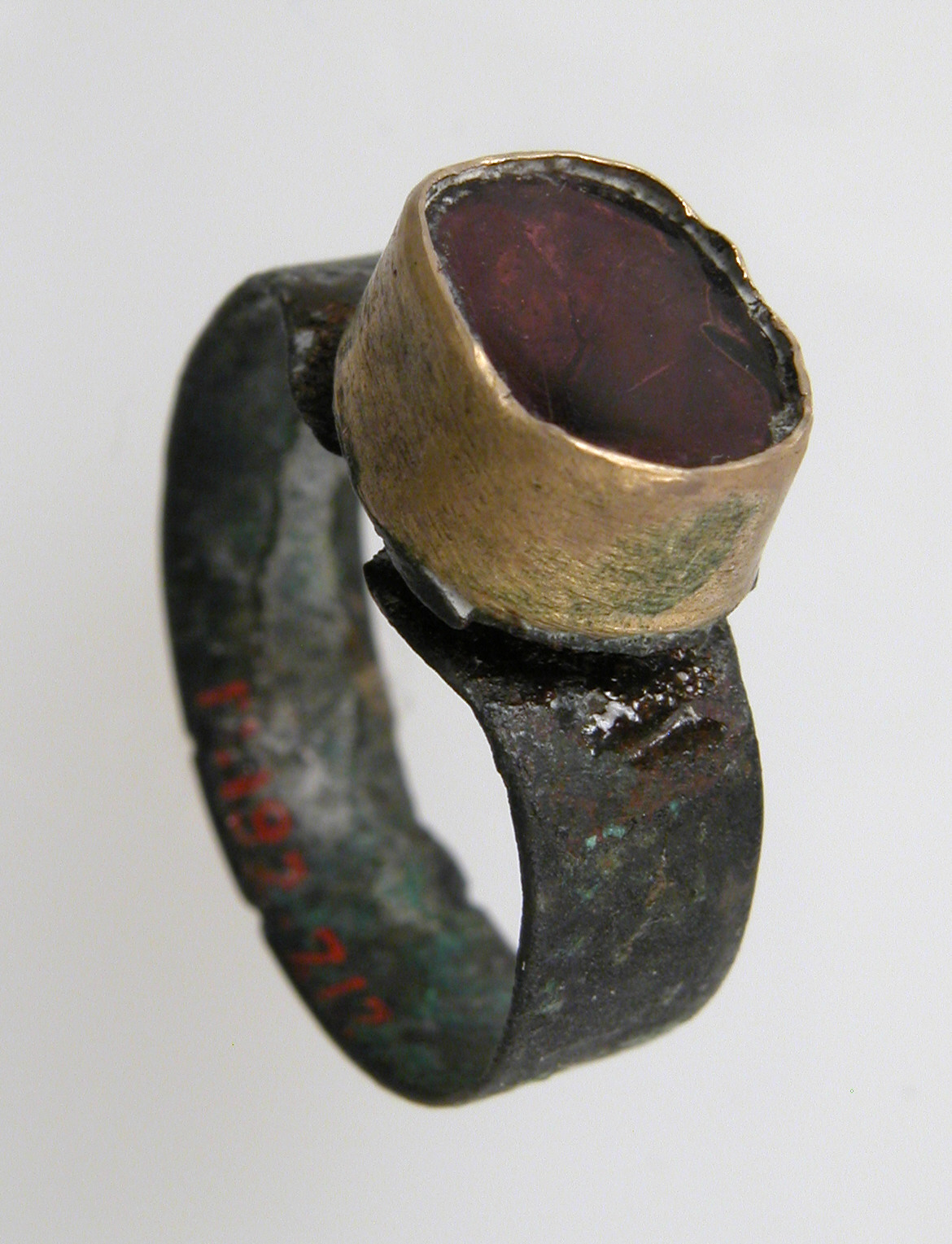
Heritage Analysis: The Frankish Finger Ring
Provenance and Material Culture
The Frankish finger ring, rendered in silver with a gold bezel and a central stone of either glass paste or carnelian, represents a pivotal artifact in the study of early medieval European adornment. Originating from the Merovingian period (circa 5th–8th century CE), this object bridges the gap between Roman imperial legacy and the nascent feudal hierarchies of post-Roman Gaul. For Katherine Fashion Lab, the ring is not merely an antique curiosity but a strategic repository of symbolic capital—one that can be translated into a 2026 luxury narrative of authenticity, power, and spiritual resonance.
Materially, the combination of silver and gold is deliberate. Silver, in Frankish society, was associated with lunar qualities, purity, and the commonwealth of the warrior class, while gold—reserved for the bezel—signified solar divinity, sovereignty, and immutable value. The choice of carnelian, a reddish-orange chalcedony, or its imitation in glass paste, further complicates the artifact’s semiotic weight. Carnelian was prized across the ancient world for its protective properties, often carved with intaglios to seal documents and assert authority. Glass paste, conversely, suggests a democratization of luxury—a simulacrum that allowed lower-ranking elites to participate in the visual language of power without the cost of gemstone. This dual possibility (genuine carnelian versus glass) is not a limitation but a strategic asset, allowing Katherine Fashion Lab to craft a narrative around authenticity versus aspiration, a tension that resonates deeply with contemporary luxury consumers.
Symbolic Power and Historical Adornment
In Frankish culture, the finger ring operated on multiple semiotic registers. First, it was a signet of authority. Kings, dukes, and ecclesiastical figures used rings to impress wax seals on charters, land grants, and legal decrees. The bezel’s flat surface, whether carved or plain, was the locus of this juridical power. To wear such a ring was to hold the ability to enact reality through inscription—a proto-bureaucratic magic. Second, the ring functioned as a marker of marital and kinship bonds. Frankish law codes, such as the Lex Salica, reference the giving of rings as betrothal gifts, symbolizing the transfer of guardianship and the creation of affine alliances. The ring thus oscillated between public (legal, political) and private (domestic, affective) spheres, a duality that modern luxury brands often struggle to balance.
Historically, the Frankish ring also signals a moment of cultural synthesis. The Franks, having absorbed Roman administrative practices, Christian liturgical customs, and Germanic warrior ethos, produced adornment that was deliberately hybrid. The use of gold bezels on silver bands echoes late Roman military rings, while the preference for carnelian or glass paste mirrors Byzantine taste. This syncretism is crucial for Katherine Fashion Lab’s 2026 strategy: the ring is not a relic of a single tradition but a testament to the power of cultural convergence. In an era of globalized luxury, where consumers seek pieces that tell complex, cross-cultural stories, the Frankish ring offers a template for creating objects that are simultaneously rooted and cosmopolitan.
Spiritual Meaning and Protective Function
Beyond its secular functions, the Frankish ring was imbued with profound spiritual significance. Early medieval Christianity, still interwoven with pagan Germanic beliefs, viewed rings as conduits of divine favor. The circular form—without beginning or end—was a mnemonic of eternity, the unbroken covenant between God and humanity. Bishops and abbots wore rings as symbols of their mystical marriage to the Church, a tradition that persists in episcopal vestments today. For the laity, the ring served as an apotropaic talisman. Carnelian, in particular, was believed to staunch bleeding, ward off envy, and ensure safe passage in the afterlife. Even glass paste, when consecrated or blessed, could acquire similar protective virtues through the intent of the wearer.
This spiritual dimension offers Katherine Fashion Lab a distinct competitive advantage in the 2026 market. Contemporary luxury consumers, particularly Gen Z and younger millennials, are increasingly drawn to "meaningful materialism"—objects that provide psychological comfort, spiritual grounding, or meditative focus. The Frankish ring’s history as a talisman of protection and divine connection can be reframed as a "wearable intention," a physical anchor in an age of digital fragmentation. The brand can develop a narrative that positions the ring not as a passive ornament but as an active agent of well-being, echoing the ancient belief that jewelry could influence fate.
Strategic Translation for 2026 High-End Luxury
To leverage this heritage asset, Katherine Fashion Lab must adopt a multi-pronged strategy that respects historical integrity while embracing contemporary innovation. First, the brand should launch a limited-edition "Merovingian Sovereign" collection, featuring replicas and reimaginations of the Frankish ring. The replicas, crafted in sterling silver with gold-plated bezels and genuine carnelian, would retail at an accessible high-end price point (€1,500–€3,000), targeting aspirational luxury buyers. Simultaneously, a bespoke atelier service—using 18-karat gold, ethically sourced carnelian, and hand-engraved intaglios—would cater to ultra-high-net-worth clients, with prices exceeding €25,000. This tiered approach mirrors the original artifact’s dual nature (silver vs. gold, glass vs. gemstone) and allows the brand to capture multiple market segments without diluting its prestige.
Second, the spiritual and protective narrative must be amplified through experiential marketing. Katherine Fashion Lab should partner with contemporary art institutions and medieval history museums to host immersive exhibitions, where clients can handle replicas, learn about Frankish burial practices, and participate in "ring consecration" ceremonies—a modern, secular reinterpretation of the ancient blessing. Digital storytelling, via short-form documentary content and augmented reality filters that overlay the ring’s historical journey onto the wearer’s hand, will further deepen engagement. The brand’s 2026 campaign tagline, "Seal Your Sovereignty," directly evokes the ring’s signet function while appealing to modern desires for personal agency and self-definition.
Third, sustainability and ethical sourcing must be central to the strategy. The original ring’s use of silver and glass paste—materials that are recyclable and lower-impact than newly mined gold or rare gemstones—provides a credible foundation. Katherine Fashion Lab can commit to using 100% recycled silver and lab-grown carnelian for its accessible line, while the bespoke line will feature gemstones from certified artisanal mines. This approach not only honors the medieval ethos of resourcefulness but also aligns with the 2026 luxury consumer’s expectation of environmental and social responsibility.
Finally, the brand should position the Frankish ring within a broader "Heritage of Power" narrative, connecting it to other artifacts in its research archive—such as Merovingian brooches, belt buckles, and votive crowns. This creates a cohesive universe that can be expanded into future collections, editorial content, and even a coffee-table book. By treating the ring not as an isolated object but as a gateway to a lost world of symbolic sophistication, Katherine Fashion Lab will differentiate itself from competitors who merely appropriate historical motifs without understanding their deeper significance.
In conclusion, the Frankish finger ring is a masterclass in the fusion of material, symbolic, and spiritual value. For Katherine Fashion Lab, it offers a rare opportunity to create luxury that is historically literate, emotionally resonant, and strategically forward-looking. By honoring the artifact’s dualities—silver and gold, carnelian and glass, public and private—the brand can craft a 2026 collection that speaks to the modern wearer’s quest for authenticity, protection, and enduring legacy. This is not mere ornament; it is a wearable philosophy, and that is the ultimate luxury.