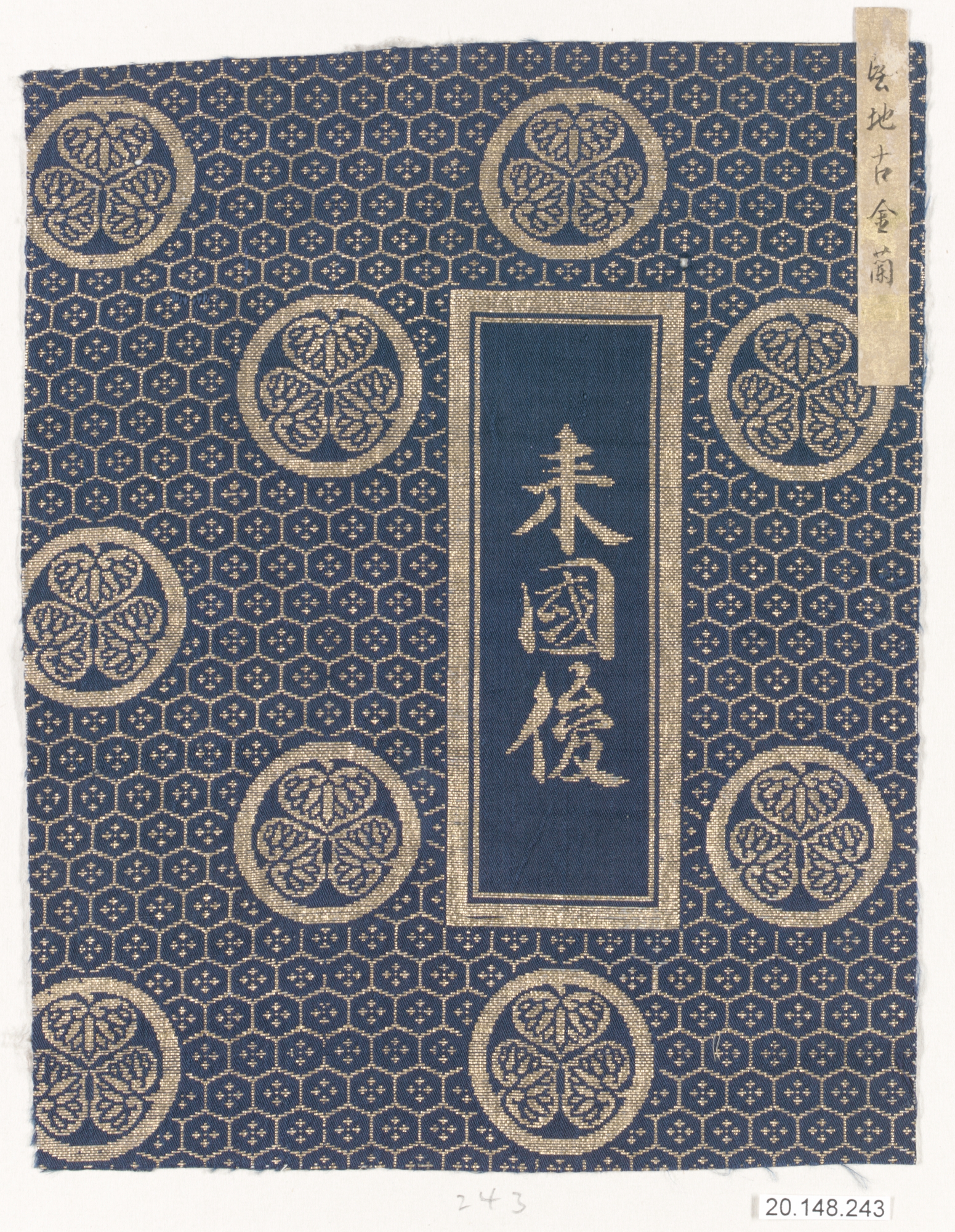
The Anatomy of Silence: A Couture Analysis of the Japanese Compound-Weave Silk Piece
In the rarefied echelons of haute couture, where innovation is often mistaken for noise, Katherine Fashion Lab’s latest standalone study—a Japanese-origin compound-weave silk piece—offers a masterclass in restraint as a radical act. This is not a garment that shouts; it is a textile that breathes. It demands a specific kind of attention, one that rewards patience with a profound understanding of how material, geography, and technique can converge into a singular, wearable philosophy. For the discerning collector, this piece is less an item of clothing and more an archival object, a meditation on the tensile strength of fragility.
Provenance as a Design Principle
To analyze this piece is to first acknowledge its cartographic soul. Japan’s textile heritage is not merely a stylistic reference point; it is a disciplinary framework. The piece’s provenance is not a marketing tagline but a structural DNA. The silk itself, sourced from specific sericulture regions known for their long-fiber cocoons, possesses a tensile integrity that mass-produced Chinese or Italian silks rarely achieve. This is the first layer of the analysis: the raw material is not passive. It carries a memory of humidity, of the specific mulberry leaf diet, and of the hand that reeled it. Katherine Fashion Lab has not attempted to "improve" this silk. Instead, the design team has acted as a curator, allowing the fiber’s inherent luminous density to dictate the silhouette’s fall.
The compound weave—a technique requiring a Jacquard loom or, in its most traditional iteration, a hand-operated drawloom—is the piece’s intellectual core. Unlike a simple tabby or satin weave, a compound weave integrates multiple warp and weft systems. The result is not a flat surface but a topographical relief. In this specific piece, the compound structure creates a dual-faced effect: a matte, almost chalky exterior that absorbs light, and a subtly reflective interior that catches it. This is not a print. This is a structural illusion, a trompe-l’œil executed not with paint but with tension and interlacing.
Deconstructing the Compound Structure
Let us be precise about the technical achievement. In a standard compound weave, the warp threads are divided into binding warps and pattern warps. The weft—here, a fine, high-twist silk—is thrown in a sequence that allows the pattern warp to float over the ground weave, creating a raised, almost brocaded effect. However, Katherine Fashion Lab has subverted the traditional opulence of brocade. Instead of gold thread or metallic accents, the pattern emerges through a subtle variation in the sheen gradient of the same silk yarn. The design, which appears abstract at a distance, resolves into a fragmented chrysanthemum motif only upon close inspection—a nod to Japanese mon (family crests) but rendered in a deconstructed, modernist manner.
The compound weave’s structural integrity also allows for a remarkable dimensional stability. The garment does not sag or stretch with wear; it holds its architecture. This is particularly evident in the piece’s shoulder line. There is no padding, no boning, yet the shoulder stands in a perfect, sharp perpendicular. This is achieved not through construction but through the weave’s inherent stiffness—a clever interplay between the silk’s natural protein structure and the density of the interlacing. The piece essentially tailors itself.
The Aesthetic of Wabi-Sabi in a Couture Context
Philosophically, the piece is a direct translation of wabi-sabi—the Japanese aesthetic of finding beauty in imperfection and transience. Western couture has historically pursued permanence, a frozen perfection. This piece rejects that. The compound weave, while structurally precise, is allowed to exhibit minor irregularities: a slight slub in the yarn, a faint variation in the dye uptake where the warp tension was not perfectly uniform. These are not flaws; they are the fingerprints of the artisan. In a market saturated with digitally perfect, seamless knits, this piece is a defiantly analog object.
The color palette is equally restrained. It is not black, but a deep, ink-wash charcoal—a shade the Japanese call sumi. There is a hint of a green undertone, like the patina on a bronze temple bell. This color choice is critical. It allows the compound weave’s shadow play to be the primary visual event. The fabric becomes a monochromatic study in light modulation. When the wearer moves, the surface ripples like water over stones, with the raised warp threads catching the light in micro-bursts of silver.
Silhouette and the Architecture of Negative Space
The cut is deceptively simple: a single, continuous panel that wraps the body, secured by a hidden internal clasp. There is no visible fastening, no zipper, no button. This is a deliberate erasure of the "garment" as a constructed object. The piece functions more like a swath of liquid metal that has been momentarily frozen. The hem is raw, left un-finished to fray slightly—a subtle nod to the Buddhist concept of mujo (impermanence). The sleeve, if it can be called that, is a deep, hanging cowl that creates a pocket of negative space between the arm and the torso. This is not about covering; it is about framing absence.
From a management perspective, this piece represents a bold supply-chain decision. Katherine Fashion Lab has invested in a single, high-cost material with a long lead time, rather than diversifying into cheaper blends. This is a strategic bet on exclusivity over volume. The piece is not designed for mass replication. Its compound weave requires a specific loom setup that is prohibitively expensive for all but the most specialized Japanese mills. The lab has effectively created a barrier to entry that cannot be overcome by fast-fashion copyists, because the cost of imitation would exceed the retail price of the original.
Conclusion: A Quiet Provocation
This standalone study is a provocation against the tyranny of novelty. In an industry obsessed with seasonal drops and viral moments, Katherine Fashion Lab has produced a garment that is timeless in a deeply literal sense—it will look as relevant in twenty years as it does today, precisely because it does not reference a specific trend. It references a material culture that has existed for centuries. The compound weave is not a new technology; it is a perfected one. The piece is a reminder that couture’s ultimate luxury is not ornamentation, but the confidence to be quiet.
For the wearer, this is not a garment that transforms the body into a spectacle. It transforms the body into a canvas for the fabric’s internal dialogue. It asks you to slow down, to observe the interplay of warp and weft, to appreciate the infinitesimal variations in the silk’s luster. In a world of cacophony, this piece is a whisper—but a whisper that carries the weight of a thousand years of Japanese textile mastery. It is, quite simply, a masterpiece of controlled intention.