Executive Summary: The Shabti as a Proto-Luxury Artefact
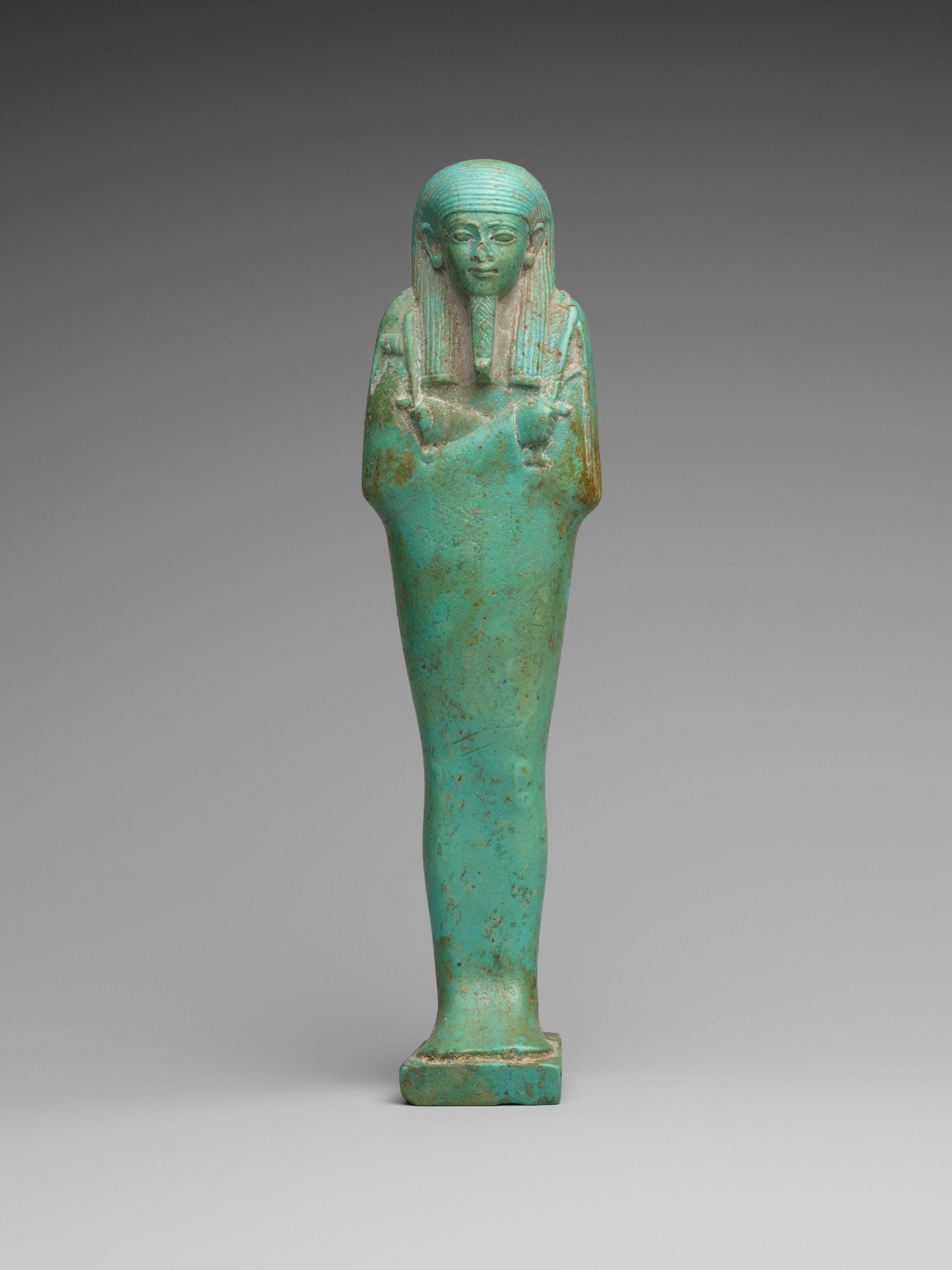
This strategic heritage analysis examines the Shabti of the Overseer of the Fleet Hekaemsaf, a faience funerary figurine from ancient Egypt's New Kingdom period (circa 1550–1070 BCE). For Katherine Fashion Lab, this object is not merely an archaeological relic but a profound case study in enduring luxury principles. It embodies a complete, codified system of symbolic power, personal adornment for eternity, and spiritual utility—all rendered in a high-status material. Deconstructing this artifact reveals a blueprint for a 2026 high-end luxury strategy centered on transcendent purpose, material alchemy, and the curation of legacy. This research positions the shabti not as a historical curiosity, but as a direct conceptual ancestor to modern bespoke luxury, offering a narrative of profound depth for a forward-facing brand.
Historical and Cultural Context: The Adorned Proxy
The shabti (or ushabti) functioned as a statutory proxy for the deceased in the afterlife, intended to perform manual labor on their behalf when called upon. The example belonging to Hekaemsaf, an overseer of the royal fleet—a position of significant logistical and military authority—is particularly instructive. His title connects him to networks of trade, exotic materials, and pharaonic power. The figurine itself, typically inscribed with Chapter 6 of the Book of the Dead, transforms from a mere statuette into an activated legal and spiritual contract. This imbues the object with a functional purpose far beyond ornamentation; it is an essential component of eternal self-preservation and status maintenance. For the elite like Hekaemsaf, the shabti was the ultimate personalized product, ensuring their exalted station transcended mortal life.
Material Alchemy: The Luxury of Faience
The choice of faience—a sintered quartz ceramic with a lustrous vitreous glaze—is a critical marker of luxury. More than a simple clay, faience was revered for its symbolic resonance. Its bright blue-green glaze evoked the colors of life-giving water, lush vegetation, and the celestial heavens, materials associated with immortality and rebirth. The manufacturing process was complex, requiring specialized kilns and knowledge to control the efflorescence of the glaze. For Katherine Fashion Lab, faience represents an ancient parallel to modern technical textile innovation and material storytelling. It was a man-made substance engineered to mimic and surpass the symbolic value of precious stones like turquoise and lapis lazuli. In a 2026 context, this translates to the development of proprietary fabrics, sustainable yet luxurious material science, and finishes that carry embedded meaning—materials that are not just seen but understood to be transformative.
Deconstructing Symbolic Power and Adornment
The shabti’s adornment is not aesthetic frivolity; it is a dense visual language of power and preparedness. Hekaemsaf’s shabti would likely depict him in the attire of his office—possibly a finely pleated kilt, symbolic jewelry, and holding the tools of a laborer (hoes, seed bags) which are, paradoxically, the instruments of his exemption from toil. This juxtaposition is key: the elite figure is armed for eternity with the insignia of both authority and utility.
The Semiotics of Eternal Readiness
Every detail is a signifier: the carved beard (divine association), the crossed arms (a pose of Osirian resurrection), the inscribed hieroglyphs (a permanent incantation). The "adornment" here is the complete curation of identity for an infinite timeline. For a luxury strategy, this moves beyond seasonal trends to the creation of timeless, purpose-driven pieces. It suggests a collection where a garment’s cut, fabric, and minimal detailing all communicate a specific, empowered function—whether that is a boardroom "armor," a garment for creative ritual, or travelwear designed for seamless global navigation. The adornment is in the precision of purpose.
Spiritual Meaning as the Ultimate Luxury
The core value proposition of the shabti was spiritual utility—purchasing eternal leisure and security. This taps into a fundamental luxury driver: the alleviation of anxiety and the promise of a perfected existence. In a modern, secular context, this "spiritual" dimension translates to well-being, legacy, and profound personal meaning. The 2026 high-end consumer seeks objects that facilitate a curated life, that act as talismans for personal values, mindfulness, or legacy building. Luxury is no longer about conspicuous consumption but about inconspicuous efficacy—products that work on a psychological or spiritual level for the owner.
Strategic Application: The Katherine Fashion Lab 2026 Heritage Strategy
Integrating the shabti’s principles requires moving from inspiration to a codified brand philosophy. This analysis proposes a strategic framework for 2026:
1. The "Eternal Proxy" Bespoke Service
Develop an ultra-bespoke service that creates not just a garment, but a curated "armory" for the client’s legacy and lifestyle. Inspired by the shabti’s inscribed spell, this involves deep-dive consultations to understand the client’s professional, personal, and aspirational roles. The resulting capsule—a limited series of perhaps 5-7 pieces—would be technically flawless, embedded with personalized symbolism (e.g., custom weave patterns representing personal milestones, monograms in a private script, pockets sized for specific talismanic objects). Like the shabti, each piece would serve a defined function in the client’s "afterlife"—the legacy they are building.
2. Material Innovation as Mystique
Channel the alchemy of faience through a dedicated "Material Atelier." Invest in partnerships with biotech and sustainable science labs to develop next-generation materials with inherent narrative: lab-grown leathers infused with organic dyes from historic gardens, climate-positive silks, or intelligent textiles that adapt to physiological states. The story is not just sustainability, but transformation—how raw, earth-born or science-born materials are alchemized into objects of protective beauty.
3. The "Curated Legacy" Narrative
Position collections around themes of preparedness, proxy, and permanence. A "Fleet Overseer" collection could focus on dynamic, versatile pieces for the global navigator—garments that transition seamlessly from climate to climate, from private jet to high-stakes meeting, acting as a "proxy" for optimal presence. Marketing campaigns would eschew mere glamour for cinematic storytelling that shows the garment as an active participant in the client’s mastery of their world, much as the shabti acted for Hekaemsaf in the Field of Reeds.
4. Archetype-Based Client Engagement
Move beyond demographic targeting to psychographic archetypes inspired by shabti owners: The Overseer (CEO, strategist), The Eternal Voyager (philanthropist, explorer), The Custodian of Culture (collector, patron). Each archetype informs distinct design principles, service models, and communication channels, creating a deeply resonant, tribe-like brand relationship.
Conclusion: From Tomb to Tomorrow
The Shabti of Hekaemsaf provides Katherine Fashion Lab with a masterclass in pre-industrial luxury. It demonstrates that the apex of desirability resides at the intersection of uncompromising materiality, profound symbolic utility, and a narrative of transcendent self-preservation. For the 2026 luxury landscape, where consumers seek meaning and legacy over logos, this ancient artefact offers a radically relevant blueprint. By interpreting its principles—the proxy, the potent material, the prepared identity—Katherine Fashion Lab can craft a contemporary luxury language that is both archaeologically profound and futuristically essential, dressing not just the body, but the enduring self it aspires to become.