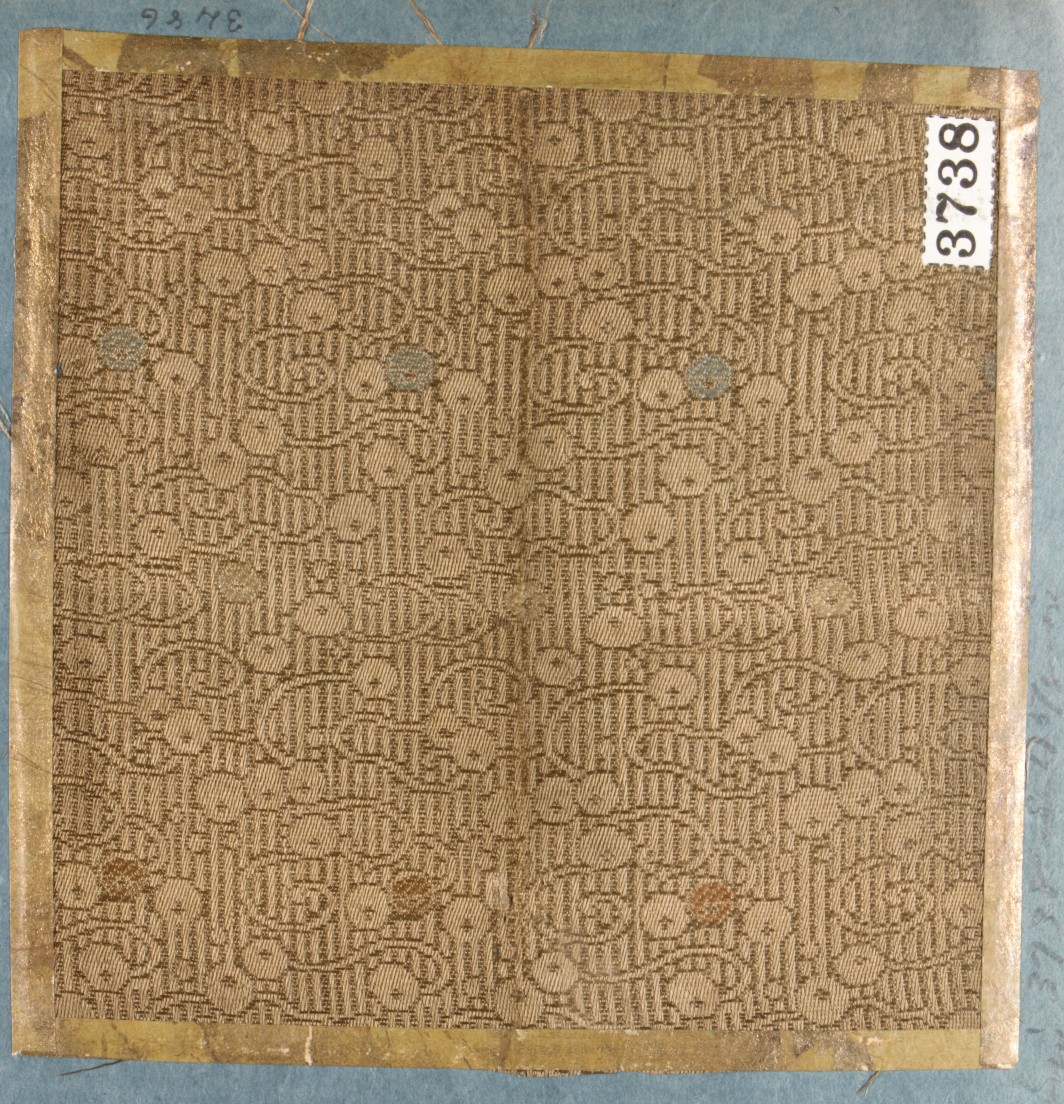
The Art of Anticipation: A Couture Analysis of a Japanese Silk Textile Sample
In the rarefied world of haute couture, the textile is not merely a substrate upon which a garment is built; it is the genesis of the silhouette, the whisper of movement, and the primary vehicle of narrative. At Katherine Fashion Lab, our archival study of a singular textile sample—a fragment of Japanese silk, presented without context or intended pattern—offers a profound lesson in the discipline of material-first design. This standalone analysis seeks to deconstruct the sample’s physical and conceptual properties, positioning it not as a remnant of a past collection, but as a living blueprint for future atelier innovation.
Provenance and the Weight of Legacy
The sample’s origin in Japan immediately situates it within a lineage of unmatched technical mastery. Japanese silk production, from the sericulture of the Kyoto prefecture to the hand-tied resist dyeing of the shibori tradition, is predicated on a philosophy of precision as reverence. This particular swatch, likely a test weave or a prototype for a larger commission, carries the quiet authority of that heritage. Unlike Western silks that often prioritize a uniform, mirror-like finish, this sample reveals a subtle, organic irregularity—a faint slubbing in the warp that speaks to a hand-loomed origin or an intentional manipulation of the filament. This is not a flaw; it is the signature of the artisan, a tactile reminder that couture is the antithesis of industrial perfection.
In a standalone study, we must ask: what does this provenance demand of the designer? It demands humility. The fabric is not a blank canvas; it is a completed argument. The designer’s role is not to impose a foreign structure but to enter into a dialogue with the fiber’s intrinsic memory. The silk’s weight—a medium-weight habutai with a slight, almost papery crispness—suggests it was woven for structure rather than fluid drape. This is a critical distinction. It is not a fabric that will melt over the body; it is one that will hold a sculpted form, suggesting a garment that is architectural, even ceremonial.
Deconstructing the Material: Touch, Light, and Structure
Our laboratory analysis focuses on three primary vectors: tactile topography, light refraction, and structural memory. First, the tactile topography is a study in controlled contrast. The face of the fabric is smooth, almost cool to the touch, with a tight, high-thread-count weave that resists friction. Yet, the reverse side reveals a subtle, brushed nap—a finishing technique that softens the hand feel and adds a layer of thermal insulation. This dual-sided nature is a deliberate couture strategy: it allows for a garment to be worn inside-out, offering two distinct aesthetic experiences without additional construction. The designer must consider this a gift—a pre-engineered versatility that reduces the need for lining, thereby preserving the fabric’s breathability and natural drape.
Second, light refraction is where this sample transcends the ordinary. Under a raking light, the silk exhibits a phenomenon known as moiré—not the printed pattern, but the optical interference caused by the irregular tension in the weft threads. This creates a shifting, liquid shimmer that is not overtly lustrous but rather subtly iridescent. In a couture context, this is invaluable. It means that the garment will never appear static. As the wearer moves, the fabric will catch and absorb light differently, creating a kinetic visual effect that photographs beautifully but is even more arresting in person. This is the antithesis of a flat, digital print; it is a living surface.
Finally, structural memory is the most telling attribute. When we crush a corner of the sample in our fist and release it, the crease does not immediately fall away. Instead, it holds a soft, defined fold for several seconds before slowly relaxing. This memory indicates a high percentage of sericin (the natural gum of the silk filament) retained in the weave, or a specific heat-setting process. For the atelier, this is a directive: this fabric is meant to be pleated, tucked, or gathered. It will not forgive a careless seam; it demands precision. A simple A-line skirt would waste its potential. Instead, the designer should consider origami-inspired folds, sharp knife pleats that hold their edge, or a bustier with pronounced, sculptural seaming that relies on the fabric’s ability to stand away from the body.
From Sample to Silhouette: A Conceptual Proposal
Given these properties, a standalone study must culminate in a forward-looking proposal. We propose a garment that is neither a dress nor a coat, but a hybridized shell—a cocoon-like outer layer that respects the silk’s architectural integrity. The silhouette would be a soft, rounded trapezoid, built on a foundation of horizontal, hand-finished tucks. Each tuck would be spaced at intervals that echo the fabric’s natural moiré rhythm, creating a visual syncopation. The sleeves would be cut in a single piece with the body (kimono-sleeve construction), eliminating shoulder seams to allow the silk’s slight stiffness to create a graceful, bat-wing drape.
The closure would be a study in contrast: a series of hand-stitched silk knots, rather than buttons, to avoid piercing the fabric’s precious surface. This garment would be finished with a raw, hand-rolled hem—a deliberate exposure of the silk’s edge to demonstrate the quality of the weave. This is not a design for mass production; it is a proposition for a single client, a pièce unique that leverages the fabric’s memory to create a garment that is both protective and ethereal.
The Strategic Imperative of Material-Led Couture
For Katherine Fashion Lab, this analysis reinforces a core strategic tenet: luxury is not added; it is revealed. In an era of accelerated fashion cycles, the standalone study of a single textile is a radical act of slowness. It forces the design team to resist the temptation of trend-driven sketching and instead to listen to the material’s own language. The Japanese silk sample is not a passive object; it is an active collaborator. Its provenance demands respect, its touch demands precision, and its structure demands a silhouette that celebrates tension and release.
Ultimately, this fragment of silk is a masterclass in restraint and specificity. It teaches us that a truly couture garment is not a vehicle for the designer’s ego, but a testament to the symbiotic relationship between fiber, hand, and vision. By studying it in isolation, we have extracted a complete design brief—one that will inform our future collections with a renewed commitment to material integrity. The sample, though small, is a universe; our task is merely to translate its quiet brilliance into a wearable form of art.