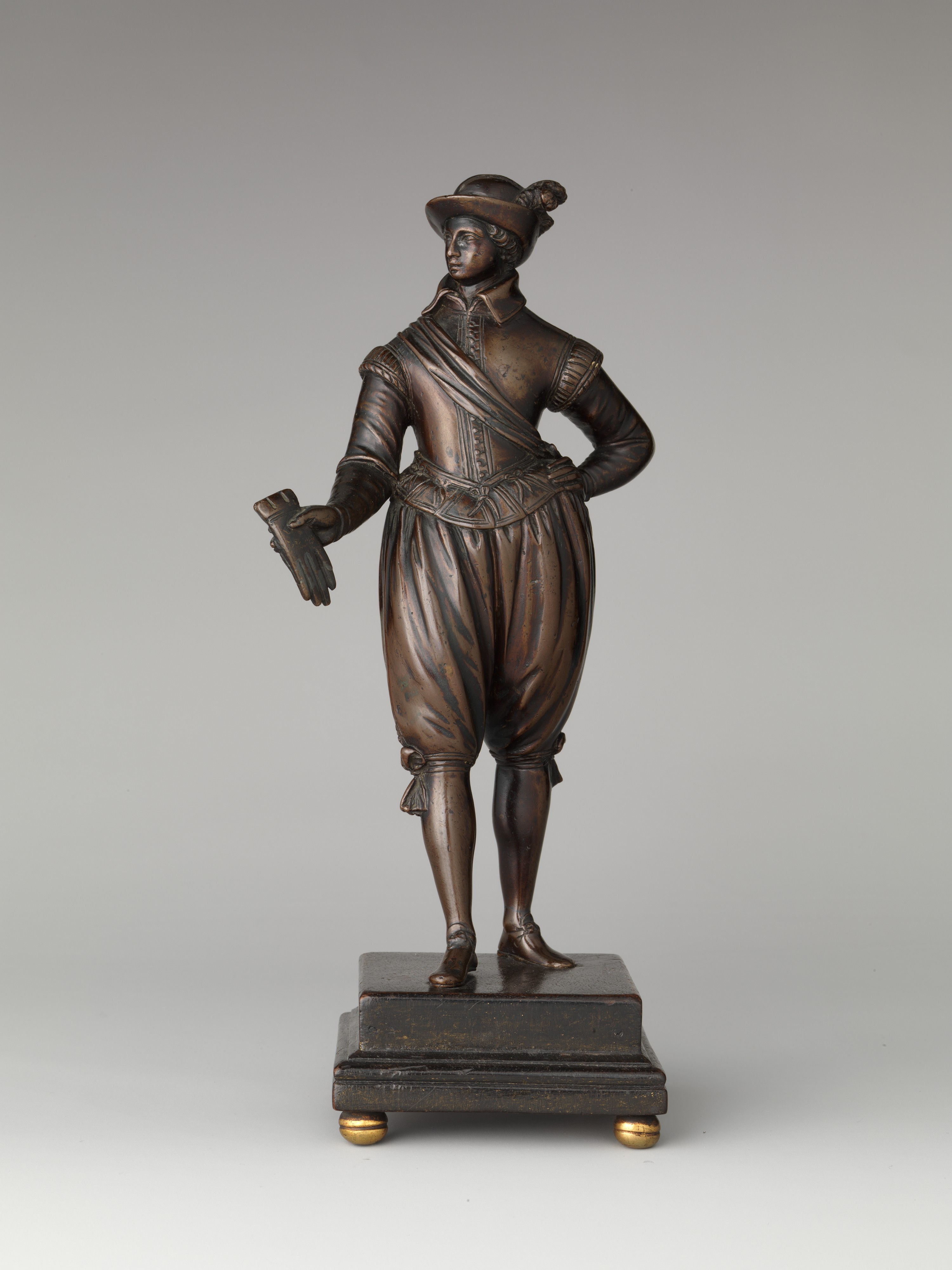
The Cavalier Reimagined: Bronze, Motion, and the Dialogue of Dynastic Forms
In the rarefied echelons of contemporary couture, where garment construction transcends mere apparel to become a form of sculptural epistemology, Katherine Fashion Lab’s latest offering—The Cavalier—emerges not as a mere garment, but as a thesis on material memory. Drawing from the dual archival anchors of the Rock in the form of a fantastic mountain and the Jar in the shape of a bronze container (hu), this piece performs a daring act of aesthetic synthesis. At first glance, these two historical artifacts appear to occupy opposing poles of the decorative arts: one celebrates the untamed, organic irregularity of nature; the other embodies the rigid, ceremonial symmetry of human artifice. Yet, within the crucible of Katherine Fashion Lab’s atelier, they are revealed as two manifestations of a single, profound truth: the dynamic tension between stasis and momentum, a principle that finds its ultimate expression in the figure of the Cavalier—the eternal rider poised between departure and arrival.
Deconstructing the Archival Paradox: The Mountain and the Vessel
The Rock in the form of a fantastic mountain is a masterclass in controlled chaos. Its silhouette is a study in geological dramaturgy—peaks that lean precariously, crevices that swallow light, and surfaces that ripple with the memory of volcanic upheaval. In the context of Chinese scholar’s rocks, this object was not a mere decoration but a microcosm of the cosmos, a physical meditation on the sublime power of nature to defy geometric logic. Conversely, the Jar (hu) is the apotheosis of ritual order. Its bulbous belly, tapering neck, and flared foot create a cadence of perfect proportion. The bronze patina, developed over millennia, speaks not of erosion but of preservation—a deliberate, chemical dialogue between metal and time that results in a surface of deep, iridescent greens and umbral browns.
What unites these disparate forms is their shared material ontology: bronze. In both artifacts, bronze is not a passive substrate but an active agent. It is a metal that records every gesture of its creation—the hammer’s blow, the mold’s constraint, the kiln’s fury. Katherine Fashion Lab has internalized this metallurgical vocabulary, translating the hu’s taut, symmetrical volumes and the rock’s fractured, vertiginous contours into a wearable architecture. The Cavalier, therefore, is not a costume inspired by these objects; it is a metallurgical event rendered in fabric and structure.
Engineering the Silhouette: A Study in Bronze Kinetics
The primary innovation of The Cavalier lies in its structural negotiation between the rider’s anatomy and the horse’s dynamic posture. Traditional equestrian couture—from the rigid dolman of the Hussar to the tailored frock of the English hunt—prioritizes function and containment. Katherine Fashion Lab subverts this logic. The jacket’s shoulder line, instead of a clean seam, erupts into a series of asymmetrical, cantilevered panels that echo the rock’s jagged strata. These panels are not merely decorative; they are engineered with internal boning of memory-shape alloy, allowing them to lift and flare with the wearer’s movement, mimicking the restless energy of a stallion mid-canter. The effect is one of petrified motion—a snapshot of a gallop frozen in a metallic haze.
This is where the hu’s influence becomes palpable. The garment’s torso, or cuirass, is cut with the disciplined precision of the bronze vessel’s belly. It is a cylindrical, almost architectural form that cinches at the waist before flaring out over the hips, replicating the jar’s elegant s-curve. The fabric itself is a proprietary blend of silk gazar and a micro-woven metallic filament, a textile that possesses the heft and sheen of burnished bronze while retaining the fluidity required for the couture silhouette. The color palette is a direct extraction from the artifacts’ patinas: deep malachite greens, oxidized copper blues, and a grounding base of dark, volcanic charcoal. These are not printed but hand-dyed using a multi-bath immersion process that creates mottled, unpredictable gradients—a nod to the chemical variance of ancient bronze corrosion.
The Couture Details: Where Heritage Meets Futurism
Examining the garment’s surface reveals a cartography of inspiration. The Rock’s influence manifests in the intricate pleating system that runs down the sleeves and the back of the jacket. These are not uniform accordion pleats but irregular, shattered folds that radiate outward from the spine, reminiscent of fissures in a cliff face. Each pleat is set with a heat-press that imparts a permanent, three-dimensional topography, ensuring that the garment retains its sculptural identity even when draped on a hanger. The sleeves themselves terminate in cuffs that flare into asymmetric, leaf-like points, echoing the rock’s organic outcrops while providing a dramatic counterpoint to the body’s clean lines.
In contrast, the hu’s ceremonial precision is articulated through the garment’s closure system. Traditional buttons are eschewed in favor of a series of concealed, magnetic bronze clasps that run along a diagonal seam—a nod to the vessel’s vertical axis. When closed, the jacket achieves a seamless, monolithic appearance, like the unbroken surface of the ancient jar. When opened, it reveals a lining of deep burgundy silk, a color that would have been found in the lacquered interiors of elite tomb goods. This hidden flash of color serves as a deliberate coup de théâtre, a moment of revelation that underscores the duality of the Cavalier’s nature: armored on the outside, yet voluptuously rich within.
The Semiotics of the Rider: Power, Elegance, and the Eternal Gallop
Beyond its technical virtuosity, The Cavalier operates on a potent symbolic register. The figure of the cavalier—the mounted horseman—is a universal archetype of sovereignty, mobility, and mastery over the natural world. By fusing the rock’s untamed energy with the jar’s structured containment, Katherine Fashion Lab posits the modern wearer as a diplomat of dualities. They are at once the force of nature and the architect of civilization, the one who both respects the wild and imposes order upon it. The bronze materiality reinforces this: bronze is an alloy of copper and tin, a deliberate human invention that is nonetheless derived from the earth. It is a material that symbolizes the negotiation between raw resource and refined technology—a perfect metaphor for the contemporary individual navigating a world of chaotic information and structured systems.
Furthermore, the choice of bronze over gold or silver is a calculated statement of anti-ostentation. Gold is the metal of divine kingship; silver, of lunar mystery. Bronze, however, is the metal of earthly longevity and utilitarian beauty. It does not gleam; it glows. It does not shout; it resonates. The Cavalier, in its muted, patinated finish, eschews the flashy immediacy of modern luxury in favor of a deep, historical gravitas. It suggests that true power is not about visible brilliance but about the quiet, accumulated strength of heritage—a strength that has weathered the ages and emerged with a more complex, more interesting surface.
Conclusion: A New Canon for the Global Heritage
In synthesizing the Rock and the Jar, Katherine Fashion Lab has achieved a rare feat in contemporary design: the creation of a garment that is simultaneously avant-garde and ancestral. The Cavalier does not merely reference its archival DNA; it metabolizes it, transforming static museum objects into a dynamic, wearable philosophy. It challenges the wearer to consider their own body as a vessel of history and a terrain of future possibility. The jacket’s asymmetric panels are not flaws but features—they are the cracks in the mountain, the seams in the bronze cast, the evidence of process that elevates object to artifact.
For the connoisseur, The Cavalier is more than a purchase; it is an acquisition of cultural memory. It is a statement that global heritage is not a monolithic past to be replicated but a fragmented, beautiful dialogue to be continued. By placing the rider at the intersection of the geological and the ceremonial, Katherine Fashion Lab has not only created a masterpiece of couture but has also offered a profound meditation on how we, as modern inheritors of ancient forms, can carry the weight of history without being crushed by it. The Cavalier rides forward, but its gaze is firmly fixed on the rich, bronzed horizon behind it—a perfect balance of momentum and memory.