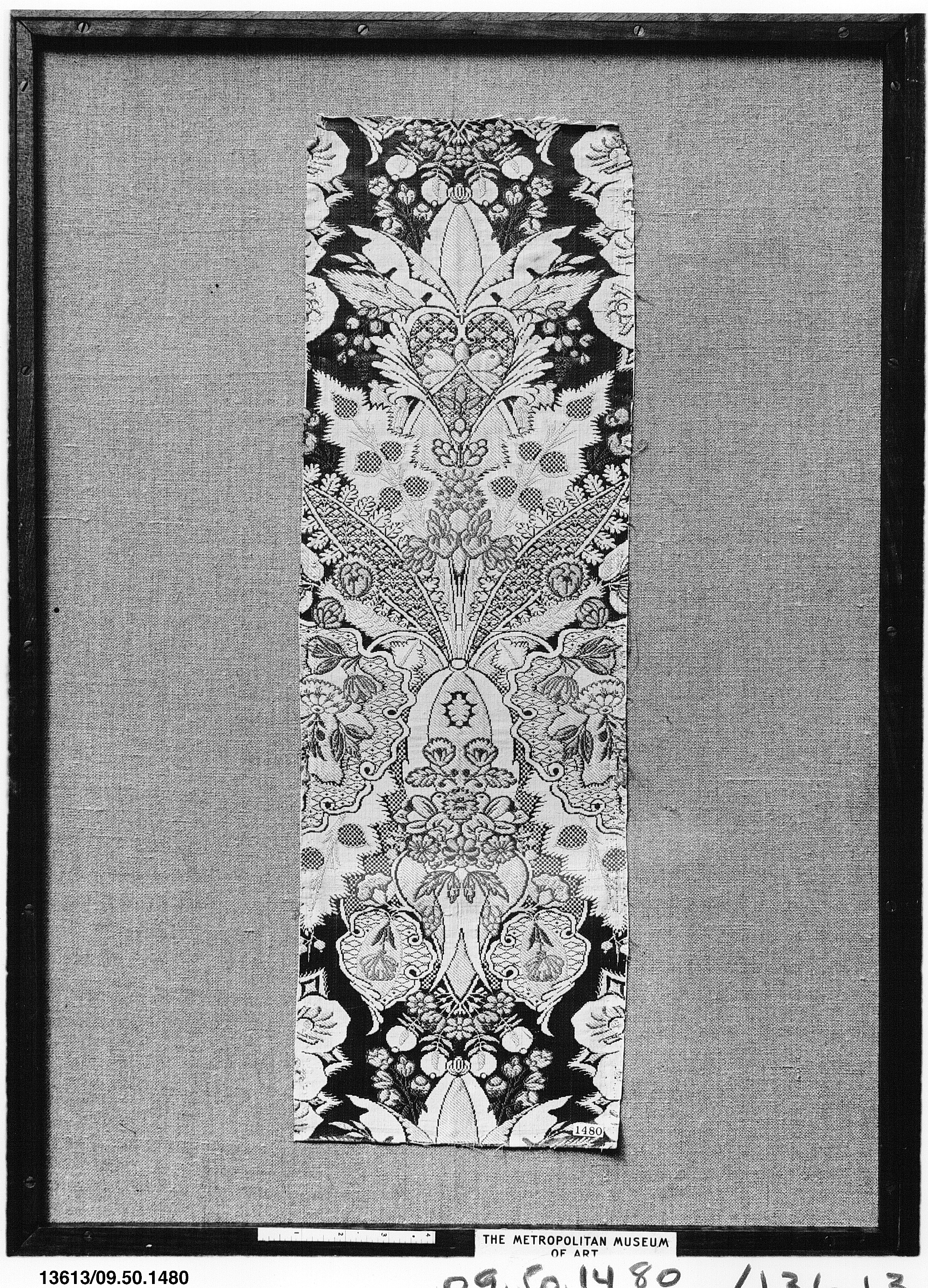
The Art of Global Heritage: A Couture Analysis of Katherine Fashion Lab's Silk Piece
In the rarefied echelons of haute couture, where fabric is not merely material but narrative, Katherine Fashion Lab has distinguished itself through a singular design philosophy: the synthesis of disparate cultural lexicons into a cohesive, wearable form. The subject of this standalone study—a silk-based piece drawn from the house’s “Global Heritage” collection—is not simply a garment. It is a cartographic artifact, a tactile map of cross-continental trade routes, and a masterclass in the discipline of restraint. This analysis dissects the piece’s material integrity, structural logic, and symbolic resonance, arguing that its true luxury lies in its ability to render the intangible—history, migration, and artisanal memory—into a tangible, sculptural presence.
Materiality as a Foundational Language
The cornerstone of this couture analysis rests upon the selection and treatment of silk. In an industry increasingly dominated by synthetic innovation, Katherine Fashion Lab’s unwavering commitment to pure, mulberry silk is a deliberate act of archival preservation. The fabric’s weight is neither the ethereal soufflé of a summer organza nor the dense, liquid drape of a duchesse satin; instead, it occupies a liminal space—a habutai-grade silk with a subtle, irregular slub that speaks to hand-spun origins. This texture is critical. Under direct light, the surface shimmers with a low, lustrous sheen, yet it does not reflect; it absorbs and diffuses, creating a depth that mimics the patina of aged parchment.
More compelling is the fabric’s structural behavior. The designers have eschewed heavy interfacing or boning, allowing the silk to follow the body’s natural kinetic rhythm. This is a high-risk strategy; a lesser atelier might rely on structure to create silhouette. Here, the silk is the structure. The garment’s folds, when the wearer moves, do not collapse randomly but fall into pre-determined, origami-like creases—a testament to a pattern-cutting process that respects the material’s memory. The finish, a rolled hem executed with micro-stitching invisible to the naked eye, further evidences a couture-level obsession with internal perfection, where the inside of the garment is as immaculate as its exterior.
Deconstructing the Global Heritage Silhouette
The piece’s silhouette defies easy categorization, which is precisely its intellectual provocation. At first glance, it reads as a modern minimalist shift—a column of silk that skims the body without clinging. Yet, upon closer inspection, the construction reveals a complex hybridity. The shoulder line, for instance, borrows from the Japanese kimono tradition, featuring a dropped, straight-cut sleeve that allows for an expansive, two-dimensional plane of fabric. However, this Eastern influence is immediately counterbalanced by a Western couture technique: a subtle, internal darting system at the waist that imparts a gentle, hourglass suggestion without breaking the fabric’s continuous flow.
Further analysis of the neckline reveals a Mandarin collar that is not closed but left open in a deep, plunging V—a reinterpretation of the high-necked austerity of Qing-dynasty robes, infused with a contemporary, almost architectural sensuality. The length, falling just below the knee, is a nod to the 1920s garçonne look, yet the hemline’s asymmetric rise on the left side echoes the draped sari pallu of South Asia. This deliberate collision of regional codes is not a careless pastiche but a curated dialogue. The garment asks the viewer to trace each line back to its origin, effectively turning the wearer into a living exhibition of global textile history.
The Embroidered Cartography: Motif and Meaning
If the silk is the canvas, the embellishment is the narrative ink. The piece features a sparse, almost austere embroidery program, concentrated solely on the left shoulder and cascading down the sleeve. Using a technique that blends French Luneville hook embroidery with Chinese Suzhou stitch, the atelier has rendered a series of abstract topographical lines. These are not floral or faunal motifs; they are, upon scrutiny, a stylized representation of the Silk Road—the ancient trade network that connected Xi’an to Constantinople.
The threads themselves are a study in material alchemy. Silver-plated filaments are twisted with raw, un-dyed silk floss, creating a contrast between the metallic and the organic. Interspersed along these "routes" are tiny, bead-like knots of coral and turquoise, materials historically traded along those same pathways. This is not decoration for its own sake; it is a semiotic system. The placement on the shoulder—the point of burden and of carrying—symbolizes the weight of cultural exchange. The absence of embroidery elsewhere is a powerful editorial choice, allowing the negative space of the silk to speak, reinforcing the idea that heritage is not about maximalist overlay but about selective, meaningful preservation.
Contextualizing the Standalone Study
In the context of a standalone study, this piece must be evaluated not against a seasonal collection, but as an autonomous object of wearable art. Its primary function is not utility but contemplation. The garment challenges the contemporary fashion ecosystem’s obsession with the new and the disruptive. Instead, it proposes a slower, more intellectual luxury—one where provenance and technique are the ultimate markers of value.
Critically, the piece succeeds because it avoids the pitfall of cultural appropriation through a process of dialogic design. Katherine Fashion Lab does not claim to reproduce any single tradition authentically; rather, it creates a third, new language. The kimono sleeve is not a costume; the sari drape is not a copy. They are citations, footnotes in a larger thesis about how global aesthetics have always been fluid, hybrid, and mutually constitutive. The garment is a testament to the fact that true heritage is not static—it is a living, evolving conversation.
From a technical standpoint, the piece is a feat of engineering. The bias-cut panels in the skirt section are aligned to create a subtle, sinusoidal wave pattern when the wearer walks, a phenomenon achieved only through meticulous fabric manipulation and a deep understanding of silk’s tensile properties. The closures, hidden frog buttons made of braided silk cord, are functional yet invisible, furthering the illusion of a seamless, unbroken textile. This is couture at its most sophisticated: the disappearance of construction in favor of pure, unmediated form.
Conclusion: A Legacy in Silk
In conclusion, Katherine Fashion Lab’s silk piece, drawn from its Global Heritage narrative, is a profound meditation on the intersections of material, memory, and modernity. It is a garment that rewards prolonged study, revealing new layers of meaning with each viewing. The choice of silk is not arbitrary; it is the only material capable of holding the delicate tension between the piece’s structural precision and its fluid, organic drape. The global references are not decorative but structural, embedded in the very logic of the cut and the placement of the stitch.
This is a piece that will not date, precisely because it exists outside of time. It is a museum-quality artifact that is, paradoxically, meant to be worn, to be animated by the human form. For the discerning collector or the cultural historian, this piece represents the apogee of contemporary couture’s potential: to be a vessel for global memory, a testament to artisanal skill, and a quiet, powerful argument for the enduring relevance of silk as the ultimate medium of artistic expression. In a world of visual noise, this garment is a whisper—but one that carries the weight of centuries.