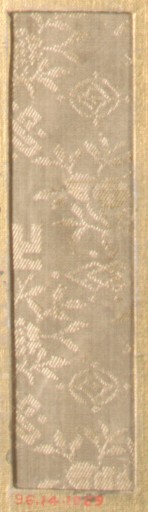
The Poetics of Silence: A Couture Analysis of an Unnamed Japanese Silk Piece
In the rarefied echelons of haute couture, where garment construction transcends mere utility to become a form of sculptural philosophy, Katherine Fashion Lab has consistently positioned itself as a vanguard of material expression. However, the subject of this standalone study—an unnamed piece originating from Japan, executed entirely in silk—demands a more nuanced critical lens. This is not merely a garment; it is a thesis on the intersection of Eastern wabi-sabi aesthetics and Western deconstructionist rigor. The piece operates as a silent dialogue between the hand of the artisan and the intrinsic memory of the fiber, offering a compelling case study in how couture can function as a vessel for cultural and temporal displacement.
Deconstructing the Origin: Japan as a Conceptual Framework
The provenance of the piece is not a mere geographical footnote but a fundamental determinant of its structural and philosophical DNA. Japanese couture, particularly the lineage extending from the avant-garde movements of the 1980s—think of the radical silhouettes of Yohji Yamamoto and Rei Kawakubo—has long rejected the Occidental obsession with the body's idealized form. This piece from Katherine Fashion Lab honors that legacy, yet it does not simply mimic its predecessors. Instead, it abstracts the core tenets of ma (negative space) and iki (refined chic) into a vocabulary that is entirely its own.
The origin manifests in the garment's asymmetry. The left shoulder is constructed with a deliberate, almost violent drape that cascades into a series of unpressed, organic folds, while the right side maintains a stark, architectural flatness. This is not a design flaw but a calculated meditation on impermanence. The silhouette eschews the conventional waistline, instead allowing the fabric to fall from a single, hidden structural point at the nape of the neck. The result is a column of silk that breathes with the wearer, creating a dynamic, ever-shifting topography. The garment does not impose a shape upon the body; rather, it negotiates a temporary truce, acknowledging the body's movement as the final, unpredictable collaborator in the design.
The Material Sublime: Silk as a Living Archive
To analyze this piece without a forensic examination of its silk would be a disservice to the craft. The material is not a passive canvas but an active agent in the garment's narrative. Katherine Fashion Lab has sourced a Habutai-grade silk—a plain-weave fabric renowned for its lightweight, lustrous finish yet deceptive tensile strength. However, the lab has subjected this silk to a proprietary, labor-intensive process of manual crushing and re-setting, a technique that imparts a permanent, crepe-like texture to the surface. This is a radical departure from the pristine, glassy finish of traditional couture silks.
This textural manipulation creates a fascinating dichotomy. Under direct light, the crushed areas appear matte and absorptive, while the untouched valleys retain a subtle, pearlescent sheen. The visual effect is akin to looking at a topographic map of a dried riverbed—a record of movement, pressure, and time. The silk, in this state, becomes a living archive of the artisan's touch. Every fold, every crush, every deliberate imperfection is a signature, a trace of the hand that labored over it. This stands in stark contrast to the machine-perfect uniformity of mass-produced luxury, reasserting the value of the human gesture in an increasingly automated industry.
Structural Ingenuity: The Invisible Architecture
What elevates this piece from a beautiful textile experiment to a masterwork of couture is its hidden structural engineering. The initial glance suggests a simple, fluid drape, but closer inspection reveals a complex internal scaffolding that defies the silk's natural propensity to cling and slide. The lab has integrated a series of invisible, hand-stitched horsehair canvas supports along the internal seam lines, not to stiffen the garment, but to create a controlled suspension system. This allows the silk to float approximately two to three centimeters off the wearer's skin, creating a micro-climate of air that enhances both comfort and the garment's ethereal presence.
Furthermore, the construction employs a reversed French seam technique, where the raw edges are meticulously enclosed within the fold, presenting a flawless interior. This is a hallmark of true haute couture—the inside must be as beautiful as the outside. Yet, the lab subverts this convention by leaving the hemline intentionally raw, allowing a delicate, frayed edge to emerge. This is a deliberate nod to the Japanese concept of boro—the art of mending and patching—suggesting that the garment is not a finished object but a continuous process. The fraying is not a sign of decay but a testament to the fiber's organic life, a counterpoint to the synthetic permanence of modern fashion.
A Standalone Study: The Garment as a Contemplative Object
In the context of a standalone study, removed from a collection or a seasonal narrative, this piece demands to be evaluated on its own terms. It is not meant to be worn for an event, but rather to be inhabited as a state of being. The garment's muted, undyed ivory tone—the natural color of the silk—further reinforces this sense of monastic purity. There is no ornamentation, no embroidery, no embellishment to distract from the dialogue between cloth and structure.
This austerity is its greatest luxury. The piece engages the viewer in a slow, contemplative act of looking. One must notice the subtle variations in the texture, the way the light shifts across the crushed surface, the quiet confidence of the asymmetrical cut. It is an anti-spectacle in an age of digital noise, a physical manifestation of quietude. The wearer is not adorned but rather enveloped in a philosophy of restraint. It challenges the modern consumer's desire for instant gratification, demanding instead a patient appreciation for the labor and time embedded in every square inch of the fabric.
Ultimately, this unnamed Japanese silk piece from Katherine Fashion Lab is a profound meditation on the nature of couture itself. It proves that innovation does not require noise, that luxury can be found in the subtle imperfections of a crushed fiber, and that the most powerful garments are those that speak in a whisper. It is a testament to the enduring power of material and the human hand to transform it into a vessel of profound, silent meaning.