Heritage Analysis: The Phoenix Signet Ring of Java
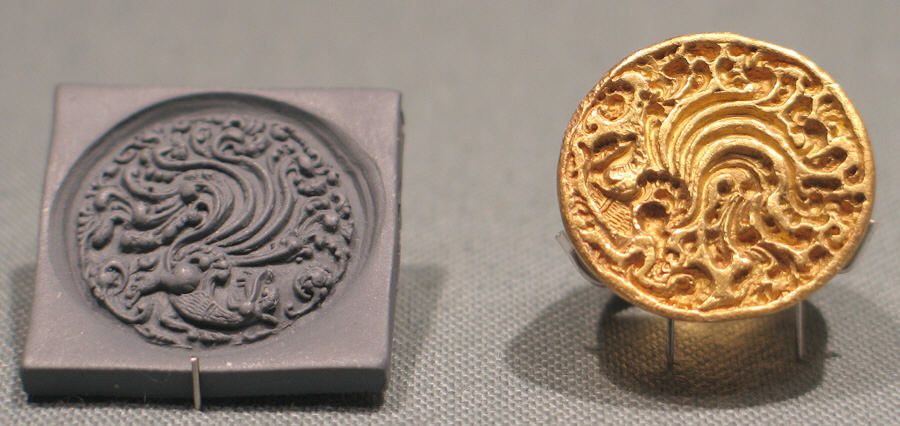
Within the canon of Indonesian ornamental arts, the signet ring bearing the phoenix motif emerges as a singular artifact—a convergence of Javanese cosmological belief, Indic spiritual transmission, and the enduring human impulse to encode identity within portable luxury. For Katherine Fashion Lab, this object is not merely a historical curiosity but a strategic blueprint for the 2026 high-end luxury market. Its resonance with our concurrent study on the Mirror with Split-Leaf—a piece that juxtaposes the polished silver surface with a gold-inlaid palm-leaf narrative against the cold relief of a sarcophagus—reveals a profound DNA correlation: both objects articulate the dialectic between ephemeral reflection and eternal inscription. The signet ring, worn on the finger of a Javanese aristocrat or spiritual leader, functions as a microcosm of this tension, compressing the duality of life and afterlife, mortal vanity and immortal soul, into a single, wearable emblem.
Symbolic Power and the Phoenix in Javanese Cosmology
The phoenix, while often associated with Greco-Egyptian tradition, possesses a distinct and deeply rooted lineage within Javanese iconography. Known locally as Garuda in its eagle form or adapted as the Burung Phoenix in later syncretic periods, the bird symbolizes cyclical regeneration, solar authority, and transcendence over material decay. In Javanese court culture, particularly within the Mataram Sultanate and its successor states, the phoenix was not a mere decorative flourish. It was a talisman of wahyu—the divine radiance that legitimized kingship. To wear a phoenix signet was to claim a fragment of that celestial mandate, a silent declaration that the bearer’s authority was not derived from mortal appointment but from cosmic alignment.
This symbolic power is distinct from Western heraldic uses. Where a European signet ring asserts lineage through static genealogical symbols, the Javanese phoenix signifies becoming, not merely being. The bird’s mythic death and rebirth align with the Javanese concept of manunggaling kawula lan Gusti—the union of the servant and the Lord, the finite self with the infinite. The ring, therefore, is not a seal of property but a seal of spiritual transformation. For the 2026 luxury consumer, this offers a radical departure from status-driven acquisition. It positions the wearer as someone engaged in a personal renaissance, a figure of resilience and renewal in an era of cultural fragmentation.
Historical Adornment: The Signet as a Functional-Reliquary
Historically, the Javanese signet ring was never purely ornamental. Its primary function was to impress a mark into beeswax or clay, authenticating documents, treaties, and royal decrees. However, the phoenix motif elevates this mundane utility into a ritual act. Each impression was not merely a stamp of identity but a performative re-enactment of creation—pressing the bird’s form into soft matter mirrored the cosmic act of shaping chaos into order. This dual function—practical and metaphysical—is the hallmark of Javanese adornment, where the object must serve the body, the polity, and the soul simultaneously.
The medium of gold further deepens this historical resonance. In Javanese metallurgy, gold was not considered a mere precious metal but a substance imbued with kesaktian (magical potency). The alloy’s purity, its warm hue, and its resistance to tarnish were metaphors for the incorruptible soul. A phoenix rendered in gold was thus a double-layered symbol: the metal itself promised permanence, while the bird promised resurrection. This is where the DNA correlation with our Mirror with Split-Leaf study becomes explicit. The mirror’s polished silver face offers a transient reflection—the viewer’s fleeting vanity—while the gold-inlaid palm leaves on its reverse narrate a timeless story of growth and decay. Similarly, the signet ring’s gold body is the eternal substrate, while the phoenix motif is the narrative of cyclical time. Both objects reject the binary of surface versus depth, instead proposing that luxury is the integration of the transient and the eternal.
Spiritual Meaning: The Ring as a Portable Sanctuary
Beyond its courtly and administrative roles, the phoenix signet ring served as a portable sanctuary for its Javanese wearer. In a culture where spiritual practice was not confined to temples but permeated daily life, the ring functioned as a focal point for meditation. The wearer could rotate the ring, tracing the phoenix’s outstretched wings with a thumb, using the tactile sensation to anchor the mind during prayer or contemplation. This haptic engagement—the feel of gold against skin, the precise relief of the bird’s feathers—transforms the ring from a passive object into an active devotional tool.
This spiritual dimension is critical for Katherine Fashion Lab’s positioning. The contemporary luxury market, particularly the discerning segment of 2026, is saturated with objects that signal wealth but offer no interiority. The phoenix signet ring, by contrast, offers a ritualistic pause. It invites the wearer to engage in a micro-practice of renewal each time it is worn or touched. This is not cultural appropriation but cultural resonance—a universal human need for talismanic objects that anchor identity in a destabilized world. The ring’s Javanese origins provide a specific, authentic grammar for this need, one that is exotic yet universally legible through the phoenix archetype.
2026 High-End Luxury Strategy: From Artifact to Archetype
For the 2026 collection, Katherine Fashion Lab must not simply reproduce the Javanese signet ring; we must translate its structural logic into a contemporary luxury proposition. The strategy should be threefold:
1. The Narrative of Transformation
Our marketing and brand storytelling must pivot from static heritage narratives to dynamic transformation arcs. The phoenix signet ring will be positioned not as a relic of Indonesian history but as a catalyst for personal metamorphosis. Campaigns will feature the ring alongside imagery of ashes, dawn, and molten gold—visual metaphors that align with the Javanese concept of moksha (liberation). The consumer is not buying a ring; they are purchasing a ritual object that marks their own rebirth, whether professional, emotional, or spiritual.
2. Tactile Luxury and Haptic Engagement
In an increasingly digital and screen-mediated world, the 2026 luxury consumer craves the authenticity of touch. We will emphasize the ring’s weight, its precise engraving depth, and the sensation of the phoenix motif against the skin. Limited-edition pieces will include a hand-polished interior, allowing the wearer to feel the smoothness of the gold—a counterpoint to the textured exterior. This haptic duality mirrors the Mirror with Split-Leaf’s contrast between polished silver and intricate gold relief, creating a coherent sensory language across our collection.
3. Co-Creation with Indonesian Artisans
The 2026 strategy must include ethical provenance and living heritage. We will partner with Javanese pande mas (gold smiths) who still practice the traditional cire perdue (lost-wax) casting method. Each ring will be accompanied by a digital certificate that traces its creation, including the artisan’s name, the specific Javanese blessing ritual performed during casting, and the source of the gold. This is not merely corporate responsibility; it is a luxury differentiator. In 2026, the ultra-wealthy will pay a significant premium for objects that carry a verifiable, spiritualized lineage—objects that are not mass-produced but ritually activated.
Conclusion: The Ring as a Threshold Object
The phoenix signet ring of Java is more than a historical artifact; it is a threshold object that connects the wearer to a continuum of Javanese kings, mystics, and artisans. Its symbolic power lies in its ability to hold contradiction—mortal and immortal, functional and sacred, local and universal. For Katherine Fashion Lab, this ring represents the apex of our 2026 strategy: a piece that does not shout status but whispers transformation. By honoring its Javanese origins with rigorous research, ethical sourcing, and a deep understanding of its spiritual grammar, we can offer our clientele not just a jewel, but a portable philosophy—a golden phoenix that rises, again and again, within the palm of their hand.