The Unraveling of Heritage: A Couture Analysis of Katherine Fashion Lab's Textile Fragment
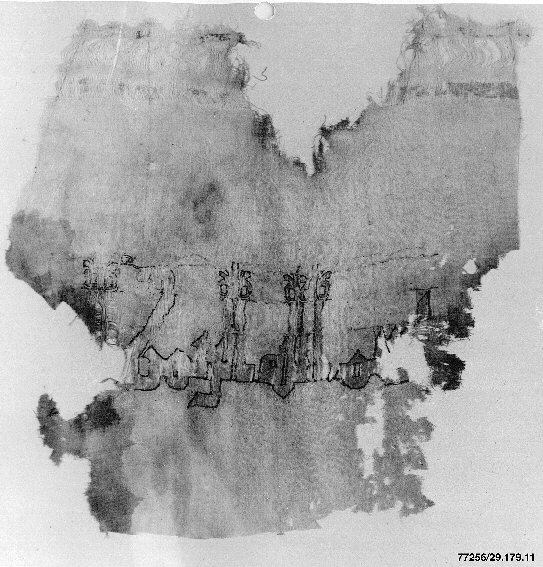
In the rarefied echelons of haute couture, where innovation often masquerades as disruption, Katherine Fashion Lab (KFL) presents a compelling counter-narrative. The subject of this analysis—a standalone textile fragment designated as Global Heritage—is not a garment, nor a prototype, but a distilled study in material philosophy. Comprising linen and silk executed in both plain and tapestry weaves, this fragment transcends its physical dimensions to function as a microcosm of the atelier’s intellectual rigor. It is a deliberate act of archaeological preservation, recontextualized for the contemporary fashion discourse, demanding that we reconsider the primacy of the finished silhouette in favor of the generative power of the raw material.
Material Dialectics: Linen and Silk in Structural Tension
The fragment’s genius lies in its deployment of binary materiality. Linen, with its rugged, plant-based integrity, provides the structural vertebrae of the piece. Its plain weave—unadorned, honest, and utilitarian—anchors the composition in a lexicon of earthy permanence. Conversely, silk introduces a counterpoint of ethereal luxury. The juxtaposition is not merely aesthetic but tactile; the coarse, slightly irregular hand of the linen against the liquid, almost frictionless surface of the silk creates a sensory dissonance that is intellectually provocative. KFL does not blend these fibers into a homogenized hybrid. Instead, the atelier preserves their distinct identities, allowing them to engage in a dialectical conversation—one of strength meeting suppleness, of agrarian pragmatism meeting aristocratic opulence.
This material pairing is further complicated by the integration of the tapestry weave. Unlike the plain weave’s uniformity, tapestry weaving is inherently narrative. It is a slow, deliberate process that builds imagery through discontinuous weft threads. In this fragment, the tapestry sections appear not as pictorial illustrations but as structural interruptions—dense, almost sculptural blocks that rise from the flat plane of the linen ground. This creates a topographical variation, a relief map of artisanal labor. The eye is drawn across the surface, tracing the transition from the rhythmic grid of the plain weave to the irregular, pixelated density of the tapestry. It is a study in tempo, where the metronomic beat of the loom is disrupted by the improvisational pause of the weaver’s hand.
Deconstructing the "Global Heritage" Designation
The provenance label Global Heritage is a loaded signifier, one that KFL handles with considerable sophistication. In a fashion landscape often accused of cultural appropriation, this fragment resists the temptation to mimic specific regional motifs. Instead, it abstracts the concept of heritage itself. The linen evokes the flax fields of Northern Europe, the silk whispers of the ancient Silk Road, while the tapestry technique nods to pre-Columbian, Coptic, and Medieval European traditions. This is not a pastiche; it is a synthetic genealogy. The fragment suggests that heritage is not a static artifact to be copied, but a dynamic network of techniques and materials that have traveled, intermarried, and evolved across centuries and continents.
By isolating this fragment as a standalone study, KFL removes it from the utilitarian context of garment construction. There is no sleeve, no collar, no hem. This deliberate decontextualization forces the viewer to engage with the textile as a primary text, rather than a secondary support for a design. The fragment becomes a manifesto, arguing that the essence of couture lies not in the final drape of a gown, but in the molecular intelligence of its construction. It is a bold pedagogical move, positioning the atelier as a custodian of textile knowledge rather than a mere producer of ephemeral trends.
The Tactile Sublime: A Sensory Analysis
To analyze this fragment solely through visual means would be a profound disservice. KFL’s work demands a haptic engagement. The plain weave linen sections possess a dry, almost chalky texture, inviting a firm grasp. The silk, in contrast, offers a cool, slippery resistance, a reminder of its origins in the silkworm’s cocoon. The tapestry weave, however, is the piece’s tactile climax. Its surface is nubby and irregular, with loose weft threads that catch on the skin, creating a sensation of incompleteness, of a work perpetually in the process of becoming.
This tactile sublime is a deliberate challenge to the ocular-centric nature of contemporary fashion consumption. In an era of digital imagery, where garments are seen but rarely touched, the fragment reasserts the primacy of the body. It whispers of the weaver’s fingers, of the tension of the warp, of the hours of human concentration embedded in every square inch. The color palette, likely muted earth tones and undyed naturals, further emphasizes this anti-spectacle ethos. There is no vibrant hue to distract, only the honest chroma of the raw materials—the ivory of the silk, the flaxen beige of the linen, and the subtle shadow variations of the tapestry. This restraint is not a lack of imagination but a radical focus on the ontological essence of cloth.
Implications for Contemporary Couture
The strategic implications of this standalone study are manifold. In a market saturated with hyper-branded luxury, KFL offers an alternative model of slow luxury. The fragment functions as a proof-of-concept for a more intellectual, research-driven approach to couture. It suggests that future collections might be born not from mood boards of celebrity culture, but from deep archival dives into textile archaeology. The fragment is a prototype for a new kind of luxury—one that values provenance, process, and material integrity over logo visibility.
Furthermore, the piece challenges the linear progression of fashion seasons. By presenting a fragment as a finished, standalone object, KFL subverts the idea that a textile must culminate in a garment. The fragment is complete in its incompleteness; it is a fragmentary totality. This philosophical stance empowers the collector to view the piece as a wearable art object, a conversation starter, or a pedagogical tool. It elevates the textile from a component to a protagonist.
Conclusion: The Fragment as a Complete Universe
Katherine Fashion Lab’s Textile Fragment is a masterclass in reduction and focus. It strips away the noise of fashion to reveal its foundational pulse—the woven thread. By harmonizing the opposing forces of linen and silk, and by deploying the narrative complexity of tapestry against the structural simplicity of plain weave, KFL creates a work of profound intellectual and sensual depth. The Global Heritage label is not a claim of ownership but an acknowledgment of influence, a testament to the fact that all innovation is, in some way, a dialogue with the past.
In this standalone study, we are not looking at a remnant of a larger design; we are looking at the design itself, distilled to its most potent form. It is a quiet, powerful argument for the return to material intelligence—a reminder that in the hands of a master, a mere scrap of cloth can contain the entire universe of couture’s potential. The fragment is not a beginning or an end, but a profound, resonant pause in the relentless motion of style.