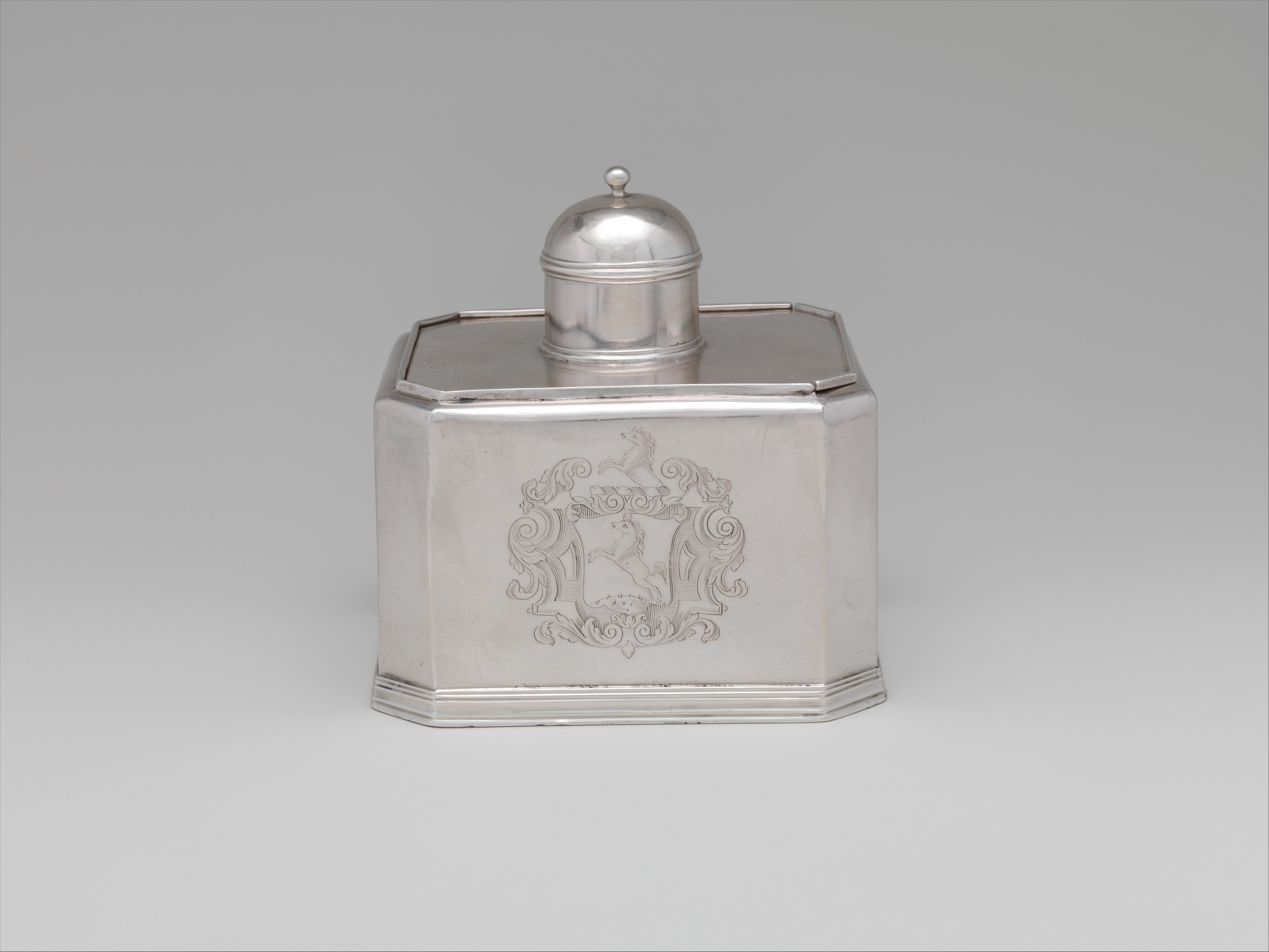
Deconstructing the Confection: A Metallurgical and Conceptual Analysis of 'Sugar Box'
Presented as a standalone study, Katherine Fashion Lab's 'Sugar Box' emerges not merely as a garment but as a sophisticated thesis on American cultural paradoxes, rendered in the cool, unforgiving medium of silver. This analysis positions the piece at the intersection of haute couture's meticulous craft and conceptual art's intellectual rigor, examining how it transmutes the ephemeral iconography of the American dessert into a permanent, armored statement. The work challenges the viewer to reconcile its saccharine inspiration with its metallic reality, forcing a confrontation between indulgence and restraint, nostalgia and critique.
Material Alchemy: From Granule to Plate
The foundational genius of 'Sugar Box' lies in its radical material choice. Silver, historically associated with currency, heirlooms, and sterile modernity, is subverted to capture the essence of a disposable, hyper-palatable commodity. The Lab employs techniques far beyond traditional silversmithing. The surface treatment suggests a meticulous textural replication of granulated sugar, possibly achieved through advanced electroforming or granular sintering, where silver powder is fused to create a porous, crystalline epidermis. This creates a mesmerizing play of light, diffusing it softly rather than reflecting it sharply, mimicking the way light catches on a bed of refined sugar.
Furthermore, the construction implies a study in structural engineering. To achieve the 'box' silhouette—a rigid, geometric form reminiscent of a candy package or a simplified Barbie doll package—the silver must be alloyed and worked to provide specific tensile strength while allowing for articulation at the seams. The hinges and closures are integral to the narrative; they are not hidden but celebrated as functional, industrial components, suggesting the garment is a container to be opened, a prize to be unwrapped. This duality of fragile aesthetic and resilient form is a core American tenet, echoing the country's own blend of optimistic fantasy and industrial might.
Silhouette as Social Commentary: The Confined Confection
The 'Box' silhouette is the conceptual heart of the study. It departs from the organic, body-conscious flow of European couture traditions, opting instead for a graphic, architectural statement. This shape directly references the packaged, commodified femininity pervasive in post-war American culture. It evokes the rigid perfection of a boxed cake mix, the promised, standardized outcome of domestic bliss, and the plastic clamshell packaging of mass-produced dolls that prescribe idealized body images.
Yet, within this constraint lies a profound commentary. The wearer, encased in this silver shell, becomes both the product and the consumer. The silhouette does not conceal the body so much as it redefines its social container. It speaks to the pressures of conforming to sweet, palatable, and neatly packaged identities. However, the very material—hard, valuable, enduring—subverts this notion. It suggests that what is imposed as a fragile, consumable ideal can be reforged into something armored, valuable, and permanent. The standalone nature of the study emphasizes this: this is not a garment for a narrative collection; it is a singular, powerful object for contemplation, removed from the cycle of seasonal trends.
American Context: The Bitter Aftertaste of Sweetness
As an American origin piece, 'Sugar Box' engages deeply with the nation's complex relationship with excess, desire, and image. American culture is a primary exporter of the sugar mythos—from the gleaming soda fountain to the omnipresent cupcake. This work dissects that iconography. The silver becomes a mirror, both literal and figurative, reflecting the viewer's own projections and complicities. It asks: what do we sacrifice for sweetness? What rigidity lies beneath the appealing surface?
The choice to forgo color is particularly potent. It strips away the childish joy of pink frosting and rainbow sprinkles, reducing the concept to its monochromatic, structural essence. This is sugar analyzed under the microscope, its addictive purity laid bare. In the context of American fashion, which often champions casual sportswear or overt glamour, 'Sugar Box' occupies a rare space of critical luxury. It recalls the conceptual rigor of artists like Matthew Barney or the early deconstructive work of Rei Kawakubo, yet its grounding in a universally recognizable domestic object makes its critique uniquely accessible and unsettling.
Conclusion: A Standalone Monument to Contradiction
Katherine Fashion Lab's 'Sugar Box' ultimately stands as a masterful study in contradiction. It is a monument to the ephemeral, an armor forged from a treat, a critique delivered as a luxury object. Its success as a standalone study is that it requires no external narrative; its material, form, and title create a self-contained dialectic. It synthesizes the industrial with the culinary, the oppressive with the desirable, and the valueless (a sugar packet) with the inherently valuable (silver).
This analysis concludes that 'Sugar Box' is less a garment about sugar and more a garment about the containers—social, cultural, and physical—that shape our consumption. It freezes a moment of American cultural metabolism in precious metal, offering a cold, beautiful, and indelible artifact for contemplation. In doing so, it establishes Katherine Fashion Lab not just as an atelier of clothing, but as a laboratory for refining the raw materials of our collective psyche into sharp, enduring forms. The aftertaste it leaves is complex, metallic, and profoundly thought-provoking.