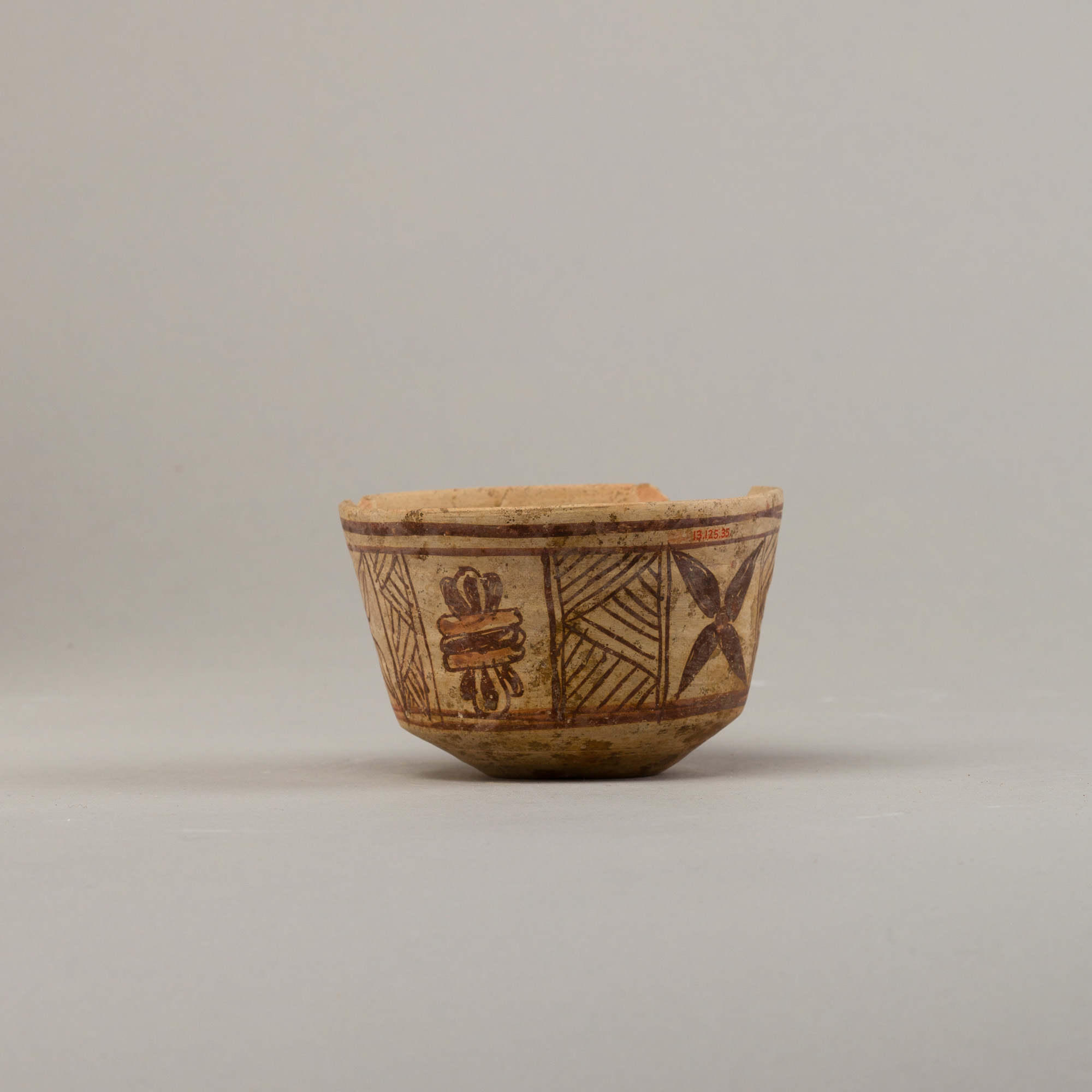
Executive Heritage Analysis: The Bowl as a Strategic Archetype
For Katherine Fashion Lab, the study of an ancient ceramic bowl transcends antiquarian curiosity. It is a masterclass in the semiotics of power, the architecture of desire, and the enduring economics of scarcity. This analysis deconstructs the bowl’s symbolic DNA—its floral and geometric lexicon—to extract transferable principles for a 2026 high-end luxury strategy. The artifact is not merely a vessel; it is a proto-luxury object, encoding status, cosmology, and artisanal mastery in equal measure.
Symbolic Power: The Vessel as a Political and Cosmic Statement
The bowl’s painted surface is a silent manifesto of authority. In ancient civilizations—whether Mesopotamian, Minoan, or pre-Columbian—the decorated bowl was rarely a utilitarian object. It was a ceremonial instrument, a diplomatic gift, and a funerary offering. Its circular form is a microcosm of the cosmos, a bounded universe where the owner controlled the narrative. The geometric bands—chevrons, meanders, and concentric circles—functioned as a visual language of order, demarcating the sacred from the profane. For a modern luxury house, this translates into the strategic use of controlled geometry as a signifier of institutional power. The 2026 client is not buying clothing or accessories; they are acquiring a fragment of ordered reality, a talisman of stability in a fragmented world. Katherine Fashion Lab should position its geometric motifs not as mere decoration, but as a proprietary system of visual governance—a code that signals membership in an exclusive, discerning elite.
Historical Adornment: The Prestige of Permanent Decoration
Unlike transient textile dye or perishable wood, fired pottery with painted pigment is a study in permanence. The act of painting a bowl was a high-stakes ritual; a single error in firing could destroy hours of labor. This historical context elevates the medium to a status of irreversible commitment. The artisan’s hand, guided by a master’s eye, produced a surface that could not be altered—a stark contrast to today’s digital, editable world. For Katherine Fashion Lab, this offers a potent strategic narrative: the valorization of the non-negotiable. In the 2026 luxury market, where AI-generated patterns and mass customization dilute uniqueness, a return to irreversible, hand-executed adornment becomes the ultimate differentiator. The Lab should consider a capsule collection where each piece’s pattern is painted by a single artisan, signed, and never replicated—a direct heir to the ancient bowl’s ethos of permanent, singular beauty.
Spiritual Meaning: The Bowl as a Conduit for Transcendence
The floral motifs—lotus, palmette, or rosette—were not botanical illustrations. They were hieroglyphs of rebirth, fertility, and divine favor. The bowl, when held, was an intermediary between the human and the divine, a vessel for offerings that bridged worlds. The geometry, meanwhile, served as a meditative grid, aligning the user with celestial rhythms. This dual coding—organic life force (floral) and cosmic order (geometry)—creates a psychological tension that is profoundly resonant for the modern luxury consumer. The 2026 high-net-worth individual is seeking more than status; they seek meaning and spiritual grounding. Katherine Fashion Lab can leverage this by framing its designs as ritual objects for contemporary life. A scarf or a silk jacket, patterned with the bowl’s floral-geometric grammar, becomes a wearable mandala—an object of daily contemplation, not just a garment. The marketing narrative should pivot from "fashion" to ceremonial utility, positioning the brand as a curator of transcendent experiences, not merely a purveyor of goods.
Strategic Synthesis: The 2026 High-End Luxury Roadmap
Translating this ancient artifact into a 2026 luxury strategy requires a three-tiered approach: Narrative Provenance, Material Alchemy, and Exclusivity Architecture.
Narrative Provenance: The bowl’s power lies in its origin story. Katherine Fashion Lab must construct a "digital provenance" for each collection, tracing design elements directly to the artifact’s symbolic vocabulary. This is not cultural appropriation but cultural curation—a respectful, scholarly dialogue with the past. The brand should publish a "Heritage Codex" (a limited-edition book or digital NFT) detailing the meaning of each motif, turning customers into initiates of a secret visual language.
Material Alchemy: The bowl’s medium—terracotta, slip, and mineral paint—offers a tactile palette. For 2026, the Lab should experiment with ceramic-infused textiles and terracotta-toned metallic finishes. Imagine a structured handbag with a surface that mimics the bowl’s burnished clay, or a silk twill with a mineral-pigment print that feels almost chalky to the touch. This sensory crossover—from pottery to fashion—creates a novel haptic experience that AI-driven competitors cannot replicate.
Exclusivity Architecture: The ancient bowl was not mass-produced. It was commissioned. Katherine Fashion Lab should adopt a bespoke-by-default model for its "Heritage Vessel" line. Clients do not purchase a finished product; they commission a pattern—choosing the floral motif and geometric border—which is then hand-painted onto a garment or accessory over a six-month period. This reintroduces the ancient concept of patronage, where the client is a co-creator with the artisan, and the final object is a unique artifact, not a SKU. The price point should reflect this: not a premium, but an investment in permanence.
Conclusion: The Bowl as a Strategic Mirror
The ancient bowl, with its floral vitality and geometric rigor, is a mirror for the 2026 luxury consumer’s dual desire: for organic authenticity and structural certainty. Katherine Fashion Lab’s strategic opportunity is to become the modern atelier of the sacred vessel—a house that transforms apparel and accessories into heirlooms of symbolic power. By honoring the bowl’s historical adornment, spiritual depth, and artisanal permanence, the Lab does not merely reference the past; it re-engineers the future of high-end luxury. The strategy is clear: sell not the object, but the rite of possession. In doing so, Katherine Fashion Lab positions itself not as a fashion label, but as a cultural institution of enduring value—a vessel, if you will, for the most precious commodity of all: meaning.