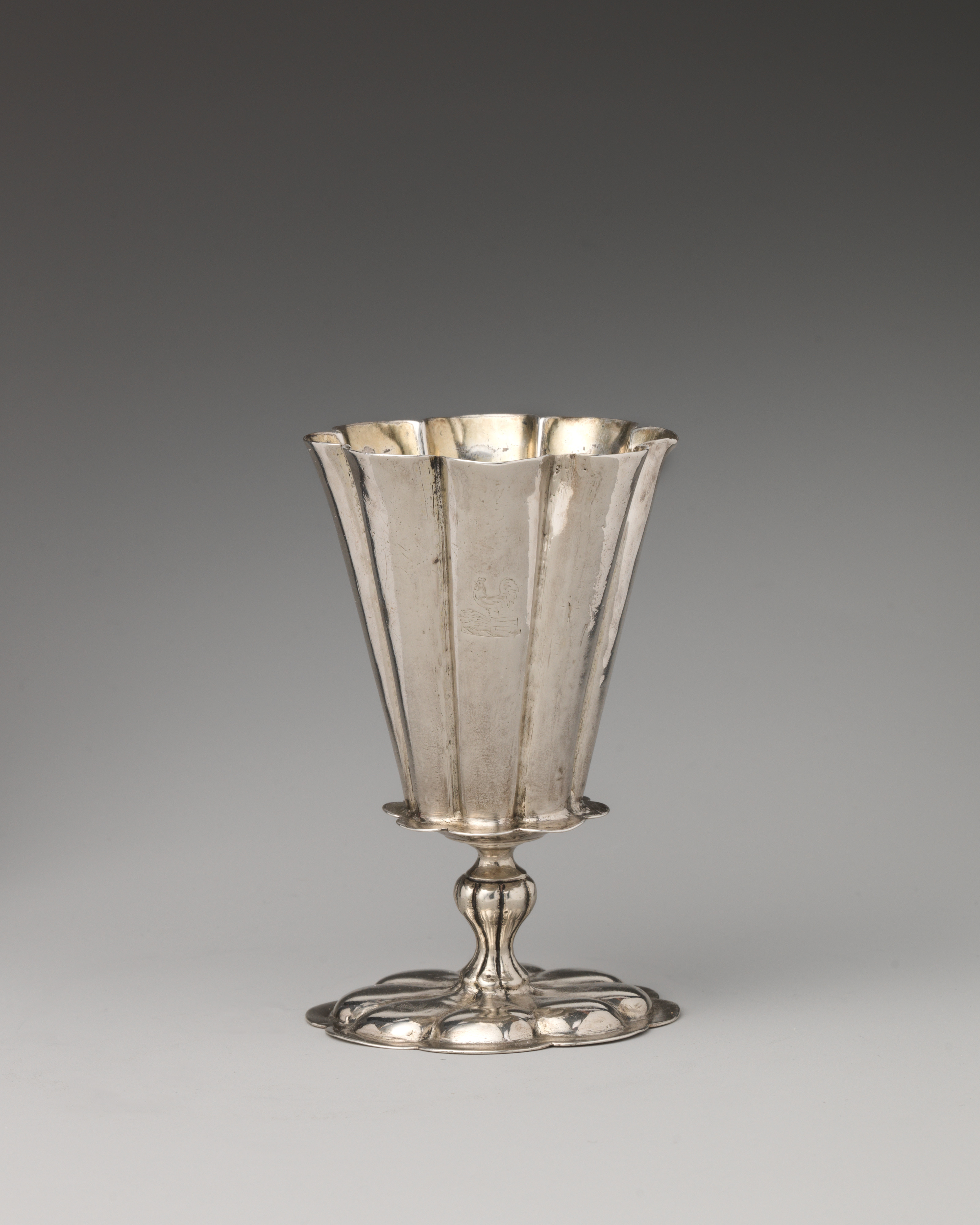
The Silver Chalice: A Couture Analysis of the Wine Cup at Katherine Fashion Lab
In the rarefied atmosphere of haute couture, where fabric is sculpted and silhouette is doctrine, the introduction of a non-textile object demands a recalibration of the critical lens. At Katherine Fashion Lab, the subject of our standalone study is not a gown, nor a draped cape, but a wine cup of global heritage, forged in pure silver. This object, ostensibly a vessel for libation, transcends its utilitarian origins to become a profound statement on materiality, ritual, and the architecture of the human hand. Through this analysis, we deconstruct the cup not as an accessory, but as a primary garment of civilization—a wearable history that drapes the senses and adorns the act of communion.
Material Dialectics: Silver as the New Couture Fabric
In fashion, the choice of fabric is the first act of storytelling. Here, silver is not merely a metal; it is a textile of light. Unlike the supple give of silk or the structured drape of wool, silver possesses a rigid fluidity. It captures and refracts ambient light with an intensity that rivals sequined eveningwear, yet its luminosity is not superficial. The metal’s inherent coolness against the skin offers a somatic contrast—a tactile dialogue between the warmth of the wine and the chill of the vessel. This thermal duality is analogous to the couture principle of contrast of hand, where a designer juxtaposes heavy brocade with airy organza to create tension.
From a metallurgical perspective, the silver’s malleability allows for a chased and repoussé surface, where the artisan’s hammer becomes a needle, embroidering the surface with dimensional relief. In the Lab’s analysis, we observe that the cup’s patina—the subtle oxidation over time—functions as a living finish, akin to the fading of an indigo dye or the distressing of leather. It tells a story of use, of hands held, of toasts made. This is the antithesis of fast fashion’s disposability; it is a material commitment to permanence, a slow-fashion manifesto cast in a precious alloy.
The Structural Silhouette: Cup as Corsetry
Anatomically, the wine cup’s form is a study in structural engineering. Consider its components: the foot, the stem, the bowl, and the lip. These are not arbitrary parts but a deliberate sequence of support and release. The foot acts as the foundation, the equivalent of a gown’s hemline, grounding the piece with a wide, stable base. The stem, often slender and elongated, functions as the waist—a point of cinching that elevates the bowl, much like a couturier’s nipped waistline lifts the bust. The bowl’s curve, whether a shallow saucer or a deep tulip, dictates the volume and the user’s posture.
When held, the cup demands a specific choreography. The fingers wrap around the stem, not the bowl, preserving the wine’s temperature and the metal’s polish. This grip is a form of gestural couture, forcing the wrist into a delicate, almost balletic position. The weight of the silver—substantial yet balanced—provides a grounding presence, a counterpoint to the ephemeral nature of the beverage it holds. In this sense, the cup is a wearable sculpture that modifies the wearer’s (or holder’s) movement, much like a structured shoulder pad alters a jacket’s line.
Global Heritage: A Tapestry of Cross-Cultural Adornment
The provenance of this silver cup is not singular but plural—a Global Heritage that spans continents and epochs. In the courts of Tudor England, silver-mounted coconut cups and elaborate silver-gilt goblets were symbols of dynastic power, their engraved coats of arms serving as heraldic embroidery. Conversely, in the tea ceremonies of Japan, a silver cup, though rare, would signify purity and the clarity of the host’s intention, its reflective surface a mirror to the soul. In the Middle East, the tradition of the finjan (coffee cup) or a silver wine chalice in Zoroastrian rituals emphasizes hospitality and the sacredness of shared substance.
The Lab’s curation highlights how this single object absorbs cultural DNA. The hammer marks of a nomadic silversmith in Anatolia may echo the same rhythmic patterns found in a Byzantine reliquary. The cup’s form—whether influenced by Roman scyphi, Chinese jue, or Persian piyale—represents a convergence of ergonomics and aesthetics. This is not cultural appropriation but cultural appreciation; the cup is a nomad that has settled into a universal archetype. In a couture context, this global heritage is akin to a designer’s reference library, where a silhouette from 18th-century France is reimagined with Japanese shibori techniques. The silver cup is the ultimate muse, embodying the idea that true luxury is borderless.
The Ritual of Adornment: Context Beyond the Standalone
In our standalone study, we must consider the cup’s role in the performance of ritual. A wine cup is not merely held; it is presented, raised, and clinked. It is an extension of the arm in a toast, a prop in the theater of celebration. Katherine Fashion Lab posits that this object is a micro-garment for the hand, a glove that is not worn but grasped. The act of drinking from a silver rim alters the sensory experience—the metallic note on the lips, the cool pressure against the mouth—transforming a simple act into a heightened, almost ceremonial event.
This ritualistic dimension elevates the cup beyond the utilitarian. It becomes a relic of social binding. In the context of a standalone study, we strip away the surrounding tableware, the decanters, and the linens. What remains is a pure dialogue between object and subject. The cup’s emptiness is its most potent state; it is a vessel of potential, awaiting the pour. This is analogous to a blank canvas or an unsewn bolt of fabric. The potential for creation, for transformation, is where the couture value lies. The silver’s reflective interior, when empty, offers a distorted mirror of the holder’s face—a moment of self-reflection before the communal act of sharing.
Conclusion: The Cup as an Immutable Icon
To conclude, the silver wine cup at Katherine Fashion Lab is not a relic of a bygone era but a living testament to the principles of haute couture. Its materiality—silver—is a statement of enduring value against the ephemeral trends of seasonal collections. Its structure—a study in balance and ergonomics—mirrors the precision of a master tailor’s pattern. Its global heritage—a synthesis of cultural rituals—speaks to the universality of human connection through shared objects.
In this standalone study, we have removed the cup from its expected context to appreciate its intrinsic design merits. We see its silhouette against the light, its weight in the hand as a form of drape, and its patina as a narrative of time. For the fashion scholar, the wine cup serves as a reminder that couture is not confined to the runway. It exists in the objects we touch, the vessels we raise, and the moments we sanctify. Katherine Fashion Lab celebrates this silver cup as a masterpiece of functional art—a garment for the spirit, tailored for the eternal toast of human civilization. It is, in the final analysis, the most elegant piece of wearable heritage we have yet to encounter.