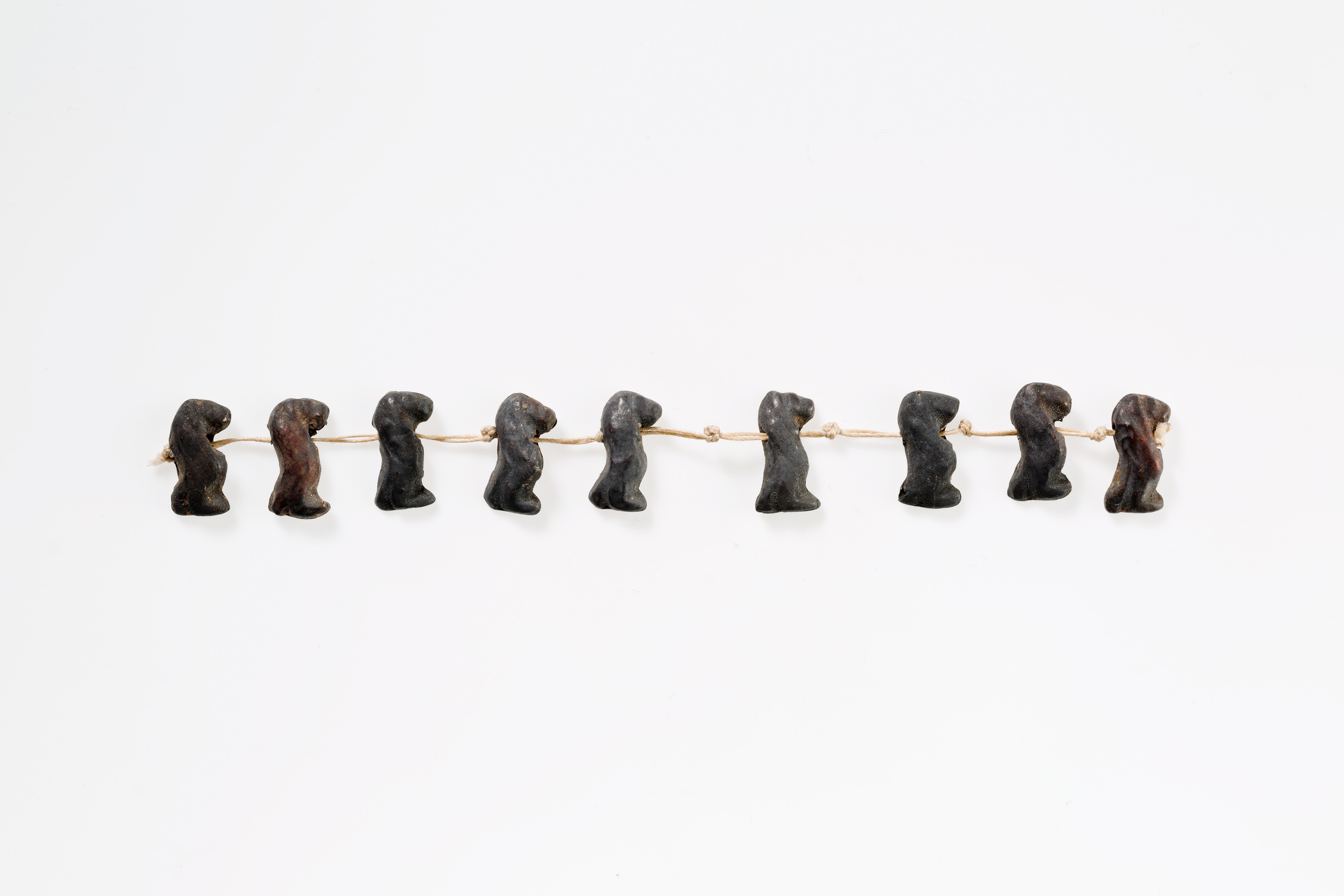
Executive Heritage Brief: The Nine Taweret Amulets
This strategic research paper examines the Nine Taweret Amulets as a singular, high-impact heritage asset for Katherine Fashion Lab’s 2026 luxury narrative. The amulets, composed of electrum—a naturally occurring gold-silver alloy—and layered with fine plaster, originate from the late New Kingdom period of Ancient Egypt. Their cultural weight, however, transcends archaeological chronology. For a maison operating at the intersection of heritage and contemporary luxury, these nine objects are not merely artifacts; they are encoded repositories of protective power, material mastery, and feminine authority. This analysis decodes their symbolic architecture and translates it into a viable, emotionally resonant strategy for high-end positioning in the 2026 market cycle.
Material Alchemy: Electrum and Plaster as Symbolic Carriers
The medium of the Nine Taweret Amulets demands immediate attention. Electrum was not a random metallurgical choice; it was a deliberate fusion of solar gold and lunar silver, representing cosmic balance and the unification of divine opposites. In Ancient Egyptian cosmology, gold was the flesh of the sun god Ra, imperishable and eternal, while silver was the bone of the moon, associated with the god Thoth and the cool, regenerative power of night. By alloying these metals, the artisans created a substance that was neither purely solar nor lunar but a synthesis of both—an emblem of totality. For Katherine Fashion Lab, this material logic offers a profound lesson in 2026 luxury: true opulence is not loud singularity but the quiet, intelligent union of opposing forces.
The inclusion of plaster is equally significant, though often overlooked. Plaster served a dual function: as a structural core for the delicate electrum sheet and as a ritual substrate. In the amulet’s creation, plaster was not a cheap filler but a sacred grounding element, anchoring the divine metal to the earthly realm. This juxtaposition of precious and humble materials challenges the contemporary hierarchy of luxury materials. It suggests that value is not inherent in rarity alone but in the narrative tension between the base and the sublime. A 2026 strategy that references this duality—pairing high-polish metals with matte, organic textures—can create a signature aesthetic that reads as both archaic and avant-garde.
Symbolic Power: The Taweret Archetype and Feminine Protection
Taweret, the hippopotamus goddess, occupies a unique space in the Egyptian pantheon. Unlike the male-dominated deities of war and kingship, Taweret was a domestic apotropaic figure—a protector of childbirth, fertility, and the vulnerable threshold between life and death. Her iconography is deliberately monstrous: the body of a pregnant hippopotamus, the limbs of a lion, and the back of a crocodile. This composite form was not an aesthetic accident but a strategic aggregation of defensive attributes. The hippopotamus offered raw, maternal ferocity; the lion provided courage and territorial defense; the crocodile supplied amphibious vigilance. The Nine Taweret Amulets, worn in sets or individually, were thus portable fortresses of female-centric power.
The number nine itself is laden with numerological significance. In Egyptian thought, the Ennead—the group of nine deities—represented the complete cosmic order. Nine also signifies the nine months of human gestation, aligning perfectly with Taweret’s role as a birth goddess. The repetition of the amulet nine times amplifies its protective frequency, creating a resonant field that wards off chaos (Isfet) and invites order (Maat). For a modern luxury house, this symbolic power translates into a narrative of guarded strength. The 2026 woman is not seeking fragile adornment; she seeks armor that is emotionally intelligent. The Taweret archetype offers a blueprint for a collection that celebrates protective femininity—not as a retreat from power, but as its most potent expression.
Historical Adornment: From Ritual Object to Wearable Statement
Contextualizing the Nine Taweret Amulets within historical adornment practices reveals their functional versatility. They were not confined to the tomb; they were worn by living women, particularly during pregnancy and childbirth, and later placed upon mummies to ensure safe passage into the afterlife. This dual-life usage—active and passive, terrestrial and celestial—is crucial for understanding their enduring appeal. The amulets were threaded on linen cords or gold chains, often positioned over the womb or the chest, making them intimate companions to the body’s most sacred processes. This proximity to the skin was not incidental; it was essential. The amulet’s power was activated through contact, through the warmth of the wearer’s flesh.
In the context of 2026 high-end strategy, this principle of intimate activation is paramount. The modern luxury consumer is increasingly detached from mass-produced ornament, seeking pieces that function as talismanic extensions of the self. Katherine Fashion Lab can leverage this by designing not just jewelry, but “wearable rituals.” The amulets’ historical placement—over the womb or heart—suggests a blueprint for pieces that are designed to be worn close to the body, perhaps as under-layers or hidden clasps, visible only to the initiated. This concept of “secret adornment” elevates the wearer’s experience from passive display to active participation in a private, protective narrative.
Spiritual Meaning: Maat, Isfet, and the Luxury of Balance
The spiritual dimension of the Nine Taweret Amulets extends beyond mere superstition into a sophisticated philosophical framework. Central to their function was the maintenance of Maat—the principle of cosmic balance, truth, and justice. The amulets were believed to actively repel Isfet, the force of chaos, disorder, and falsehood. In this light, the amulets were not just protective charms but ethical instruments. They served as physical reminders that the wearer was aligned with the forces of order, and that her personal power was derived from her commitment to equilibrium.
This spiritual meaning offers a powerful counter-narrative to the excess and noise of contemporary luxury. In 2026, the high-end market is moving toward “conscious luxury,” where value is measured by intention and impact. The Taweret amulets provide a historical precedent for this shift. They were not objects of vanity but of necessity—functional tools for spiritual survival. A luxury strategy that adopts this ethos will resonate deeply with discerning clients who view their purchases as extensions of their moral and spiritual commitments. The amulet’s promise of balance becomes a metaphor for the maison’s own ethos: a balanced portfolio, a balanced supply chain, and a balanced relationship between heritage and innovation.
2026 Luxury Strategy: Translating the Taweret Code
Translating the Nine Taweret Amulets into a 2026 high-end strategy requires a multi-layered approach that respects the artifact’s integrity while making it relevant to contemporary aesthetics and commerce. The following strategic pillars are proposed for Katherine Fashion Lab’s consideration.
Curatorial Storytelling as Brand Architecture
The amulets should not be presented as mere inspiration; they should be positioned as a “founding artifact” of a new collection. Katherine Fashion Lab can produce a limited-edition series of nine signature pieces, each corresponding to one of the original amulets. The marketing narrative must be anthropological, not merely aesthetic. High-resolution imagery of the electrum’s patina, the plaster’s texture, and the amulets’ worn surfaces should be paired with scholarly annotations. This curatorial approach positions the maison as a custodian of cultural memory, not a mere appropriator. The 2026 client is sophisticated; she demands provenance, context, and intellectual depth. By offering these, Katherine Fashion Lab elevates its product from commodity to cultural artifact.
Material Innovation through Historical Synthesis
The electrum-plaster combination offers a unique opportunity for material innovation. Katherine Fashion Lab could commission a modern reinterpretation using a proprietary alloy—perhaps a platinum-palladium blend to mimic electrum’s luminous warmth—paired with a high-density ceramic or micro-molded resin that echoes the plaster’s grounding presence. This is not a pastiche but a dialectical evolution. The design language should emphasize weight, texture, and tactile contrast. The pieces should feel substantial yet comfortable, evoking the amulet’s protective heft without sacrificing wearable ergonomics. This material strategy creates a distinct sensory signature that competitors cannot easily replicate.
Ritual-Centric Consumer Experience
To fully activate the spiritual meaning of the amulets, the retail experience must be transformed. Standard boutique displays are insufficient. Katherine Fashion Lab should design an immersive “Chamber of Protection” for flagship stores, where the Nine Taweret Amulets are displayed in a dim, intimate space reminiscent of a temple sanctum. Clients should be invited to engage in a private consultation—a “ritual of selection”—where they choose their amulet based on their personal needs: fertility, creativity, resilience, or balance. Each piece would be presented in a bespoke box lined with linen, echoing the amulets’ original wrapping. This experience transforms a purchase into a ceremony, creating deep emotional attachment and repeat engagement.
Limited Edition and Investment Value
Scarcity is a cornerstone of high-end strategy, but artificial scarcity is increasingly transparent. The Nine Taweret Amulets offer a legitimate basis for limited editions. A global release of only nine hundred pieces—one hundred per amulet type—would honor the sacred number while creating genuine investment value. Each piece should be individually numbered and accompanied by a certificate of authenticity that includes a micro-engraved history of the original amulet. This approach appeals to the collector’s mindset, positioning the pieces as heirloom assets that appreciate in cultural and monetary value over time. The 2026 luxury market is bifurcating: either disposable fast-fashion or enduring, meaningful investments. Katherine Fashion Lab must unequivocally occupy the latter space.
Collaborative Cultural Stewardship
Finally, a responsible strategy requires collaboration with Egyptian cultural authorities and contemporary Egyptologists. This is not merely an ethical imperative but a strategic one. By partnering with institutions such as the Egyptian Museum in Cairo, Katherine Fashion Lab can ensure the historical accuracy of its narrative and contribute to preservation efforts. A percentage of proceeds from the Taweret collection could be earmarked for the conservation of New Kingdom artifacts. This philanthropic component adds a layer of authentic purpose, aligning the maison with the global movement toward cultural stewardship. In 2026, the luxury client does not merely buy a product; she buys into a legacy. By linking the amulets to their living heritage, Katherine Fashion Lab creates a virtuous cycle of cultural and commercial value.
Conclusion: The Enduring Currency of Protection
The Nine Taweret Amulets are far more than ancient curiosities. They are a sophisticated synthesis of material science, spiritual philosophy, and gendered power. Their electrum bodies speak to a civilization that understood the alchemy of balance; their plaster cores remind us that humility supports brilliance; their hippopotamus goddess form challenges reductive notions of feminine beauty, celebrating instead the ferocity of maternal protection. For Katherine Fashion Lab, these amulets offer a rare opportunity to build a 2026 strategy that is intellectually rigorous, emotionally resonant, and commercially astute. By honoring the artifact’s full complexity—its symbolism, its materiality, its ritual function—the maison can craft a narrative that stands apart in a saturated market. The amulets’ ancient promise of protection finds its modern