The Art of Suspension: Deconstructing Weight and Worth in Katherine Fashion Lab’s “Hanging”
In the rarefied echelons of contemporary couture, where innovation often masquerades as mere provocation, Katherine Fashion Lab’s standalone study, “Hanging,” emerges as a profound meditation on physics, heritage, and the very ontology of adornment. At first glance, the piece presents a paradox: a garment whose structural integrity is predicated on its own precariousness, a silhouette that defies the gravitational logic that has anchored fashion for centuries. Yet, upon deeper analysis, “Hanging” is not an act of defiance against gravity but a sophisticated negotiation with it—a dialogue conducted in the language of silk and gold, with a lexicon drawn from a global patrimony of craftsmanship. This is not merely clothing; it is a suspended thesis on the tension between material weight and ethereal presence.
Gravitational Choreography: The Structural Paradox
The initial visual impact of “Hanging” is one of deliberate instability. Unlike the tailored armor of a structured jacket or the disciplined drape of a bias-cut gown, this piece appears to be in a state of perpetual, elegant fall—arrested mid-motion. The construction eschews the traditional shoulder seam and waist suppression, instead utilizing a series of internal, almost invisible tension points that distribute the garment’s mass from a single, unseen anchor point, likely at the nape or the clavicle. This engineering feat transforms the wearer into a living plumb line, where every gesture alters the cascade of fabric. The genius lies in the controlled chaos; the silk is not merely draped but choreographed, with each fold and ripple responding to the micro-movements of the body beneath. The result is a kinetic sculpture that redefines the relationship between the human form and its covering—the garment no longer clings or contains, but rather flows from the body, as if the wearer is the source of a luxurious waterfall.
This suspension is a radical departure from the Western canon of tailoring, which has historically sought to impose structure upon the body. Instead, “Hanging” aligns with a more ancient, Eastern philosophy of dress, where fabric is revered for its intrinsic fluidity and the body is a mere conduit for its expression. The absence of restrictive boning or heavy interfacing is a testament to the Lab’s technical audacity. The weight, therefore, is not borne by the shoulders but is distributed through a complex system of counterweights and hidden seams, creating a garment that feels weightless despite its opulent materiality. The wearer experiences a paradoxical sensation: a profound physical lightness that is intellectually and visually substantial.
Material Lexicon: Silk as Memory, Gold as Lineage
The materiality of “Hanging” is its most eloquent argument. The primary substrate is a mulberry silk of exceptional grade, chosen not for its sheen alone but for its tensile strength and its remarkable ability to hold a crease while remaining supple. This silk, likely sourced from a heritage mill in Como or Kyoto, possesses a memory—it remembers the shape of the hand that dyed it and the tension of the loom that wove it. In this context, the fabric is not a passive surface but an active participant in the narrative of suspension. Its fluidity allows for the continuous, unbroken lines that define the silhouette, creating a visual stream that guides the eye from the anchor point down to the asymmetric hem, which appears to have been cut by the wind itself.
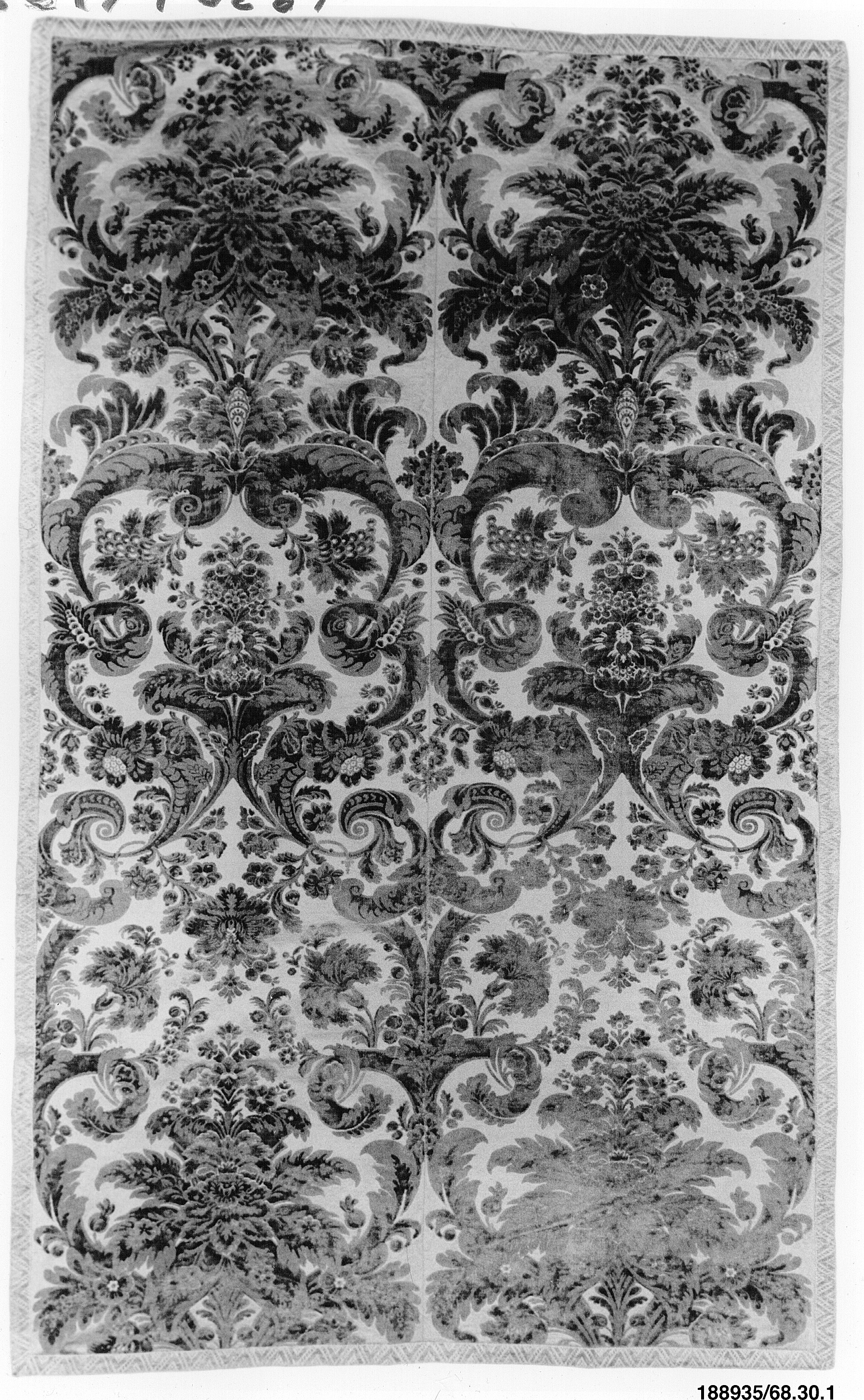
Interspersed within this sea of silk is the second protagonist: gold-wrapped thread. This is not a metallic lurex or a gilded polyester; it is a true metal thread, where a filament of pure gold is spiraled around a core of silk or polyester. This technique, known as passementerie in the West and zari in the Indian subcontinent, is a hallmark of ceremonial and courtly dress across cultures. In “Hanging,” the gold is not used for ostentatious embroidery but is woven directly into the ground fabric in a subtle, almost undetectable grid. This creates an optical phenomenon: as the wearer moves, the gold catches the light in brief, staccato flashes, suggesting a constellation of stars trapped within a liquid medium. The gold thread serves as a structural metaphor—it is the unyielding, precious core that provides the tensile strength to support the weight of the silk, just as the cultural heritage of goldwork provides the conceptual backbone for the design.
Global Heritage: A Cartography of Suspended Time
The “Global Heritage” origin of “Hanging” is not a mere marketing tagline; it is an embedded code within the garment’s DNA. The concept of suspension as a form of adornment is a recurring motif across disparate civilizations. One can trace its lineage to the Mughal courts, where the patka sash was worn hanging low, its weight signifying rank and its fluidity symbolizing the emperor’s grace under pressure. Similarly, the Japanese furisode, with its long, hanging sleeves, was a garment of transition and status, its length a visual declaration of youth and unmarried nobility, designed to trail and dance with the wearer’s steps. Even in the Greco-Roman tradition, the palla was often worn suspended over the shoulder, its drape a sign of civic virtue and philosophical poise. Katherine Fashion Lab synthesizes these disparate threads into a cohesive, modern vernacular. The piece does not quote any single historical costume but rather extracts the essence of suspension—the idea that what is not worn tightly can be more powerful than what is.
This cultural synthesis is achieved through a process of abstracted reference. The gold thread recalls the opulence of the Byzantine Empire, while the silk’s fluidity echoes the Tang Dynasty’s love for diaphanous layers. Yet, the silhouette is resolutely contemporary, almost avant-garde in its minimalism. There is no collar, no cuff, no visible fastener. The garment is a study in negative space, where the absence of traditional tailoring elements speaks louder than their presence. This is a deliberate curatorial choice: by stripping away cultural signifiers, the Lab forces the viewer to confront the universal, primal relationship between fabric, weight, and the human body. The heritage is not in the pattern but in the hand—the knowledge of how to handle silk without crushing it, how to tension gold thread without breaking it, how to hang a garment so it does not strangle but liberates.
The Standalone Study: A Manifesto in Fabric
As a standalone study, “Hanging” is removed from the context of a seasonal collection or a thematic runway show. This isolation is critical to its interpretation. It is not a piece meant to be accessorized or paired with other garments; it is a complete, self-contained argument. In this solitude, it functions as a manifesto, a thesis statement on the future of couture. The Lab proposes that luxury is not found in accumulation but in reduction; that technical mastery is best displayed through apparent simplicity; and that the most profound innovation often lies in revisiting ancient principles with modern engineering.
This piece challenges the contemporary obsession with comfort as a form of shapelessness. “Hanging” is supremely comfortable, but its comfort is an active, intelligent comfort—it moves with the body, never hindering, yet always present. It demands a specific posture, a certain carriage, not through corsetry but through the sheer psychological weight of wearing something so exquisitely balanced. The wearer becomes a co-author of the garment’s final form, and no two wearers will ever produce the same silhouette. This is the ultimate luxury: a garment that is never the same twice, that is constantly being rewritten by the physics of the moment.
In conclusion, “Hanging” is a masterclass in material poetry and conceptual rigor. It transforms a simple physical act—the act of hanging—into a profound artistic statement about the relationship between support and freedom, between heritage and innovation, between the weight of the past and the lightness of possibility. Katherine Fashion Lab has not just created a garment; they have engineered a philosophy, suspended in silk and secured with gold, for the discerning connoisseur of wearable art.