Executive Heritage Assessment: The Stucco Fragment as a Blueprint for Power and Prestige
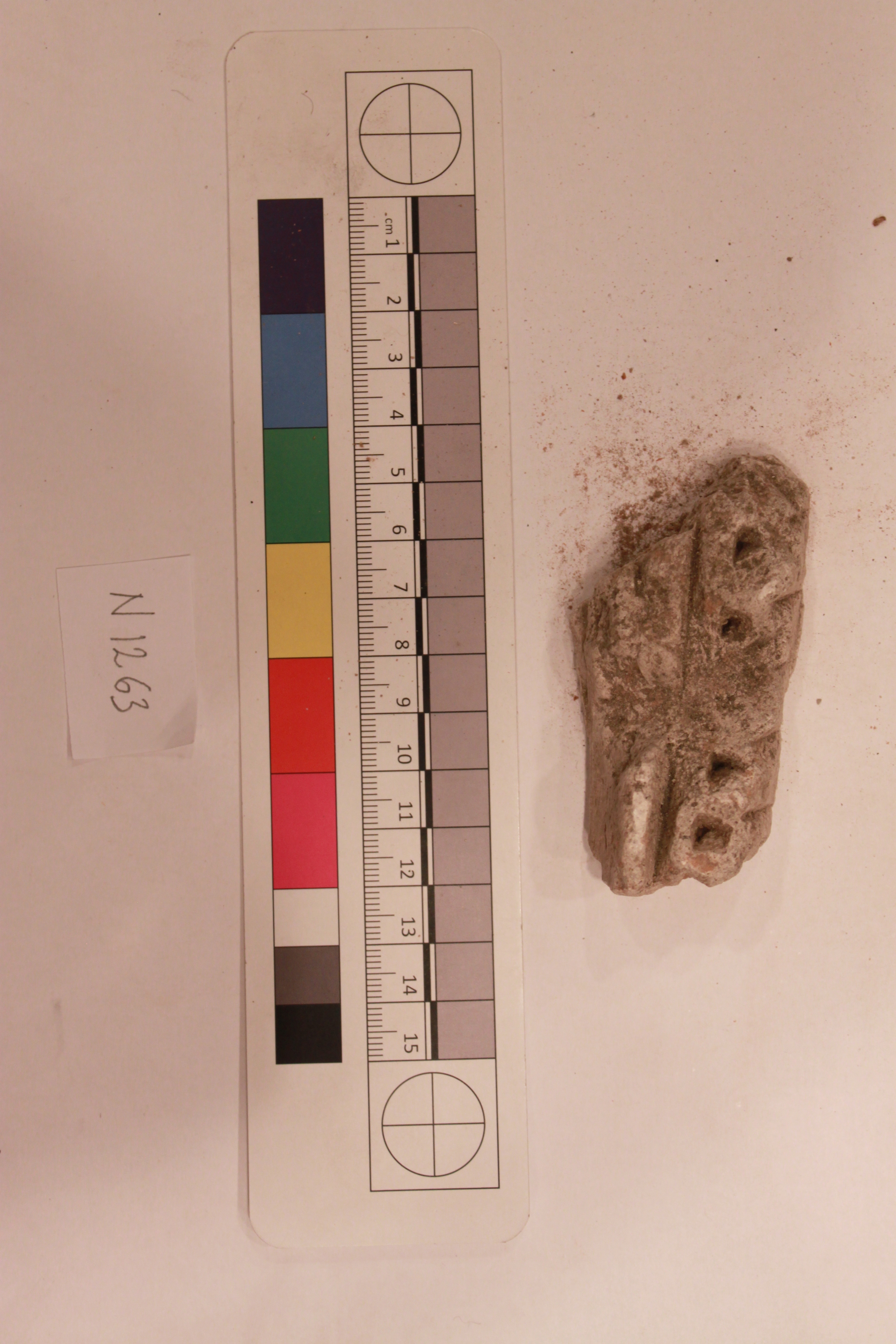
This standalone research paper, prepared for Katherine Fashion Lab, undertakes a rigorous examination of a singular artifact: a carved and painted stucco fragment from an ancient civilization. Within the context of high-end luxury strategy for 2026, this fragment is not merely an archaeological curiosity; it is a primary source document on the semiotics of power, the psychology of adornment, and the materialization of the sacred. By deconstructing its symbolic lexicon and manufacturing ethos, we extract actionable intelligence to inform a new paradigm of 'Heritage-Driven Luxury'—one that moves beyond aesthetic nostalgia toward a profound engagement with material spirituality and hierarchical resonance.
Materiality and Craft: The Politics of the Surface
Stucco, in its ancient application, was never a 'cheap' substitute for stone. In the hands of master artisans, it was a medium of supreme malleability, permitting a fluidity of form unattainable in quarried rock. The fragment’s carved relief and polychrome surface demand a re-evaluation of material hierarchy within luxury. The strategic implication for Katherine Fashion Lab is the elevation of 'soft power' materials—those that require intensive, specialized labor to manipulate—over inherently rigid, precious substances.
The Polychrome Imperative
The presence of paint on the stucco is a critical data point. In antiquity, color was not decorative; it was performative and protective. Pigments were sourced from rare minerals—cinnabar for vermilion, lapis for ultramarine—transforming the fragment into a repository of geographic conquest and trade dominance. For a 2026 luxury strategy, this dictates a shift toward proprietary colorways. The Lab must treat its palette as a guarded intellectual property, sourcing pigments and dyes from singular, controlled origins. The color is not an accent; it is the primary carrier of brand value, signifying access to resources unavailable to the broader market.
Symbolic Power and the Grammar of Authority
The iconography carved into the stucco—whether a fragment of a royal headdress, a taloned deity, or a stylized botanical motif—operates as a coded language of legitimacy. In ancient civilizations, to control the image was to control the narrative of divinity and statehood. The fragment’s incomplete state is itself a powerful symbol of enduring legacy; it survives the collapse of its originating empire, suggesting that symbolic capital outlasts physical dominion.
Hierarchy Through Abstraction
We observe that ancient power was rarely represented naturalistically. Instead, it was abstracted into exaggerated proportions—oversized eyes for omniscience, rigid posture for immutable law. This abstraction created psychological distance between the ruler and the ruled, fostering awe. The 2026 luxury consumer, saturated with data and realism, craves this distance. The strategic directive is to introduce 'Neo-Hieratic' silhouettes—garments and accessories that use exaggerated lines and geometric precision to project an aura of unassailable authority, rather than approachable comfort. The design language must whisper of edicts and ceremonial courts, not casual wear.
Historical Adornment: The Body as a Political Canvas
This stucco fragment likely adorned an architectural frieze or a ceremonial object, yet its principles directly translate to bodily adornment. In ancient contexts, adornment was a heavy responsibility; gold, feathers, and painted stucco were worn to shoulder the weight of cosmic order. The individual was a walking monument. This contrasts sharply with contemporary 'minimalist' luxury, which often prioritizes ease.
Ritualistic Weight and Structure
Katherine Fashion Lab’s 2026 collection should introduce pieces that possess architectural gravity. This does not imply physical heaviness, but visual and conceptual density. Structured collars that mimic carved friezes, cuffs that echo the fragment's relief work, and textiles that replicate the texture of painted stucco—these items transform the wearer into a living artifact. The adornment must feel like an investiture, a ceremony of self-coronation. The consumer is not 'wearing' a brand; they are donning a legacy.
Spiritual Meaning and Transcendent Consumption
The stucco fragment’s original function was likely votive—an offering to appease or invoke a deity. Its creation was an act of materialized prayer. The artisan’s stroke was a ritual gesture. For the modern luxury market, which increasingly suffers from a spiritual vacuum, this offers a profound strategic opening. The product must be positioned as a talisman, a physical anchor for intention and protection.
The Aura of Consecration
To borrow from Walter Benjamin, the fragment possesses an 'aura' derived from its unique existence in time and space. Mass production erases this aura. Therefore, the 2026 strategy must pivot to 'Controlled Serendipity'. This involves introducing minor, intentional variations in the finishing process—a hand-painted edge, a subtle asymmetry in a carved motif—that render each piece unique. This is not a flaw; it is a signature of the divine hand. Marketing narratives must pivot from 'craftsmanship' to 'consecration,' framing the atelier as a sacred space where materials are blessed through skill.
Strategic Synthesis: The 2026 'Relic Mode'
Drawing from this analysis, Katherine Fashion Lab is advised to adopt a three-pillar strategy for 2026, codified as the 'Relic Mode'. This is not a historical costume revival, but a philosophical alignment with the fragment’s core values.
Pillar One: The Archaeology of Self
Launch a campaign that encourages consumers to view their personal style as an excavation of their own inner authority. The stucco fragment is presented as a mirror—broken, incomplete, yet undeniably powerful. The luxury product is the tool for reassembling this fragmented identity into a coherent, powerful whole. Imagery should be chiaroscuro, emphasizing texture and shadow over bright, egalitarian lighting.
Pillar Two: The Economics of Eternity
Shift pricing strategy from cost-plus to perceived symbolic equity. The price point must reflect the 'eternal' nature of the design. A piece inspired by this fragment is not purchased for a season; it is an heirloom for a lineage. The Lab should offer a 'Legacy Stewardship' program, offering perpetual restoration and care for these items, reinforcing the idea that the purchase is an investment in a permanent legacy, not a transient commodity.
Pillar Three: Curatorial Retail Environments
Flagship stores must be reimagined as museological spaces, where products are displayed with the reverence of artifacts. Harsh lighting and open racks are replaced with alcove displays, controlled humidity, and interpretive plaques explaining the symbolic origin of each motif. The sales associate is re-trained as a 'Curator of Narratives,' capable of explaining the spiritual and historical weight of the piece. This transforms the retail transaction into a consultation on legacy-building.
Conclusion: From Fragment to Future
The stucco fragment, in its silent endurance, offers a masterclass in resilience and relevance. It teaches that true luxury is not about novelty, but about the codification of power through material and symbol. For Katherine Fashion Lab, the path to 2026 leadership lies in abandoning the ephemeral trends of the digital sphere and embracing the permanent, weighty, and sacred language of antiquity. By channeling the fragment’s essence—its material integrity, its symbolic density, and its spiritual function—the Lab can forge a new archetype of luxury that is not merely worn, but inhabited. The future of high-end fashion lies not forward, but in a deep, strategic excavation of the past.